Expertenanalyse zu Pierre-Auguste Renoirs The Luncheon
Stil: Impressionism · Genre: genre painting
Expert Analysis: "The Luncheon" by Pierre-Auguste Renoir
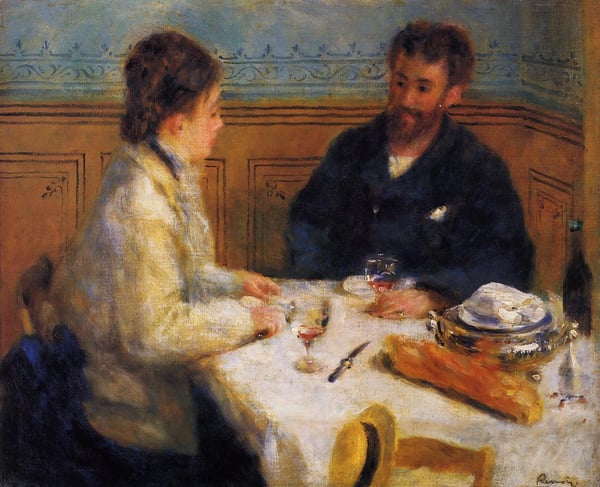
Renoir’s The Luncheon stands as a quintessential example of Impressionist genre painting, capturing a fleeting moment of bourgeois leisure with the movement’s signature concern for light, color, and modern life. Executed during Renoir’s most vibrant period of association with the Impressionists (roughly the 1870s–1880s), the work eschews the rigid composition and moralizing narrative of academic painting in favor of a candid, atmospheric slice of everyday experience.
Significance within Impressionism and Genre Painting
-
Celebration of Modern Sociability
The painting depicts a casual outdoor meal—likely a family or friends’ gathering—rather than a historical or mythological scene. This focus on contemporary social rituals (dining, conversation, relaxation) was a radical shift for genre painting, which traditionally had didactic or sentimental undertones. Renoir instead presents the scene as joyful, unpretentious, and ephemeral, aligning with the Impressionist goal of painting “modern life” as lived and felt. -
Mastery of Light and Atmosphere
Renoir’s brushwork dissolves solid forms into dappled patches of color, simulating the effect of sunlight filtering through trees onto white tablecloths, glassware, and skin tones. The soft, broken strokes and vibrant highlights—especially the interplay of warm yellows and cool blues—exemplify the Impressionist technique of capturing optical sensation rather than fixed outlines. This is not a static record but a visual echo of a moment’s transient light. -
Subordination of Narrative to Sensation
Unlike earlier genre painters (e.g., Chardin or Greuze), Renoir downplays storytelling. The figures are relaxed, their gazes unfocused; no clear interaction drives the narrative. Instead, the painting’s significance lies in its overall ambiance: the warmth of companionship, the tactile sensuality of food and fabric, the shimmer of sunlight on a summer afternoon. This shift from narrative to sensory experience is a hallmark of Impressionist innovation. -
Vivid, Unmixed Palette
Renoir employs high-key hues—pinks, greens, lavenders—applied directly onto the canvas, often without blending. This technique, derived from the Impressionist use of pure color and optical mixing, energizes the surface. The contrast between the cool shadows (blue-violet) and the warm light (yellow-orange) demonstrates an understanding of complementary colors that was revolutionary in the 1870s.
In sum, The Luncheon exemplifies how Impressionism redefined genre painting: instead of moral lessons or anecdotal detail, Renoir offers a shimmering, visceral record of happiness caught in the changing light. Its significance lies in its refusal to be anything other than a celebration of the transient beauty of ordinary modern life—a core achievement of the Impressionist movement.
Museum / Gallery
Genre
Stil
Visuell ähnlich
20 Werke mit ähnlicher Komposition und Farbpalette
Lunch with Otto Benzon
Peder Severin Kroyer
Artists' Luncheon in Skagen
Peder Severin Kroyer
Jeantaud, Linet and Laine
Edgar Degas
Tea on the Porch
Willard Metcalf
Luncheon at Antino
Peder Severin Kroyer
At the Café
Edouard Manet
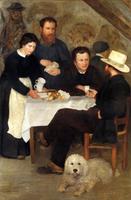
The Inn of Mother Anthony
Pierre-Auguste Renoir
The Card Players
Paul Cezanne
The End of Breakfast at Madam Vuillard
Edouard Vuillard
Misha, go out for a beer
Pyotr Konchalovsky
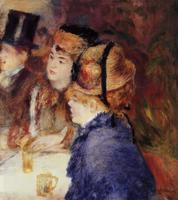
At the Cafe
Pierre-Auguste Renoir
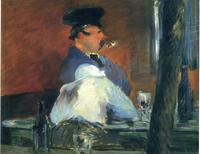
In the bar "Le Bouchon"
Edouard Manet
The Family at Cards (unfinished)
Robert Julian Onderdonk
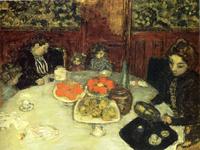
The Luncheon
Pierre Bonnard
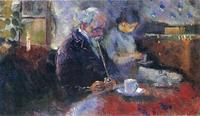
At the Coffee Table
Edvard Munch
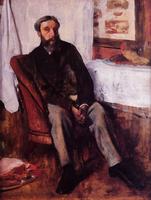
Portrait of a Man
Edgar Degas
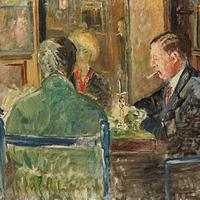
Et Bridgeparti
Oda Krohg
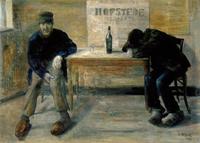
The Drunkards
James Ensor
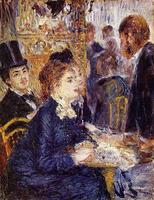
The Cafe
Pierre-Auguste Renoir
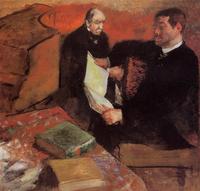
Pagan and Degas' Father
Edgar Degas