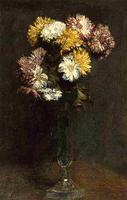
Expert Analysis of "Vase of Chrysanthemums" by Pierre-Auguste Renoir
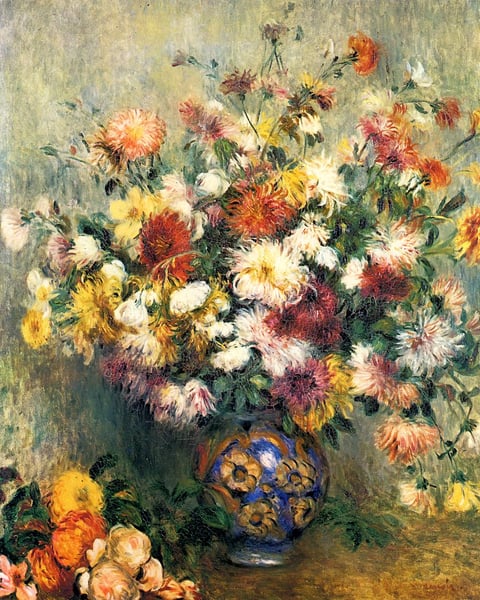
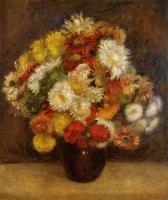
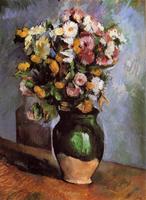
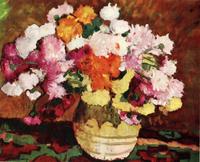
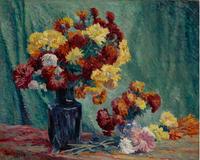
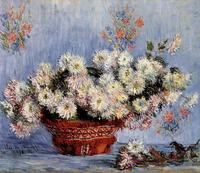
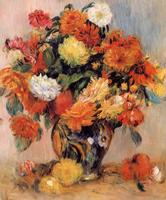
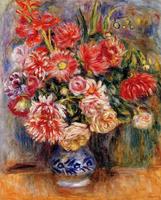
This flower painting, executed within the Impressionist style, holds particular significance because it was created during Renoir’s Rejection of Impressionism—a pivotal moment when the artist deliberately turned away from the movement’s hallmark spontaneity and optical dissolution. Where earlier Impressionist flower pieces prioritized fleeting light effects and loose, dappled brushwork, this work reveals Renoir’s growing commitment to solid form, structured composition, and a more classical sense of volume.
The chrysanthemums are not rendered as ephemeral bursts of color but as carefully modeled, three-dimensional blooms. The genre of flower painting, often considered a decorative subcategory, here becomes a laboratory for Renoir’s stylistic transition: the vase and tabletop anchor the composition with weight and depth, while the lush, still-vibrant palette retains Impressionist luminosity. Yet the brushstrokes are more deliberate, the contours firmer—signs of Renoir’s search for a “modern classicism” that would define his later work.
Thus, the artwork’s significance lies in its role as a transitional document: it embodies the tension between Impressionist freedom and a new desire for permanence, making it a key piece for understanding Renoir’s evolution and the broader shift in late 19th-century painting.