Expert Analysis: Woman and Child in a Garden by Pierre-Auguste Renoir
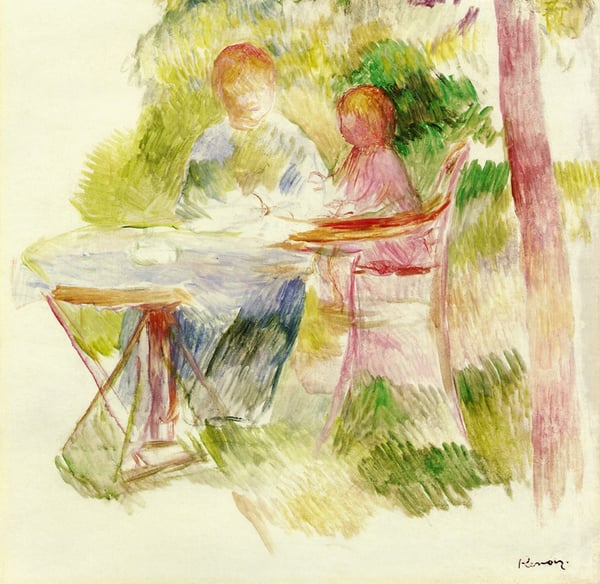
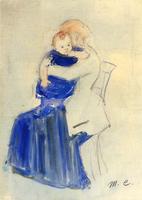
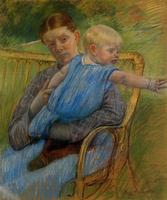
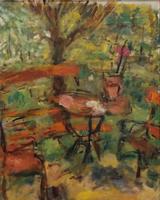
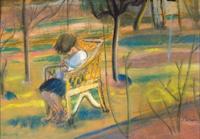
As a sketch and study from Renoir’s Impressionist period, Woman and Child in a Garden holds significance as a vivid record of the artist’s working process and his dedication to capturing fleeting moments of everyday life. Executed with the loose, rapid brushwork characteristic of Impressionism, the piece prioritizes atmosphere and sensory experience over fine detail. The garden setting—a recurring motif—allows Renoir to explore the interplay of dappled light and shadow on figures, a core concern of the movement. The intimate, informal subject of a mother and child reflects the Impressionist shift toward modern, domestic scenes rather than historical or mythological narratives. Even as a study, it reveals Renoir’s mastery of color harmony and his ability to convey warmth and tenderness through quick, gestural strokes. This work exemplifies how Impressionist sketches were not merely preparatory but were valued as autonomous expressions of spontaneity and direct observation.