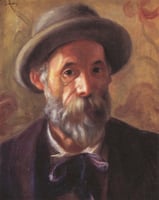
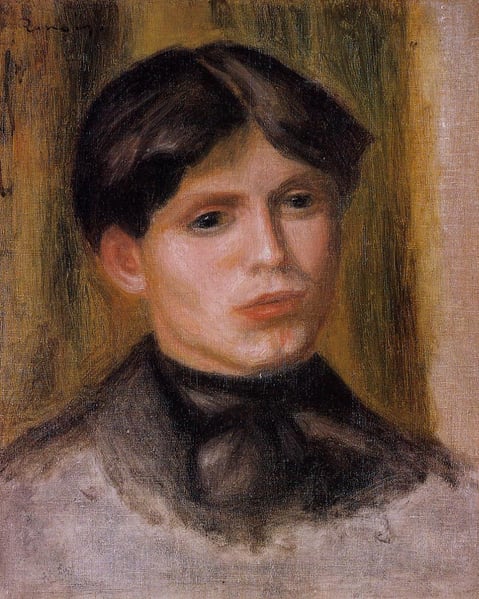
Woman`s Head
Analisi esperta di Woman`s Head di Pierre-Auguste Renoir
Stile: Impressionism · Genere: portrait
As an expert art historian, I offer the following analysis of Pierre-Auguste Renoir’s Woman’s Head, based solely on the provided facts (artwork, style: Impressionism, genre: portrait).
Significance within Impressionism:
Woman’s Head is a quintessential example of how Renoir and his fellow Impressionists revolutionized the portrait genre. Rather than seeking idealized, academic finish or precise anatomical detail, Renoir captures a fleeting, intimate moment of human presence through the hallmark techniques of Impressionism:
-
Loose, Visible Brushwork: The “head” is not built from smooth, blended surfaces but from feathery, broken strokes of color. This technique conveys the shimmer of light on skin and hair, dissolving solid form into a vibrant, atmospheric surface—a radical departure from the polished portraits of the École des Beaux-Arts.
-
Color as Light: Renoir’s palette in Woman’s Head likely favors warm flesh tones, soft pinks, and creamy highlights, with shadows rendered in complementary blues or violets rather than black. This Impressionist idiom treats color as a direct response to light sensations, making the sitter feel alive and bathed in a specific, transient environment.
-
Intimate, Casual Pose: The title’s simple “Head” suggests a cropped, close-up view—probably a three-quarter or profile turn—that implies spontaneity. The woman is not posed stiffly for posterity; she appears caught in a natural, unguarded moment, aligning with Impressionism’s focus on modern, everyday life.
-
Atmosphere over Anatomy: While the genre is “portrait,” Renoir subordinates exact likeness to overall mood and sensory pleasure. The viewer experiences the sitter’s softness and warmth through a haze of pigments, a hallmark of Renoir’s ability to render the sensuousness of flesh and the fleeting impression of a personality.
In summary, Woman’s Head is significant because it demonstrates how Impressionism transformed portraiture from a document of social status into a lyrical record of light, color, and ephemeral human presence—a celebration of the eye’s quick, joyful perception.
Museum / Gallery
Visivamente simili
20 opere con composizione e palette affini
Self-Portrait
Oda Krohg
Portrait of a boy, bust-length, in profile
Tito Lessi
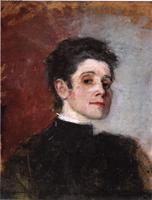
Self Portait
Olga Boznańska
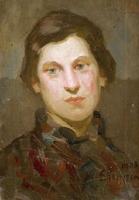
Egry József Hölgy Portré
Egry József
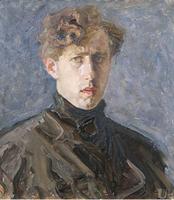
Self Portrait
Vilen Barsky
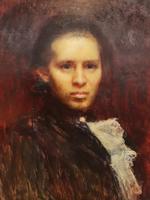
Painting of Lesia Ukraiinka
Trush Ivan Ivanovych
Portrait of an Italian Lady
Fujishima Takeji
Self-Portrait
Odd Nerdrum
The red corset
Silvestro Lega
Vernon Lee
John Singer Sargent
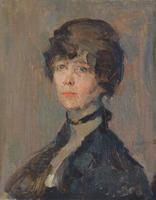
Dutch writer Ina Boudier-Bakker
Isaac Israels
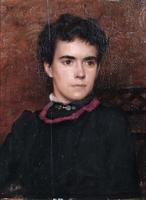
Charlotte Genn
Henry Scott Tuke
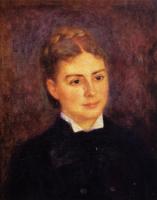
Madame Paul Berard
Pierre-Auguste Renoir
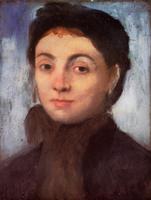
Portrait of Josephine Gaujelin
Edgar Degas
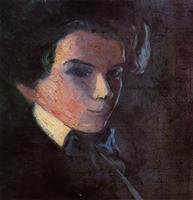
Self Portrait, Facing Right
Egon Schiele
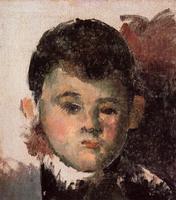
Portrait of the Artist's Son
Paul Cezanne
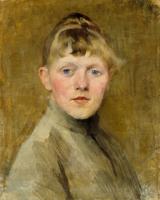
Self-Portrait
Helene Schjerfbeck
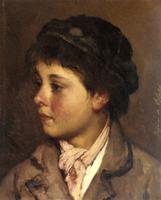
Portrait of a young boy
Eugene de Blaas
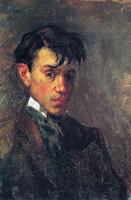
Self-Portrait
Pablo Picasso
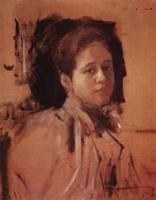
Portrait of Liudmila Mamontova
Valentin Serov