Expertenanalyse zu Kazimir Malevichs Composition
Stil: Neo-Suprematism · Genre: abstract
Analysis of "Composition" by Kazimir Malevich
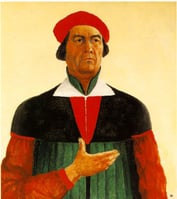
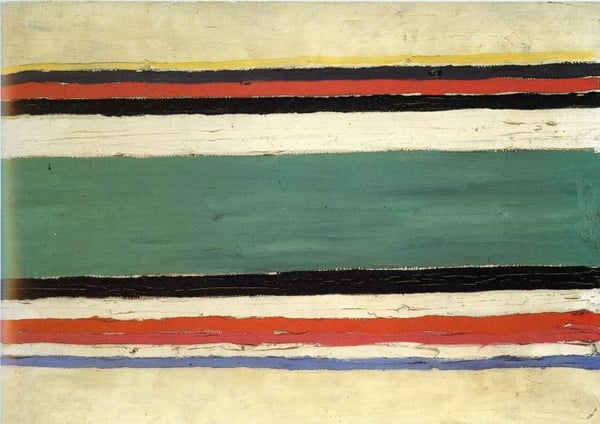
Malevich’s Composition is a key example of Neo-Suprematism, a style that extends his earlier Suprematist breakthrough into a continued exploration of pure geometric abstraction. Within this work, Malevich strips representation down to its most elemental forms—likely flat planes of color and simple shapes—rejecting any reference to the visible world. The painting’s significance lies in its radical commitment to non-objective art: it exists solely as a composition of abstract elements, where meaning is generated through spatial relationships and the dynamic tension between shape and color, rather than through narrative or subject matter. By pushing abstraction even further in the Neo-Suprematist phase, Malevich affirms that the canvas is not a window onto reality but an autonomous field of artistic sensation. This work thus stands as a testament to his enduring goal of liberating art from all external associations, making it a pivotal artifact in the history of modernist abstract painting.
Visuell ähnlich
20 Werke mit ähnlicher Komposition und Farbpalette

Horizontal Stripe Painting: November 1957 - January 1958
Patrick Heron
Untitled from the Shapes of Colour
Patrick Heron
Untitled
Peter Busa
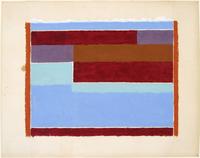
Untitled Abstraction VIII
Josef Albers
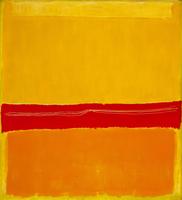
No.5/No.22
Mark Rothko
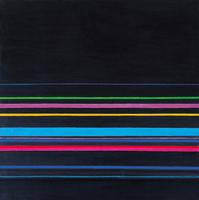
Composition no. 3
Henryk Stazewski
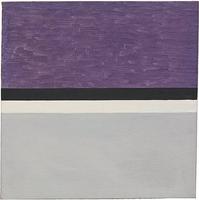
Untitled
Agnes Martin
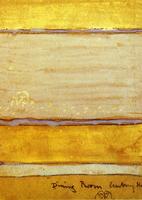
Colour Scheme for the Dining-Room of Aubrey House
James McNeill Whistler
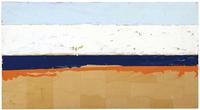
Grande Angolo
Mario Schifano
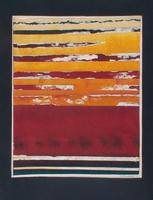
Sunscape
Małgorzata Serwatka
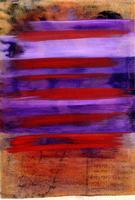
Eurydice n. 27
Bracha L. Ettinger
Moroccan Series
Ed Clark
No.10
Mark Rothko
Mabel's Release #5
Jack Bush
The Yellow Line
Claude Tousignant
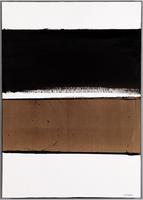
B-Walnut Stain
Pierre Soulages

Peinture 324 x 181 cm, 17 novembre 2008
Pierre Soulages
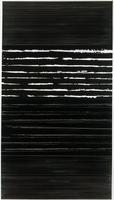
Peinture 324 x 181 cm, 14 mars 1999 (Polyptyque)
Pierre Soulages
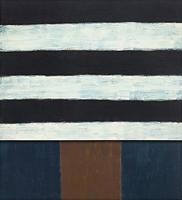
Wait
Sean Scully
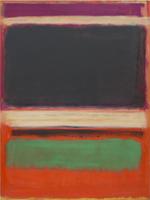
No.3/No.13 (Magenta, Black, Green on Orange)
Mark Rothko