Análisis experto de Self-Portrait de Kazimir Malevich
Estilo: Neoclassicism · Género: self-portrait
This analysis is based solely on the supplied structured facts.
Artwork: "Self-Portrait" by Kazimir Malevich
Style: Neoclassicism
Genre: Self-portrait
Expert Analysis
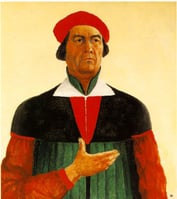
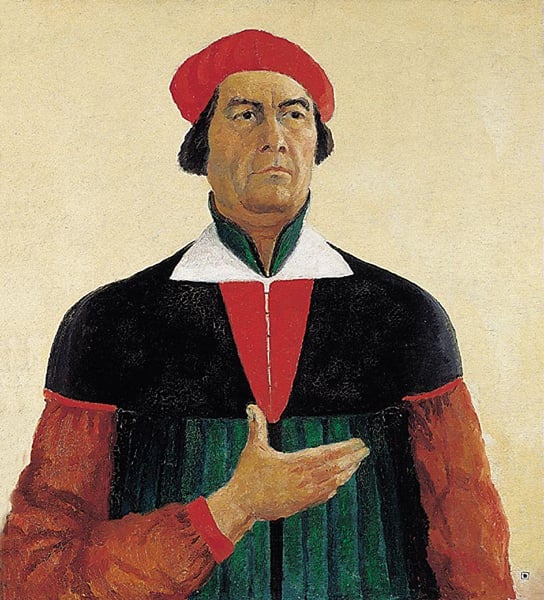
The significance of this work lies in its startling stylistic disconnect from Malevich’s own revolutionary legacy. As the creator of Suprematism—a radical, non-objective art movement that sought to free painting from the tyranny of recognizable forms—Malevich spent the 1910s and 1920s dismantling figurative traditions. Yet here, in a self-portrait executed in a Neoclassical mode, he returns to the very representational conventions his earlier work had rejected.
This move toward Neoclassicism cannot be dismissed as a simple regression. Within the broader arc of Malevich’s career, the adoption of a structured, idealized, and historically-referential style signals a conscious engagement with the artistic and political pressures of his time. Neoclassicism, with its emphasis on order, clarity, and humanist ideals, offered a visual language that was both legible and respected within official cultural circles of the late 1920s and early 1930s. By rendering himself in this manner, Malevich was not abandoning his avant-garde convictions outright, but rather embedding them within a more accessible vocabulary.
The portrait’s significance is thus twofold. First, it serves as a poignant historical document of an artist navigating the tightening constraints of Stalinist cultural policy, where the radicalism of the early Soviet avant-garde was being systematically suppressed in favor of Socialist Realism. Second, the work highlights the ongoing tension between artistic identity and public expectation. Malevich, the prophet of pure abstraction, here presents a stable, composed, and classically-grounded image of the artist—a deliberate performance that speaks to the survival and adaptation of a genius under duress. Within the Neoclassical style, this self-portrait is not merely a likeness, but a strategic, layered statement about the place of artistic tradition in a tumultuous modern world.
Museum / Gallery
Visualmente similares
20 obras con composición y paleta relacionadas
Der Kanonikus Stephan Gardiner
Quentin Matsys
Portrait of Charles VII, King of France
Jean Fouquet
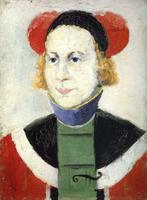
Portrait
Kazimir Malevich
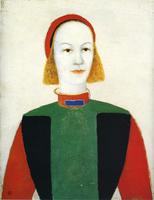
Girl
Kazimir Malevich
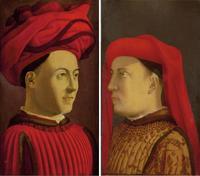
Portraits of two members of Medici family
Andrea del Castagno
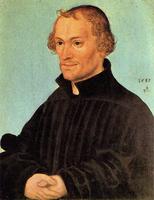
Philipp Melanchthon
Lucas Cranach the Elder
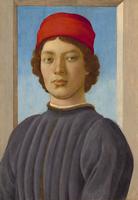
Portrait of a Youth
Filippino Lippi
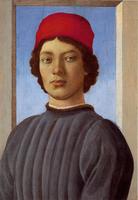
Portrait of a young man with red cap
Sandro Botticelli
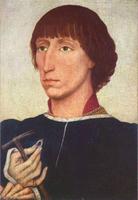
Portrait of Francesco d'Este
Rogier van der Weyden
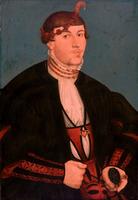
Portrait of a Young Nobleman
Lucas Cranach the Elder
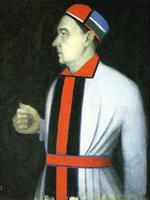
Portrait of Man
Kazimir Malevich
Federigo da Montefeltro
Piero della Francesca
Edward Grimston
Petrus Christus
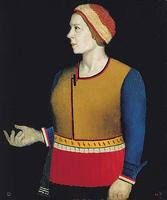
Portrait of Artist s Wife N.A. Malevich
Kazimir Malevich
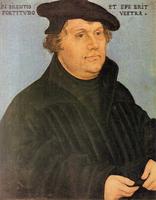
Martin Luther
Lucas Cranach the Elder
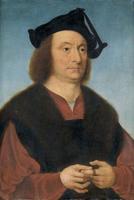
Porträt eines Mannes mit Ehering
Joos van Cleve
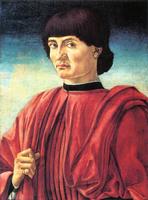
Portrait of a Gentleman
Andrea del Castagno
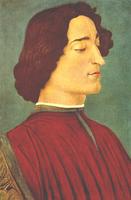
Giuliano de Medici
Sandro Botticelli
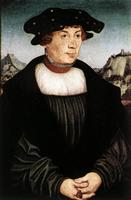
Portrait of Hans Melber
Lucas Cranach the Elder
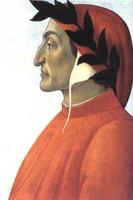
Portrait of Dante
Sandro Botticelli