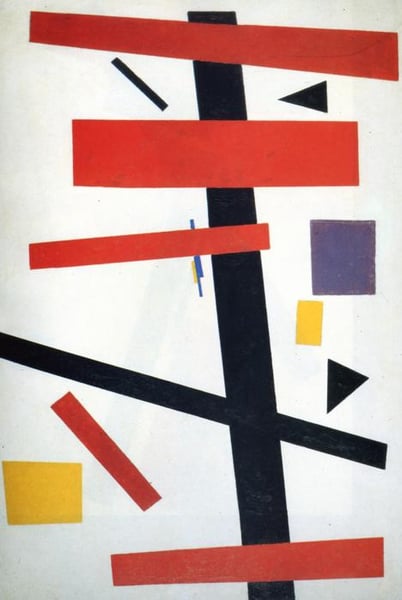
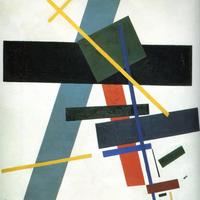
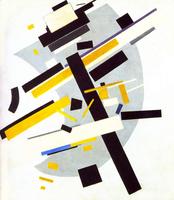
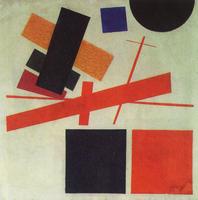
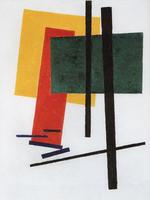
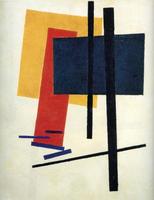
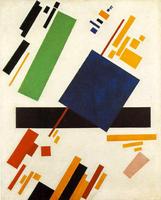
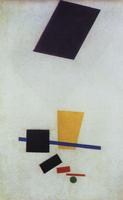
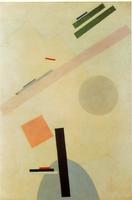
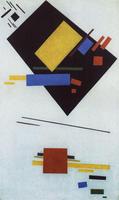
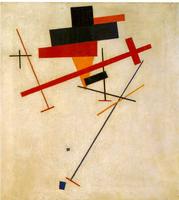
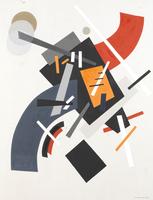
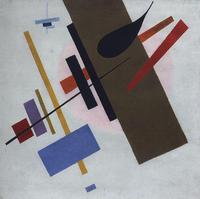
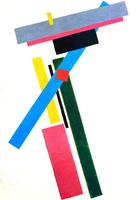
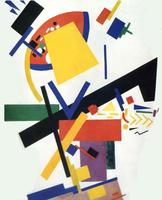
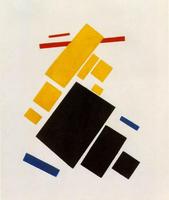
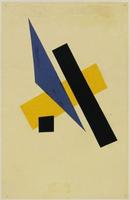
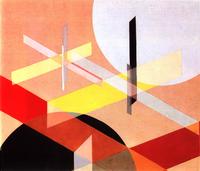
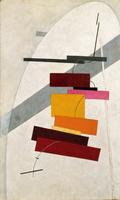
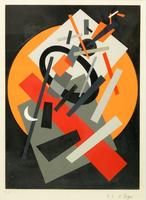
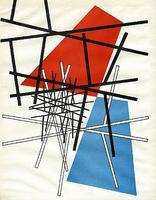
An expert analysis of Kazimir Malevich’s Suprematism must center on the limited supplied facts: the work belongs to the Suprematism style and the abstract genre. Within this framework, the artwork’s significance lies in its radical break from representational tradition. As a founding expression of Suprematism, it reduces visual language to pure geometric form—typically squares, circles, and lines—against a white void. This is not merely abstract decoration; it is a philosophical statement that art should transcend the material world to convey “the supremacy of pure feeling.” For its period, Suprematism redefined painting as a non-objective, spiritual act, directly influencing later minimalist and conceptual art. Its bold simplicity and rejection of narrative make it a pivotal landmark in early 20th‑century avant‑garde abstraction.