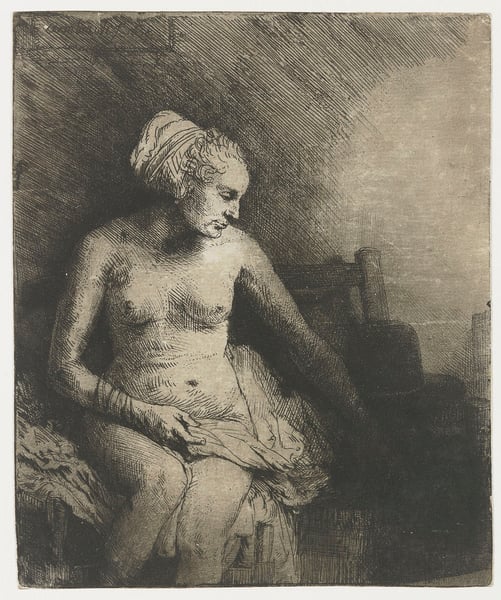
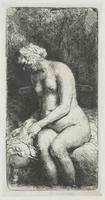
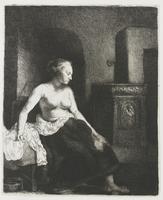
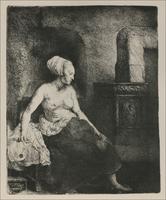
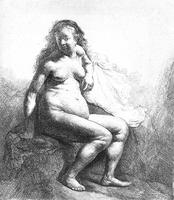
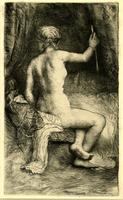
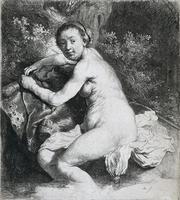
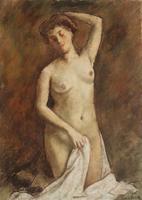
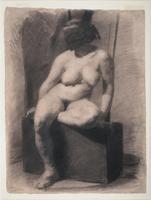
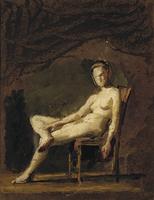
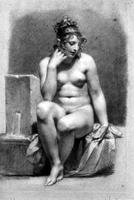
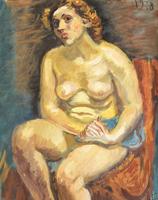
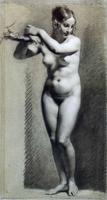
This work, A Woman at the Bath with a Hat Beside Her by Rembrandt, is a significant example of the Baroque nude for its intensely intimate and unidealized treatment of the female figure. As a Baroque nude (genre: nu), it diverges from classical conventions by focusing not on mythological grandeur but on a private, everyday moment — the simple act of bathing. The presence of the hat beside her anchors the scene in contemporary life, removing any allegorical or biblical pretext.
Rembrandt's signature chiaroscuro is central to the work's impact: pools of light sculpt the woman's flesh with tactile realism, while deep shadows suggest the recesses of the bath chamber and emphasize psychological interiority. Unlike the polished, goddess-like nudes of contemporaries, Rembrandt renders the body with unflinching honesty — folds of skin, subtle imperfections, and a natural, unposed posture. This raw humanity, combined with the hat as an ordinary accessory, transforms the genre from idealization to an exploration of vulnerability and daily existence. The painting thus stands as a key marker of the Baroque’s shift toward dramatic realism and emotional depth, showcasing Rembrandt’s mastery in capturing the profound within the commonplace.