Expert analysis of Rembrandt’s Antiope and Jupiter
Style: Baroque · Genre: sketch and study
Expert Analysis of "Antiope and Jupiter" by Rembrandt
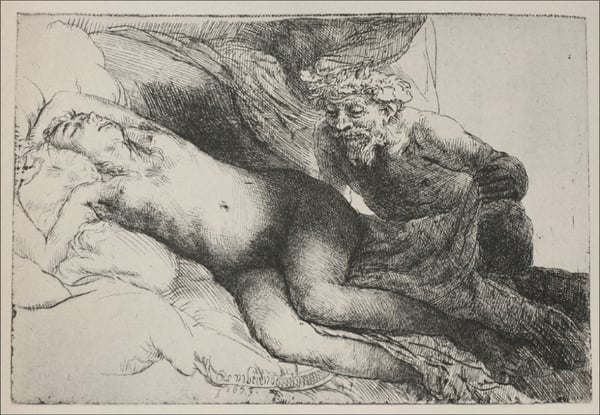
As a Baroque sketch and study, Rembrandt’s Antiope and Jupiter exemplifies the period's fascination with dramatic narrative and emotional immediacy—even in preparatory works. The subject derives from Ovid’s Metamorphoses, depicting the satyr Jupiter (or sometimes the god himself disguised as a satyr) approaching the sleeping Antiope. What makes this piece significant within Rembrandt’s oeuvre and the Baroque style is how it transforms a mythological scene into an intimate, almost psychological encounter.
Key Significance:
-
Mastery of Chiaroscuro in a Sketch: Rembrandt deploys a rapid, economical line work and dense shadow hatching to suggest form and atmosphere. Even in this unfinished state, the contrast between the dark, emerging figure of Jupiter and the soft, luminous curves of Antiope’s sleeping body demonstrates his unparalleled ability to evoke deep space and drama with the barest means.
-
Genre as Revealer of Process: As a study, this work offers a rare glimpse into Rembrandt’s creative method. The loose, searching strokes—some lines altered or erased—show him experimenting with pose and composition. This spontaneity is a hallmark of Baroque sketch practice, valuing directness and energy over polished finish.
-
Humanizing the Mythological: Rather than a static, heroic scene, Rembrandt captures a moment of vulnerability and stealth. Antiope’s relaxed posture contrasts with Jupiter’s tense, crouching advance, creating a narrative tension that feels almost voyeuristic. This focus on human emotion—even in a divine seduction—is quintessentially Rembrandt and a defining trait of Baroque art’s move toward naturalism and emotional engagement.
In summary, Antiope and Jupiter is significant not only as a technical exercise but as a testament to Rembrandt’s ability to infuse a rapid sketch with the same psychological depth and Baroque theatricality found in his finished masterpieces. It underscores how, in the 17th century, even a study could be a powerful, complete work of art.
Visually similar
20 works with related composition and palette
A Woman Lying on a Bed
Rembrandt
Jupiter and Antiope
Annibale Carracci
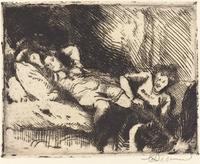
Going to Bed
Paul-Albert Besnard
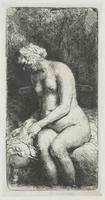
Seated naked woman (Woman bathing her feet at a brook)
Rembrandt
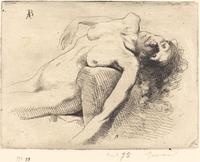
Dying Woman (la Mourante)
Paul-Albert Besnard
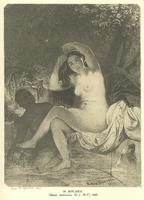
Bathsheba
Taras Shevchenko
Diana at the bath
Rembrandt
Negress lying down
Rembrandt
Model Asleep on the Floor
Paul-Albert Besnard
Seated Female Nude
Rembrandt
Venus and Mars
Giovanni Battista Piranesi
Cleopatra to death with the asp by Guercino
Giovanni Battista Piranesi
Seated Female Nude, in Solitude
Salvator Rosa
Au Bord de L'Eau
Theophile Steinlen
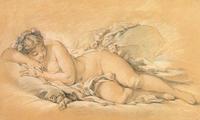
Young Woman Sleeping
Francois Boucher
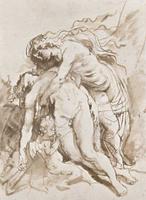
Death of Adonis
Peter Paul Rubens
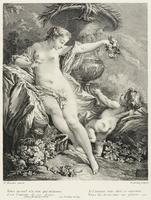
VENUS AND AMOR
Pierre Alexander Aveline
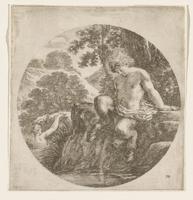
The Young Satyr
Stefano della Bella
Silen, Satyr and Bacchanals
Karl Bryullov
Possession
Paul-Albert Besnard