Expert analysis of Rembrandt’s Family Group
Style: Baroque, Tenebrism · Genre: portrait
Expert Analysis: Rembrandt’s “Family Group”
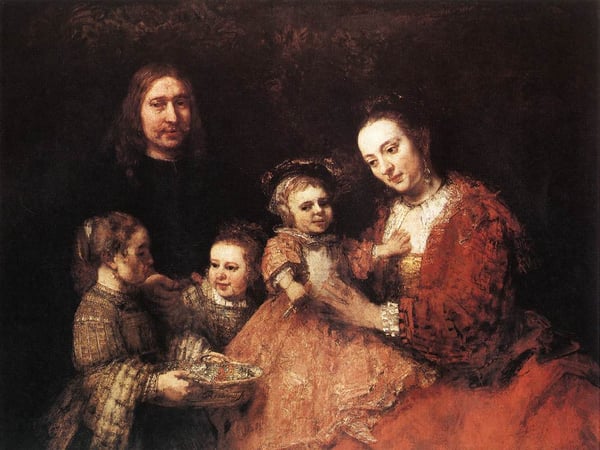
Painted within the dramatic chiaroscuro tradition of the Baroque and employing the stark contrast of Tenebrism, Rembrandt’s “Family Group” transcends the typical portrait genre by transforming a domestic scene into a psychological and spiritual drama.
Significance within style and period:
- Tenebrist mastery: Rembrandt uses extreme light–dark contrasts not merely for theatrical effect, but to isolate and elevate the intimate bonds of the family. The glowing faces and hands emerge from a nearly black background, directing the viewer’s eye to subtle expressions and gestures—a hallmark of Tenebrism that here serves emotional truth over decorative spectacle.
- Baroque humanism: Unlike formal dynastic portraits of the era, this work rejects idealized poses. The figures are caught in a natural, unguarded moment—a mother’s protective touch, a child’s curious gaze—reflecting the Baroque obsession with capturing fleeting human experience.
- Innovation in group portraiture: Rembrandt breaks from the stiff, hierarchical compositions common in 17th-century family portraits. Instead, he organizes the figures in a dynamic, asymmetrical arrangement, using light to create a narrative hierarchy: each family member is psychologically distinct yet bound by the shared illumination.
Why it matters:
“Family Group” exemplifies how Rembrandt elevated a conventional genre into a meditation on human connection. The Tenebrist technique, rather than being purely decorative, becomes a metaphor for the fragility and radiance of familial love—making this work a cornerstone of Baroque emotional realism and a precursor to modern psychological portraiture.
Visually similar
20 works with related composition and palette
Portrait of V. I. Yershova with Her Daughter
Vasily Tropinin
Marguerite Amirault Duplessis Alpuente y Ruiz (1761-1790) and son Francisco Bonaventure Alpuente y Ruiz (1783-1842)
José Francisco Xavier de Salazar y Mendoza
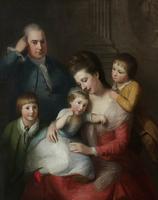
Bartholomew Ruspini (1728–1813), Chevalier, with Family
Nathaniel Hone the Elder
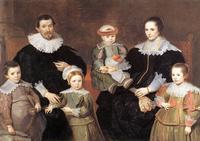
The Family of the Artist
Cornelis de Vos
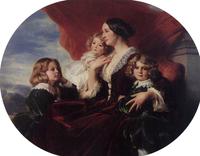
Elzbieta Branicka, Countess Krasinka and her Children
Franz Xaver Winterhalter
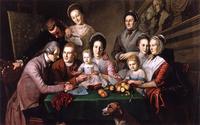
The Peale Family
Charles Willson Peale
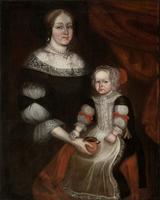
Mrs. Richard Patteshall (Martha Woody) and child
Thomas Smith
Masquerade
Antoine Watteau
As the Old Sing So the Young Pipe
Jacob Jordaens
The Jewish Bride
Rembrandt
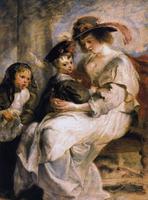
Helene Fourment with her Children
Peter Paul Rubens
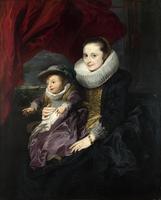
Portrait of a Woman and Child
Anthony van Dyck
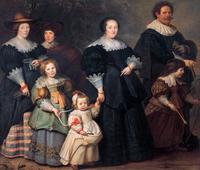
Self-portrait of the Artist with his Wife Suzanne Cock and their Children
Cornelis de Vos
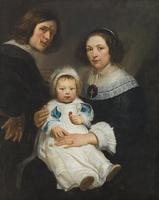
Self-Portrait with Wife Catherine de Hemelaer and Son Jan Erasmus Quellinus
Erasmus Quellinus the Younger
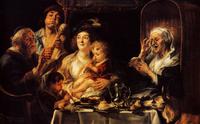
As the Old Sang, So the young Pipe
Jacob Jordaens
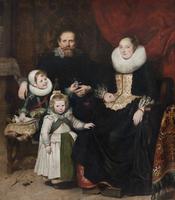
Portrait of the Artist with his Family
Cornelis de Vos
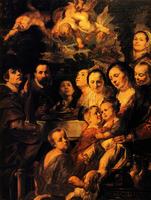
Portrait of Jordaens family
Jacob Jordaens
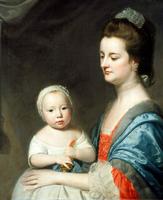
Mrs Marton and Her Son Oliver
George Romney
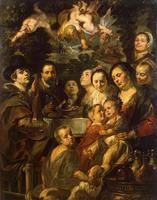
Self-Portrait with Parents Brothers and Sisters
Jacob Jordaens
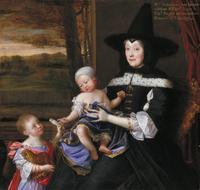
La señora Salesbury con sus nietos
John Michael Wright