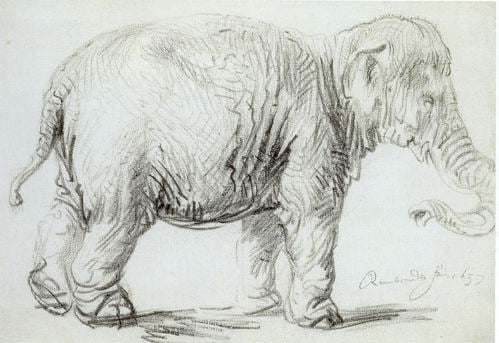
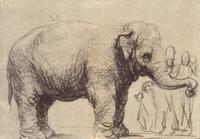
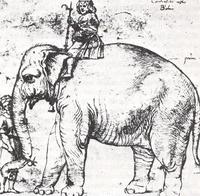
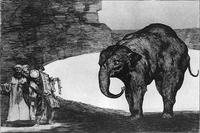
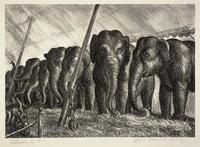
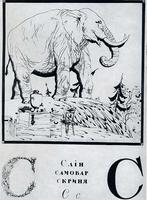
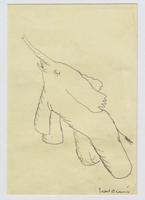
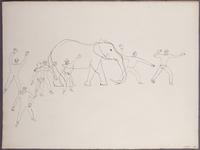
Rembrandt’s Hansken the Elephant (1637) is a striking example of the Baroque artist’s mastery in capturing lifelike naturalism, even within the modest format of a sketch. As both an animal painting and a study, it demonstrates Rembrandt’s keen observational skill and his willingness to engage with exotic subjects—a notable departure from the period’s predominant focus on historical, religious, or mythological scenes. The work is significant for its spontaneous, fluid handling of line and shadow, which imbues the elephant with a sense of weight, texture, and quiet dignity. Within the Baroque style, this sketch exemplifies the era’s fascination with direct observation from life, while also highlighting Rembrandt’s ability to elevate a simple study into a powerful portrait of an animal, reflecting the humanist curiosity that defined Golden Age Dutch art.