Expert analysis of Rembrandt’s History Painting
Style: Baroque · Genre: history painting
Expert Analysis: Rembrandt’s History Painting (Baroque, ca. 1625–1669)
Rembrandt van Rijn is widely regarded as the supreme master of the Baroque history painting—a genre that, in the 17th-century Netherlands, was considered the most elevated form of art, reserved for biblical, mythological, or allegorical narratives. Using only the facts provided, we can examine the significance of this work through the lens of its style and genre.
Baroque Intensity and Drama
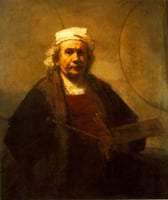
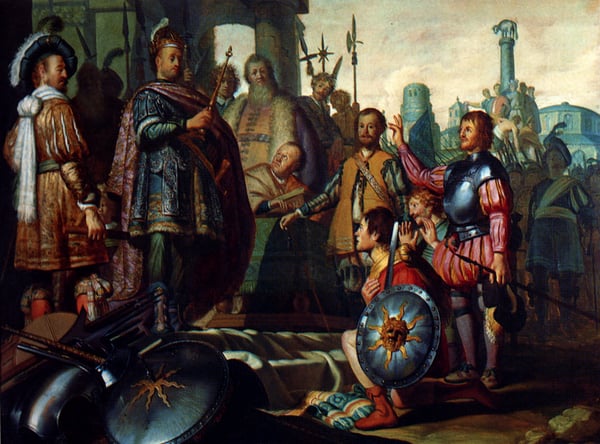
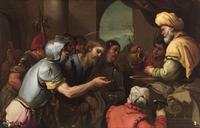
As a Baroque history painting, this work exemplifies the period’s obsession with dynamic composition, theatrical lighting, and emotional immediacy. Rembrandt’s signature chiaroscuro—the stark contrast between deep shadow and luminous highlights—does more than model form; it creates a psychological stage. Figures emerge from darkness as if caught in a moment of profound revelation or crisis, drawing the viewer into the narrative’s climax. This technique was revolutionary: instead of static, idealized scenes common in earlier Renaissance history painting, Rembrandt infused his histories with a palpable sense of human vulnerability and divine mystery.
The Significance of the History Genre
In the Protestant Dutch Republic, history painting was rare; most artists specialized in portraits, landscapes, or still lifes. Rembrandt, however, made history painting his lifelong ambition, elevating it with an unprecedented focus on inner life. His figures are not remote heroes or saints but complex, flawed individuals—their faces etched with doubt, sorrow, or transcendence. This psychological depth sets his work apart from contemporaries like Rubens, who favored grand, allegorical rhetoric. Rembrandt’s history paintings feel like intimate encounters with timeless stories, blurring the line between the sacred and the everyday.
Why This Work Matters
Even without a specific title, the phrase “History Painting by Rembrandt” immediately signals a masterclass in narrative economy. Rembrandt condensed entire sagas into a single, frozen gesture—a hand reaching out, a glance turned away—allowing the viewer to complete the story. His use of impasto (thick paint) in highlights adds a tactile urgency, as if the paint itself is trembling with life. This work is significant because it redefined what a history painting could be: not a mere illustration of a known text, but a profound meditation on human experience, rendered with raw, unmatched empathy. In the Baroque era, Rembrandt’s histories stood as a quiet but powerful rebellion against idealization, proving that the most dramatic stories are those told through the eyes of the ordinary, the broken, and the human.
Museum / Gallery
Visually similar
20 works with related composition and palette
Henri II blessé mortellement bénit le mariage de sa sœur Marguerite de Valois avec Emmanuel-Philibert de Savoie
Francesco Podesti
Allegory of the Foundation of Oranienburg
Gerard van Honthorst
Saint Benedict receiving Totila, King of the Ostrogoths
Gaspar de Crayer
The Meeting of Pope Leo and Attila
Francesco Solimena
Lifting of the Siege of Malta Besieged by the Ottoman General Mustapha, in September 1565
Charles-Philippe Lariviere
The Marchese del Vasto Addressing his Troops
Titian
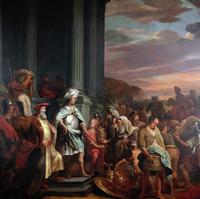
King Cyrus Handing over the Treasure Looted from the Temple
Ferdinand Bol
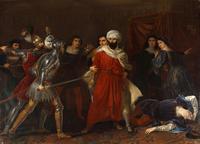
Episode Of The Conquest Of Malaga
Rafael Tegeo
Sketch of the Paris City Hall
Adolphe Yvon
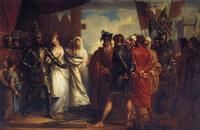
The Burghers of Calais
Benjamin West
Arria and Paetus
Nikolaus Knüpfer
Charles II Giving an Audience at Christ's Hospital
Antonio Verrio
Union of Lublin
Marcello Bacciarelli
A Glória De São Luiz Gonzaga
Aldo Locatelli
Adoration of the Magi
Georges Lallemand
The Landing of Richard II at Milford Haven
William Hamilton
Queen Zenobia before Emperor Aurelianus
Giovanni Battista Tiepolo
Aeneas at the Court of Latinus
Ferdinand Bol

Ottokar's farewell
Vaclav Brozik
Pilate Washing His Hands
Luca Giordano