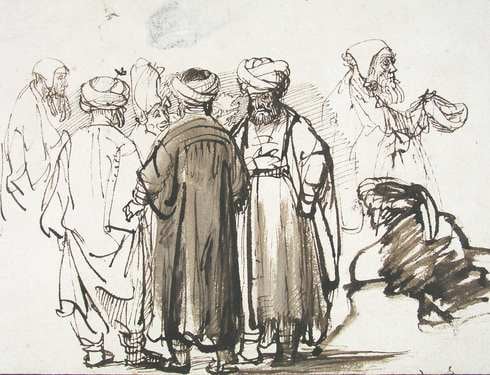
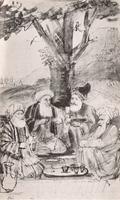
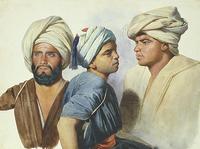
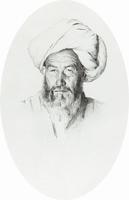
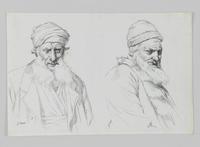
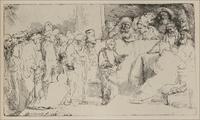
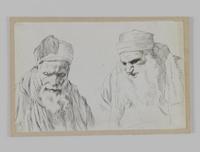
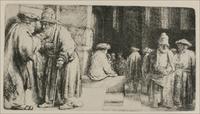
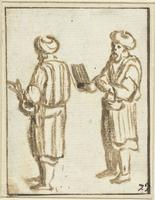
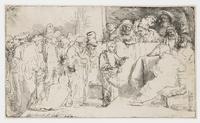
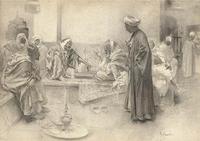
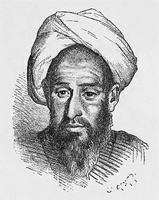
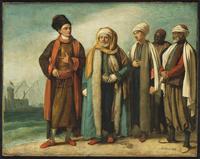
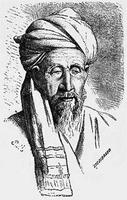
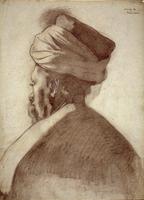
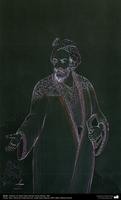
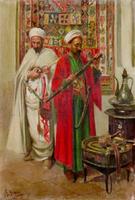
This work by Rembrandt is significant as a quintessential example of Baroque-era draftsmanship, demonstrating the artist's profound observational skill and his fascination with human character and exotic costume. As a sketch and study, it offers a rare window into Rembrandt’s creative process, where he rapidly captures not only the distinctive textures and folds of oriental dress—a popular subject in the Baroque period reflecting European curiosity about the East—but also the raw, unidealized humanity of a beggar. The juxtaposition of the dignified, richly attired figures with the half-figure studies of a destitute beggar highlights Rembrandt’s signature Baroque interest in dramatic contrasts of light, shadow, and social station. This piece is significant because it underscores the artist’s commitment to direct observation and his ability to imbue even a preparatory sketch with psychological depth, making it a key document of Baroque studio practice and the era’s broader exploration of realism and variety in human experience.