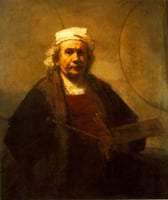
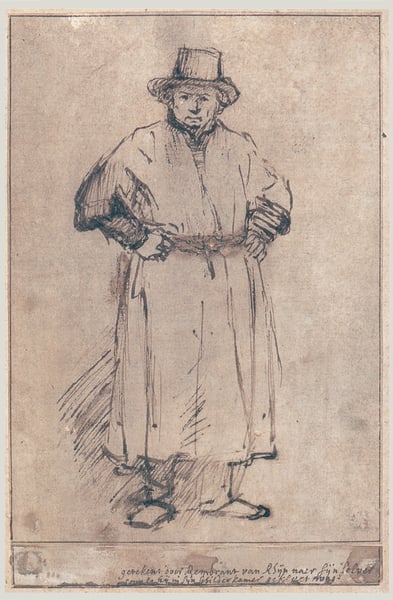
Rembrandt sanatçısının Self-portrait in studio attire eseri hakkında uzman analizi
Tarz: Baroque · Tür: self-portrait
As an expert in Baroque art, I would analyze Rembrandt's Self-portrait in studio attire with the following insights, based solely on the given facts:
Significance within the Baroque Period and Self-Portrait Genre
This work is a quintessential example of Baroque self-portraiture, primarily because it encapsulates the era’s fascination with psychological depth, theatricality, and the artist’s own identity. Rembrandt elevates the self-portrait from a mere record of likeness to a profound study of character and status.
-
Baroque Style: The painting embodies Baroque dynamism through its strong chiaroscuro (contrast of light and shadow) and intimate, direct gaze. The “studio attire” is not mere clothing; it is a deliberate costume that situates the artist within his craft, blurring the line between everyday life and artistic persona. This theatrical self-presentation—showing himself at work—was a Baroque innovation, emphasizing the artist as a creative genius rather than a mere craftsman.
-
Genre (Self-Portrait): Within Rembrandt’s own oeuvre, this self-portrait is significant because it reflects the Baroque fascination with individual introspection. Unlike earlier self-portraits that often served as demonstrations of technical skill, Rembrandt’s choice to depict himself in studio attire suggests an unvarnished honesty. It documents not just his face but his role as an artist—a theme that would become central to later self-portraiture. The fact that he portrays himself in his working clothes, rather than formal garb, subverts traditional aristocratic portraiture and asserts the dignity of the artist’s labor.
In summary, this painting is significant for its Baroque theatricality, psychological penetration, and its redefinition of the self-portrait genre as a site of professional identity and emotional complexity.
Museum / Gallery
Stil
Görsel olarak benzer
İlişkili kompozisyon ve renk paletine sahip 20 eser
Academic study of a male figure
Marià Fortuny
Turks
Filipp Malyavin
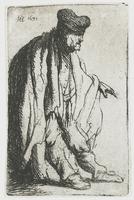
Beggar with his left hand extended
Rembrandt
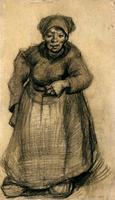
Woman with Her Left Arm Raised
Vincent van Gogh
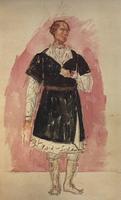
Costume Design for the tragedy of Pushkin's Boris Godunov
Kuzma Petrov-Vodkin
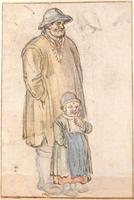
Study of a Standing Man and Child
Hendrick Avercamp
The Little Polander
Rembrandt
Schets Van Een Staande Heer
Hendrick Avercamp
The barrel organ player (Polander standing with arms folded)
Rembrandt
Mercantils
Theophile Steinlen
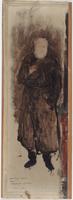
Portrait De Victor Hugo
Jules Bastien-Lepage
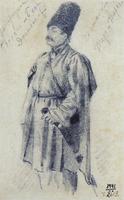
Warrant Officer Hassan-Beck Dzhagranov
Vasily Vereshchagin
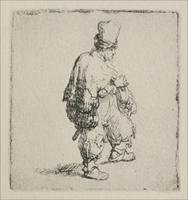
A Polander Walking Towards the Right
Rembrandt
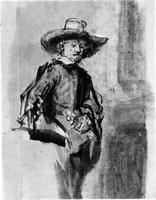
Study for one of the syndics of the Cloth Guild
Rembrandt
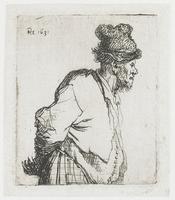
Peasant with his hands behind his back
Rembrandt
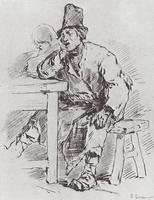
The farmer at the table
Viktor Vasnetsov
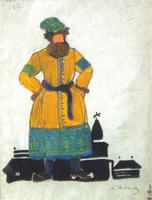
Boyarin
Nicholas Roerich
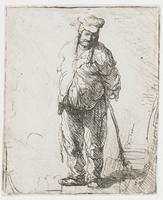
Ragged peasant with his hands behind him, holding a stick
Rembrandt
Ushkuinik
Nicholas Roerich
Standing Woman Holding a Muff Facing Right
Pietro Longhi