Expertenanalyse zu Rembrandts The Stone Bridge
Stil: Baroque · Genre: landscape
Expert Art Historical Analysis: "The Stone Bridge" by Rembrandt
Significance within Baroque Landscape Painting
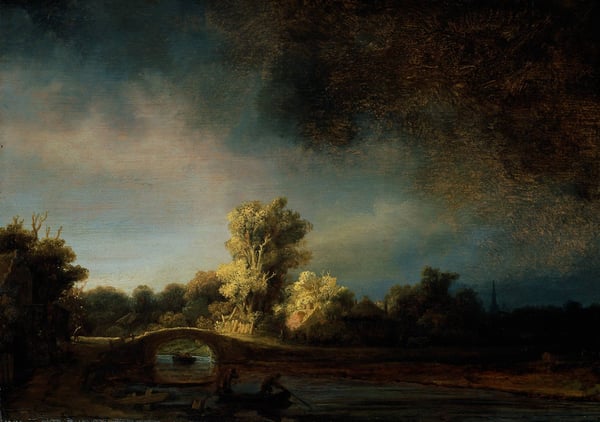
Rembrandt’s The Stone Bridge (c. 1637) stands as a masterful and somewhat atypical example of Dutch Baroque landscape painting. While many of his contemporaries, such as Jacob van Ruisdael, focused on panoramic vistas or meticulously detailed natural scenes, Rembrandt here infuses a simple, rustic subject—a stone bridge crossing a narrow canal—with the dramatic emotional intensity that defines the Baroque spirit.
Key Aspects of Its Importance:
-
Dramatic Chiaroscuro and Atmosphere: The painting is dominated by a vast, brooding storm sky that covers much of the canvas. Rembrandt deploys his signature use of chiaroscuro (strong contrasts between light and dark) not just for human figures but for the landscape itself. A single, brilliant shaft of sunlight breaks through the dark clouds, illuminating the stone bridge, the cottages beyond, and a few tiny figures. This sudden burst of light amid the gloom creates a palpable sense of fleeting time and turbulent weather—a hallmark of Baroque’s desire to capture dramatic, transient moments.
-
Elevation of the Ordinary: Rembrandt deliberately chooses a humble, local scene—a low-arched bridge, a few trees, and modest houses. By bathing this ordinary subject in such theatrical light and shadow, he elevates it to a stage of emotional grandeur. This approach mirrors Baroque art's broader interest in finding the divine or the profound within the everyday world.
-
Psychological and Emotional Impact: Unlike many Dutch landscapes that aim for topographical accuracy or serene beauty, The Stone Bridge prioritizes mood and atmosphere. The contrast between the threatening sky and the warm, hopeful glow on the bridge evokes a sense of vulnerability and resilience. This psychological depth—making the viewer feel the change in weather and the fleeting moment—is a distinctly Rembrandtian contribution to Baroque landscape art.
-
Narrative in Nature: The small, almost unnoticed figures on and near the bridge (a traveler, a fisherman) are dwarfed by the immense sky and the natural forces at play. This relationship between humanity and the overwhelming power of nature is a recurring Baroque theme, here expressed through the medium of light.
In summary, The Stone Bridge is significant because it transforms landscape from a background genre into a vehicle for Baroque drama. Rembrandt’s manipulation of light and weather infuses the scene with a profound, almost theatrical intensity, making this work a crucial example of how Baroque principles could be applied to the natural world.
Museum / Gallery
Visuell ähnlich
20 Werke mit ähnlicher Komposition und Farbpalette
Landscape with a Long Arched Bridge
Rembrandt
Landscape with Figures
Salomon van Ruysdael
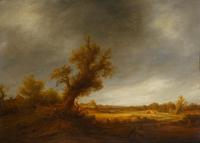
Landscape with an Old Oak
Adriaen van Ostade
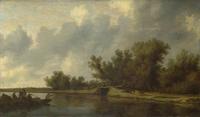
A River Landscape with Fishermen
Salomon van Ruysdael
Road in the Woods with Staffage Figures
Francois van Knibbergen
The Yare at Thorpe, Norwich
John Crome
Landscape
Adriaen van Ostade
Dedham Ferry
William Collins
En Hollandsk Flodbred
Salomon van Ruysdael
Landscape with a Horse and Carriage by a Cottage
Salomon van Ruysdael
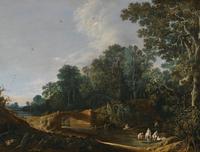
Landscape With The Toilet Of Venus
Francois van Knibbergen
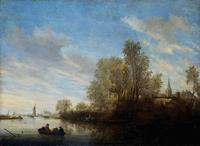
River View near Deventer
Salomon van Ruysdael
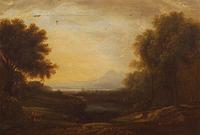
Italianate riverscape with figures in a boat and cows in the foreground
Thomas Barker of Bath
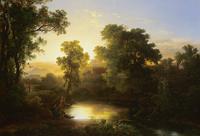
Tobias with the Angel
Károly Markó the Elder
Riviergezicht Bij Deventer
Salomon van Ruysdael
River Scene
Salomon van Ruysdael
Haying by a Stream
Benjamin Champney
After the Rain
Salomon van Ruysdael
Le Debarcadère
Salomon van Ruysdael
Ferry Boat on a River, Trees on a Hill to the Left
Hendrick Cornelisz Vroom