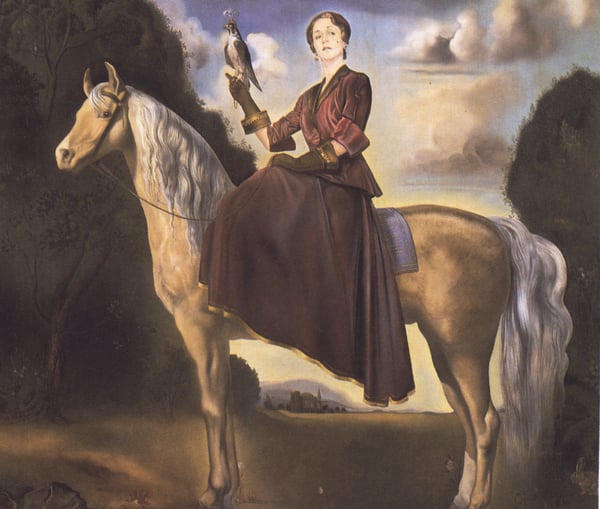
Equestrian Fantasy Portrait of Lady Dunn
Details
Expert analysis of Salvador Dali’s Equestrian Fantasy Portrait of Lady Dunn
Style: Realism, Surrealism · Genre: portrait
In his "Equestrian Fantasy Portrait of Lady Dunn", Salvador Dalí fuses the meticulous precision of Realism with the uncanny invention of Surrealism, creating a work that epitomizes the ambitions of his Classic Period (1941–1989). This later phase saw Dalí—having been expelled from the Surrealist movement—return to traditional painting techniques while retaining the dreamlike logic that defined his earlier career.
Significance within style and period:
- Technical virtuosity meets psychological depth: Dalí employs Renaissance-style chiaroscuro and anatomical exactitude to render Lady Dunn and her steed, yet the composition is deliberately destabilized. The horse’s pose, the shadowy backdrop, and the fusion of rider and mount into a single, fluid silhouette suggest a subconscious transformation—the lady becomes part beast, part myth.
- A synthesis of opposites: The portrait is both a faithful likeness (Realism) and a staged, impossible fantasy (Surrealism). The equestrian motif, a classic symbol of nobility and control, is here subverted: Lady Dunn does not grasp the reins, hinting at surrender to irrational forces. This tension between order and chaos reflects Dalí’s late-career fascination with science, religion, and the “nuclear mysticism” that blended Catholic iconography with surreal imagery.
- Product of the Classic Period: After the 1940s, Dalí declared himself a “classic” painter, seeking to rival the High Renaissance masters. In this portrait, the rigorous draftsmanship and smooth, enamel-like finish echo Ingres or Vermeer, while the eerie, atmospheric sky and the subject’s inscrutable expression recall his earlier paranoid-critical method. The work thus stands as a manifesto: surrealism could coexist with—and even be amplified by—classical discipline.
By marrying the mundane (a portrait commission) with the fantastic (a floating, dream-like equestrian fantasy), Dalí demonstrates that significance lies in the disruption of the ordinary. “Equestrian Fantasy Portrait of Lady Dunn” is not merely a portrait of a patron; it is a liminal space where the real and the imagined merge, affirming Dalí’s enduring claim that the most profound art emerges from the collision of precise technique and untamed imagination.
Museum / Gallery
Visually similar
20 works with related composition and palette
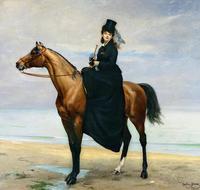
Equestrian Portrait of Mademoiselle Croizette
Carolus-Duran
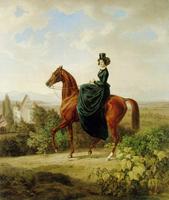
Countess Caroline von Waldbott-Bassenheim, b. Oettingen-Wallerstein on horseback on a hill near Leutstetten; in the background Leutstetten Castle
Albrecht Adam
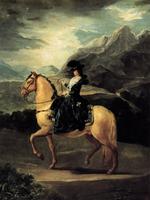
Portrait of Maria Teresa de Vallabriga on horseback
Francisco Goya
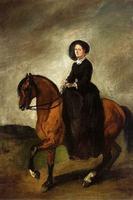
Artist's Daughter on Horseback
Piotr Michałowski
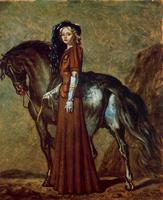
An Amazon
Giorgio de Chirico
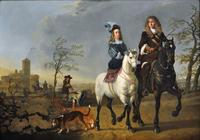
Lady and Gentleman on Horseback
Aelbert Cuyp
Portrait of K. A. and M. Ya. Narishkin
Karl Bryullov
Dama a Caballo
José Campeche
Equestrian portrait of Maria Luisa of Parma
Francisco Goya
Lady in White Dress on Horseback Riding
Max Slevogt
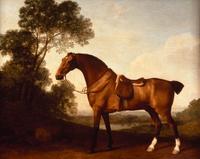
A Saddled Bay Hunter
George Stubbs
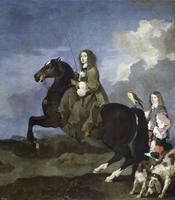
Equestrian portrait of Christina, Queen of Sweden
Sebastien Bourdon
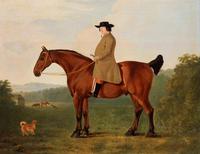
Robert Bakewell
John Boultbee
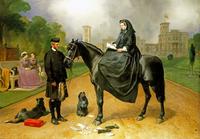
Queen Victoria at Osborne House
Edwin Henry Landseer
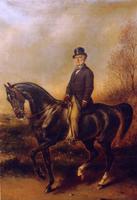
Portrait équestre de François Adolphe Akermann
Franz Xaver Winterhalter
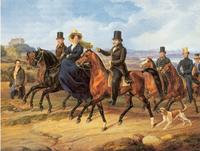
Cavalcade in front of Heiligenberg Castle Prince Karl Egon II of Fürstenberg and Amalie, b. Princess of Baden
Albrecht Adam
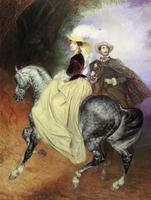
Portrait of Ye. Mussart and E. Mussart. (Riders)
Karl Bryullov
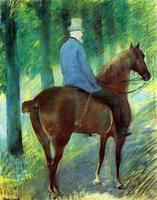
Mr. Robert S. Cassatt on Horseback
Mary Cassatt
Portrait of Maria Anna of Neuburg
Luca Giordano
King Charles II and Jane Lane Riding to Bristol
Isaac Fuller