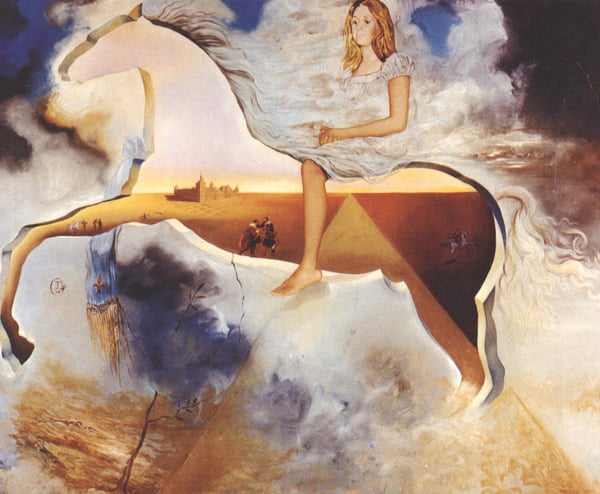
Equestrian Portrait of Carmen Bordiu-Franco
Details
Expert analysis of Salvador Dali’s Equestrian Portrait of Carmen Bordiu-Franco
Style: Surrealism · Genre: portrait
Expert Analysis: "Equestrian Portrait of Carmen Bordiu-Franco" (c. 1970s–80s) by Salvador Dalí
Painted during Dalí’s Classic Period (1941–1989), this work represents a fascinating convergence of the artist’s late technical virtuosity, his enduring engagement with Surrealism, and his controversial flirtation with Francoist Spain. While the given facts classify it as a portrait within the Surrealist movement, its significance lies in how Dalí subverts a centuries-old aristocratic genre—the equestrian portrait—to serve both traditional and iconoclastic ends.
Stylistic and Period Context:
During his Classic Period, Dalí returned to Old Master techniques—precise draftsmanship, luminous glazes, and balanced composition—while infusing them with surrealist incongruity. Here, the portrait format is outwardly conventional: Carmen Bordiu-Franco (the granddaughter of General Francisco Franco) is depicted astride a horse, a pose that echoes Baroque and Neoclassical royal portraits (e.g., Velázquez’s Equestrian Portrait of Philip IV). Yet Dalí destabilizes the dignity of that tradition. The horse’s elongated neck and distorted anatomy introduce a dreamlike, almost Dantesque quality; the background dissolves into atmospheric ambiguity rather than a clear battlefield or landscape. This tension between classical finish and surrealist dislocation is quintessential of Dalí’s late style.
Significance Within Surrealism:
The painting is significant because it demonstrates Surrealism’s ability to absorb and critique political power through visual language. By choosing Franco’s granddaughter—a member of a regime Dalí both admired and parodied—Dalí blurs the line between flattery and satire. The rider’s face is rendered with idealized clarity, but the horse’s unnatural posture and the void-like backdrop suggest a world unmoored from reality. This dual reading is a hallmark of Dalí’s Surrealism: the work can be seen as a traditional homage or as a subtle critique of Franco’s repressive apparatus, depending on the viewer’s perspective.
Artistic Legacy:
Within Dalí’s oeuvre, this portrait exemplifies his late fascination with “nuclear mysticism” and his desire to merge science, religion, and history into a single canvas. The equestrian motif—a recurring Dalínian symbol for power, conquest, and erotic energy—is here domesticated but still charged with psychological tension. The painting’s significance is further heightened by its subject: it documents Dalí’s complex, often opportunistic relationship with the Franco regime, offering art historians a rich case study of how a Surrealist master navigated patronage and politics without abandoning his core aesthetic.
In sum, Equestrian Portrait of Carmen Bordiu-Franco is a masterful synthesis of tradition and transgression. It stands as a key work of Dalí’s Classic Period, proving that Surrealist portraiture could command the same formal rigor as its historical precedents while remaining irreducibly strange and provocative.
Visually similar
20 works with related composition and palette
Rock and Infuriated Horse Sleeping Under the Sea
Salvador Dali
Untitled -The Seven Arts
Salvador Dali
The Horseman of Death
Salvador Dali
Horses with riders
Giorgio de Chirico
Salamander
Kit Williams
Brunhild (The Valkyrie)
Odilon Redon
The horses of Apollo
Giorgio de Chirico
Fantasy
Kuzma Petrov-Vodkin
Selflessly She Gives Herself for the Promulgation of Her Kind
Kent Monkman
Thirsty Warrior
Kuzma Petrov-Vodkin
The divine horses
Giorgio de Chirico
War or the Ride of Discord
Henri Rousseau
Horse Frightened by a Storm
Eugene Delacroix
Bathing of a Red Horse
Kuzma Petrov-Vodkin
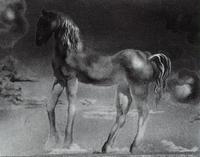
The Unicorn (unfinished)
Salvador Dali
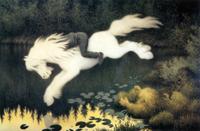
Gutt Paa Hvit Hest
Theodor Severin Kittelsen
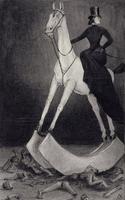
The Lady on the Horse
Alfred Kubin
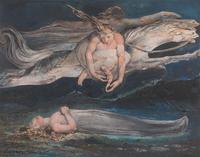
Illustration to Dante's Divine Comedy (Pity)
William Blake
Mounting the ebony horse...
Marc Chagall
Amazonas
Marie-Thérèse Auffray