
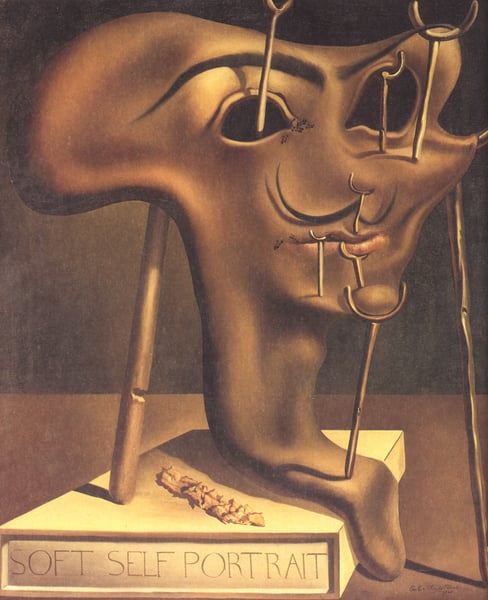
Soft Self-Portrait with Fried Bacon
Details
Expertenanalyse zu Salvador Dalis Soft Self-Portrait with Fried Bacon
Stil: Surrealism · Genre: self-portrait
Expert Analysis: "Soft Self-Portrait with Fried Bacon" (1941) by Salvador Dalí
This work is a striking example of Dalí’s Classic Period (1941–1989), a phase in which he fused his signature surrealist techniques with a revival of Renaissance composition and Catholic symbolism, while never abandoning his irreverent wit. Painted during his self-imposed exile in the United States, the piece demonstrates Dalí’s mature mastery of psychological metamorphosis—a hallmark of his paranoiac-critical method—and his ongoing fascination with the fragility of identity.
Formal and Symbolic Analysis: The portrait presents Dalí’s face as a melting, boneless structure supported by a set of crutches—an iconic motif from his earlier work now rendered with the polished, illusionistic precision of the Old Masters. The “softness” evokes the disintegration of the ego, a surrealist meditation on the instability of the self. Yet the inclusion of fried bacon draped over the face introduces a jarringly tactile, edible element. This deliberate, clashing juxtaposition—the sublime liquefaction of the human visage against the crisp, greasy bacon—epitomizes Dalí’s method of “irrational association.” The bacon also serves as a sly personal signature: Dalí famously adored fried foods and often employed them as props (e.g., in his “Autumn Cannibalism”), linking the ordinary to the uncanny.
Significance within Surrealism and the Classic Period: During the 1940s, many surrealists fled to America, and Dalí’s work became increasingly polished, theatrical, and self-referential. “Soft Self-Portrait” is a landmark of this shift: it retains the dream-like logic of early surrealism but channels it through a baroque, nearly academic finish. The work also prefigures Dalí’s later “nuclear mysticism,” in which he sought to fuse science, religion, and psychological fragmentation. Here, the soft face—an obvious nod to his “The Persistence of Memory”—is recontextualized as a portrait of the artist himself, making the dissolution of time a personal, existential statement.
Why It Matters: The painting is significant for its radical redefinition of self-portraiture. Instead of a fixed likeness, Dalí offers a process—the constant melting, supporting, and layering of identity with everyday absurdity (bacon). It encapsulates his belief that the self is not a solid entity but a performance held up by external props (crutches) and disrupted by base appetites (food). In the context of the Classic Period, it demonstrates how Dalí adapted surrealist strategies to critique modern anxiety while embracing a highly controlled, meticulous technique—a balance that would influence later postmodern and pop-surrealist art.
Museum / Gallery
Visuell ähnlich
20 Werke mit ähnlicher Komposition und Farbpalette
Sleep
Salvador Dali
The Dream of Venus
Salvador Dali
Salvador Dali Shiny
Tadas Sokolovas
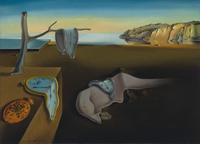
The Persistence of Memory
Salvador Dali
Melting Watch
Salvador Dali
The Disintegration of the Persistence of Memory
Salvador Dali
Anthropomorphic Bread
Salvador Dali
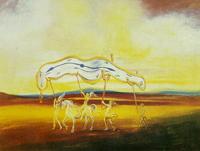
Wounded Soft Watch
Salvador Dali
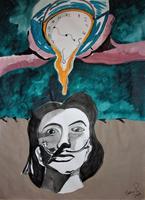
Dalí eterno
Martin Pereira
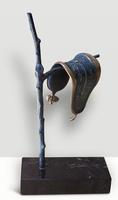
The Persistence of Memory
Salvador Dali
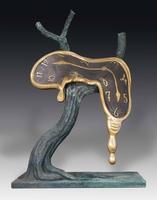
Profile of Time
Salvador Dali
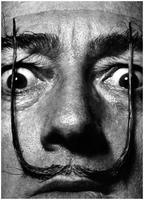
Salvador Dali
Philippe Halsman
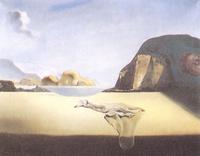
The Transparent Simulacrum of the Feigned Image
Salvador Dali
galería esquizofrénica nº5
Martin Pereira
Salvador Dali B/W Proyectado
Loutphi
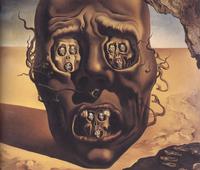
The Face of War
Salvador Dali
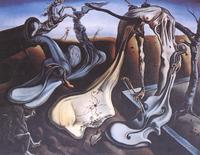
Spider Of The Evening
Salvador Dali
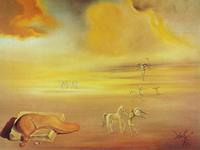
Angelic Landscape
Salvador Dali
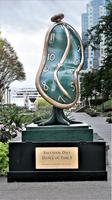
Dance of Time I
Salvador Dali
Woman Sleeping in a Landscape
Salvador Dali