
Expertenanalyse zu Pierre Bonnards Misia
Stil: Post-Impressionism · Genre: portrait
Expert Analysis: Misia by Pierre Bonnard (Post-Impressionism)
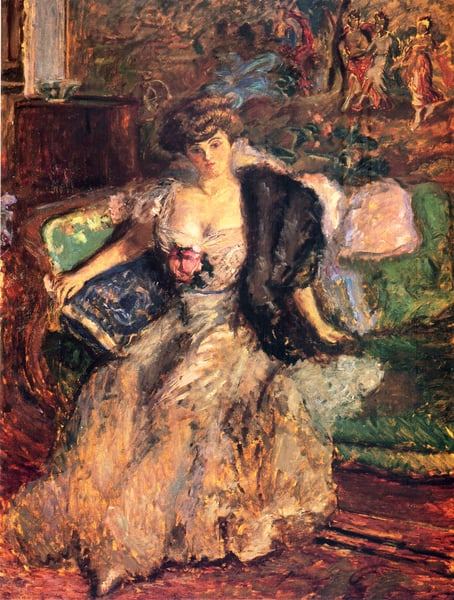
Pierre Bonnard’s portrait of Misia Sert – the celebrated Polish pianist, patron, and muse of the Belle Époque – stands as a quintessential example of Post-Impressionism’s shift from objective representation to subjective emotion. Painted during his Nabi period, the work transcends mere likeness, prioritizing color, pattern, and atmosphere over academic draftsmanship.
Significance within Post-Impressionism:
- Color as emotion: Bonnard uses a glowing, almost Fauve-like palette – warm ochres, pinks, and deep blues – not to describe reality, but to convey Misia’s magnetic presence and the intimacy of the moment. The brushwork is fluid, with dabs of pure color that shimmer, reflecting the artist’s interest in sensory experience.
- Flattened space & decorative composition: The background dissolves into decorative patterns (wallpaper, fabric), collapsing depth – a hallmark of Nabi aesthetics inspired by Japanese prints and Gauguin’s synthetism. This anti-naturalistic approach frees the portrait from literal space, making it a psychological mood-piece.
- Intimate, unguarded posture: Misia is not posed formally; she appears caught in a private reverie, her gaze averted. Bonnard captures fleeting interiority – a Post-Impressionist preoccupation with the invisible life of the sitter, rather than social status.
Why it matters: Misia exemplifies how Bonnard, alongside Vuillard and Denis, redefined portraiture after Impressionism. It rejects the detached objectivity of Manet for a lyrical subjectivity, where color and texture become the true subject. The work’s enduring influence lies in its proof that a portrait can be both a document of a person and a poem of light and color – a legacy that would later inspire the intimate chromatic worlds of Matisse and the Nabis’s decorative heirs.
Museum / Gallery
Visuell ähnlich
20 Werke mit ähnlicher Komposition und Farbpalette
Misia
Pierre Bonnard

Portrait of Susan Watkins
William Merritt Chase
Mrs. Kate A More
John Singer Sargent

The Lady in Pink (Portrait of Olivia Concha de Fontecilla)
Giovanni Boldini

Mrs. Leeds, the later Princess Anastasia of Greece (and Denmark)
Giovanni Boldini
Young Woman in Grey Reclining
Berthe Morisot
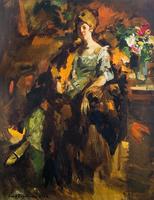
Woman portrait
Konstantin Korovin
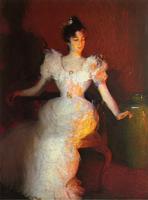
Firelight
Frank W. Benson
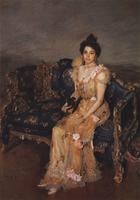
Portrait of Sofia Mikhailovna Botkina
Valentin Serov
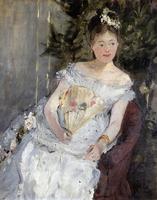
Portrait of Marguerite Carre (also known as Young Girl in a Ball Gown)
Berthe Morisot
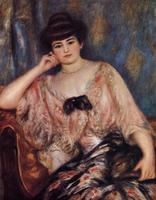
Misia
Pierre-Auguste Renoir
After The Ball
Julius LeBlanc Stewart
Queen Victoria Eugenia of Spain
Joaquín Sorolla
Woman in Black
Berthe Morisot
Portrait of Maria Akimova
Valentin Serov
Before the ball
Boris Kustodiev
The Yellow Screen
Lilla Cabot Perry
Lillie
Childe Hassam
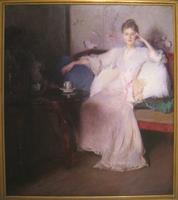
Arrangement in Pink and Gray (Afternoon Tea)
Edmund Charles Tarbell
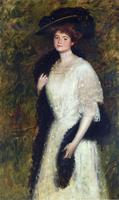
Ms. Helen Dixon
William Merritt Chase