
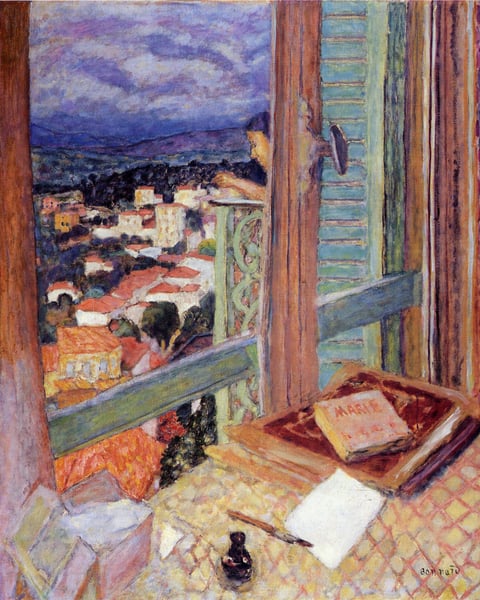
Expert analysis of Pierre Bonnard’s The Window
Style: Intimism · Genre: interior
Analysis of "The Window" by Pierre Bonnard
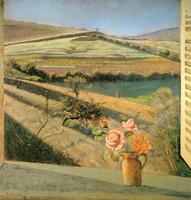
Bonnard's The Window exemplifies the principles of Intimism—a turn-of-the-century movement that elevates private, domestic scenes into profound meditations on perception and memory. As an interior scene, the painting is significant for its radical flattening of space: the window frame dissolves the boundary between inside and out, merging the room’s tactile warmth with the luminous, almost abstract view beyond. Bonnard’s characteristic use of jewel-like color—filtered light suffusing curtains, furniture, and sky—creates a hazy, dreamlike atmosphere that prioritizes sensory experience over strict representation. The work’s enduring importance lies in how it transforms a mundane domestic moment into a psychological landscape, anticipating later 20th-century concerns with subjectivity and the fluidity of visual boundaries.
Visually similar
20 works with related composition and palette
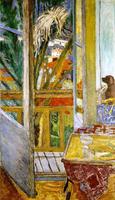
The door window with dog
Pierre Bonnard
Modok Mária, Kilátás Az Erkélyről
Modok Mária
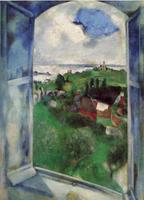
The Window
Marc Chagall
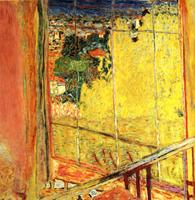
The workshop with Mimosa
Pierre Bonnard
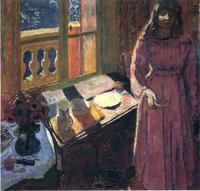
The Bowl of Milk
Pierre Bonnard
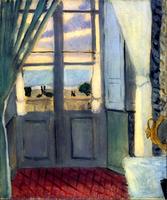
The Closed Window
Henri Matisse
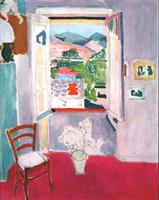
Open Window at Collioure
Henri Matisse
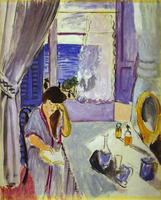
Woman Reading at a Dressing Table (Interieur, Nice)
Henri Matisse
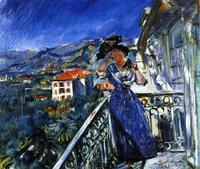
On the Balcony in Bordighera
Lovis Corinth
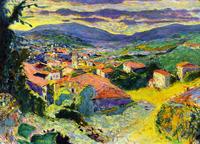
Landscape at Le Cannet
Pierre Bonnard
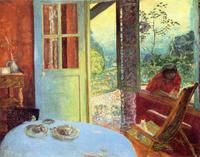
The Dining Room in the Country
Pierre Bonnard
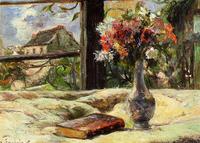
Still life. Vase with flowers on the window
Paul Gauguin
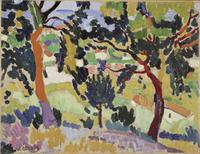
L'Estaque
Andre Derain
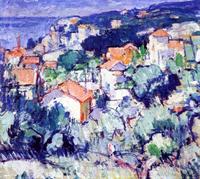
Landscape, South of France
Samuel Peploe
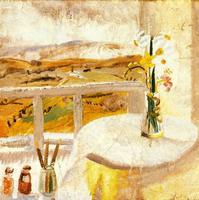
Bedroom Window, Bankshead
Winifred Nicholson
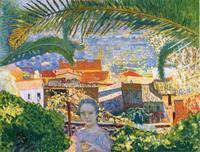
The Palm
Pierre Bonnard
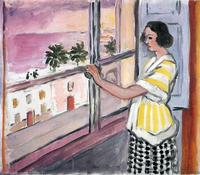
Young Woman at the Window, Sunset
Henri Matisse
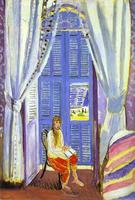
The French Window at Nice
Henri Matisse
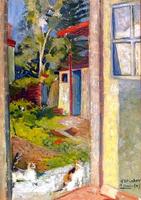
Way to the Garden
Stanley Pinker
The bouquet of roses on the window
Balthus