Analisi esperta di Grosbeak and mirabilis di Katsushika Hokusai
Stile: Ukiyo-e · Genere: bird-and-flower painting
Expert Analysis: "Grosbeak and Mirabilis" by Katsushika Hokusai
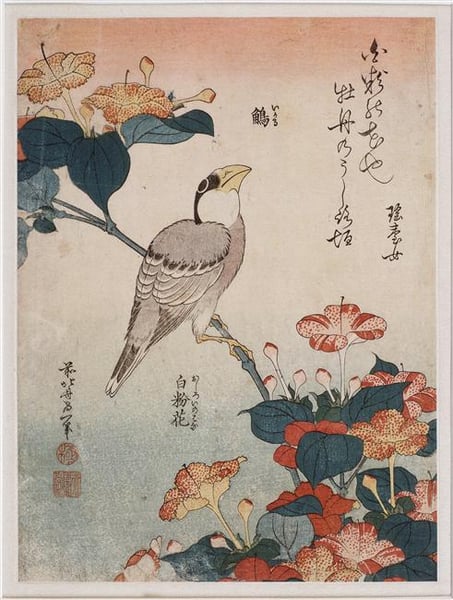
This exquisite kachō-e (bird-and-flower print) exemplifies Hokusai’s extraordinary command of the Ukiyo-e tradition, moving beyond his iconic landscapes to reveal a masterful, intimate study of the natural world. While Hokusai is best known for the dynamic force of The Great Wave, this work demonstrates his quieter yet equally revolutionary approach to composition and observation.
Significance within Ukiyo-e and the Kachō-e Genre:
-
Naturalism and Precision: Hokusai's rendering of the grosbeak is remarkable for its anatomical accuracy—note the subtle curvature of the beak, the layered feather textures, and the alert, poised stance. This reflects a shift in Ukiyo-e from decorative stylization to a more empirical, almost scientific curiosity about nature, influenced by his lifelong study of Chinese painting and Western perspective.
-
Harmony of Line and Flat Color: The composition balances the sinuous, organic line of the mirabilis (four-o'clock flower) with the solid, anchored form of the bird. The leaves and blossoms arc with a rhythmic, almost calligraphic flow, while the bird’s profile is rendered with sharp, crisp outlines—a hallmark of Hokusai’s mature style. The flat, unmodulated colors (subtle blues, greens, and warm yellows) create a serene, two-dimensional plane that still conveys depth through overlapping shapes.
-
Asymmetrical Elegance: True to Ukiyo-e principles, the subject is deliberately off-center, with the mirabilis sweeping diagonally from the lower right. This asymmetry invites the viewer’s eye to wander, creating a sense of spontaneous life—as if the scene was captured in a fleeting moment. It echoes the karajishi (Chinese-style dynamic balance) that Hokusai often employed.
-
Artistic Durability: This piece, likely from Hokusai’s later period (circa 1830s), shows his ability to invest a simple genre scene with the same structural rigor and emotional weight as his grand landscapes. The grosbeak’s focused gaze and the flower’s delicate bloom together symbolize the shasei (sketching from life) ideal that would later influence the shin-hanga (new print) movement.
Conclusion: Grosbeak and Mirabilis is significant not as an outlier in Hokusai’s oeuvre, but as a testament to his versatility. It transforms a humble bird and flower into a masterpiece of rhythm, observation, and serene vitality—demonstrating that Ukiyo-e’s true power lies not only in spectacle, but in the profound stillness of nature perfectly observed.
Museum / Gallery
Visivamente simili
20 opere con composizione e palette affini
Sparrow and magnolia
Katsushika Hokusai
Cuckoo and Azaleas
Katsushika Hokusai
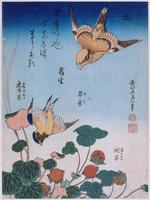
Swallow and begonia and strawberry pie
Katsushika Hokusai
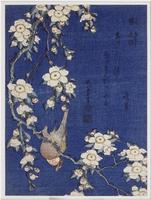
Bullfinch and weeping cherry blossoms
Katsushika Hokusai
Small Bird on a Branch of Kaidozakura
Hiroshige
Small Bird on a Branch of Kaidozakura
Hiroshige
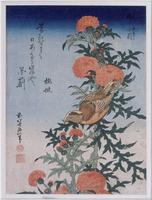
Crossbill and Thistle
Katsushika Hokusai
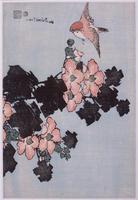
Hibiscus and Sparrow
Katsushika Hokusai
Morning Glory
Shibata Zeshin
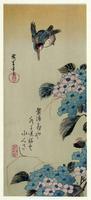
Hydrangea and Kingfisher
Hiroshige
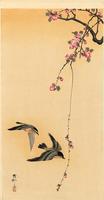
Cherry blossom with birds
Ohara Koson
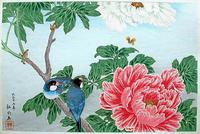
Peony and Paddy-birds
Shotei Takahashi
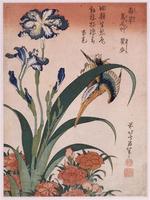
Kingfisher, carnation, iris
Katsushika Hokusai
Bindweed, dodder
Qi Baishi
Camellia and Bush Warbler
Hiroshige
Canary and Peony
Katsushika Hokusai
Bindweed and grapes
Qi Baishi
Gallinule Bird and Water Strider
Ohara Koson
Yellow bird and cotton rose
Hiroshige
Volubilism and Pippin
Katsushika Hokusai