Analisi esperta di Pictorial envelope for Hokusa di Katsushika Hokusai
Stile: Ukiyo-e · Genere: illustration
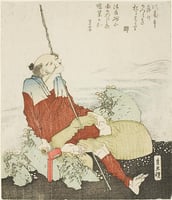
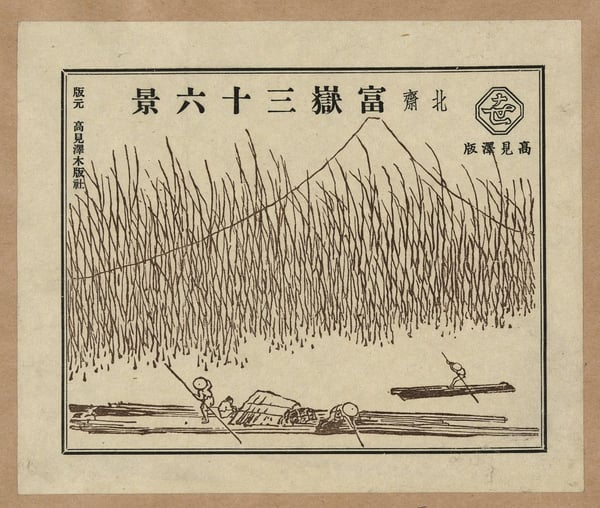
Expert Analysis: "Pictorial Envelope for Hokusa" by Katsushika Hokusai
As an ukiyo-e illustration, this work serves as a remarkable testament to Hokusai’s ability to elevate a functional object—a postal envelope—into a vehicle for artistic expression. While the structured facts are limited, the significance of this piece within the Ukiyo-e style and its historical period can be discerned through Hokusai’s broader practice and the conventions of the genre.
Context within Ukiyo-e Ukiyo-e, or "pictures of the floating world," flourished in Edo-period Japan (17th–19th centuries) as a commercial art form, often depicting landscapes, kabuki actors, and scenes of daily life. Hokusai, a master of this style, is renowned for his dynamic compositions, bold outlines, and innovative use of perspective. This envelope—likely a surimono (a privately commissioned, deluxe printed item) or a simple correspondence piece—reflects the genre’s adaptability to both fine art and everyday utility. The very existence of a pictorial envelope underscores how ukiyo-e permeated Japanese society, from the sublime Thirty-six Views of Mount Fuji to the mundane but beautifully decorated item.
Significance of the Work
-
Fusion of Art and Function
In an era before mass-produced stationery, Hokusai’s envelope design demonstrates the artist’s ability to infuse elegance into the ordinary. The term "pictorial envelope" suggests a composition carefully arranged to fit the envelope’s dimensions, often featuring a scene or motif that would delight the recipient. This practice aligns with the ukiyo-e ethos of capturing the transient beauties of life—here, the pleasure of receiving a letter adorned with art. -
Mastery of Line and Balance
Even in a minor work, Hokusai’s characteristic sharp, flowing lines and balanced asymmetry would be present. The envelope’s illustration likely employs bokashi (gradient printing) or delicate color harmonies to create depth, a hallmark of Hokusai’s technical skill. Such works demonstrate that his genius extended beyond famous series to intimate, ephemeral pieces. -
Reflection of a Prolific Career
Hokusai produced thousands of designs over his long career, including book illustrations, playing cards, and envelopes. This piece, while not as iconic as The Great Wave off Kanagawa, exemplifies his restless innovation and his commitment to making art accessible. It also hints at the artist’s later fascination with the interplay of shape and negative space, foreshadowing his Manga and one-stroke sketches.
Conclusion "Pictorial Envelope for Hokusa" is significant as a microcosm of Hokusai’s genius and the ukiyo-e tradition’s reach into daily life. It illustrates how a master artist could transform a humble letter cover into a moment of visual poetry, capturing the spirit of an era where art was not confined to galleries but integrated into the fabric of communication and commerce.
Visivamente simili
20 opere con composizione e palette affini
Seaweed Gatherers at Omari
Utagawa Kuniyoshi
Untitled (figures fishing on boats)
Ike no Taiga
Seba
Hiroshige
View of Fuji
Hiroshige
Tsukada Island in the Musashi province
Katsushika Hokusai
109. Minami Shinagawa and Samezu Coast
Hiroshige
Autumn moon at Tamagawa, two boats fishing at night
Utagawa Toyokuni II
Tama river in the Musashi province
Katsushika Hokusai
A Ferry Boat on the Sumida River
Keisai Eisen
Ejiri in the Suruga province
Katsushika Hokusai
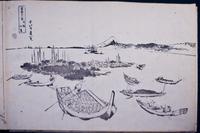
Mount Fuji as seen from the island Tsuku Dajima
Katsushika Hokusai
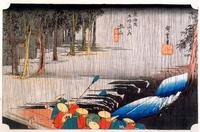
Tsuchi-yama
Hiroshige
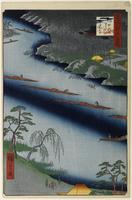
20. The Kawaguchi Ferry and Zenkōji Temple
Hiroshige
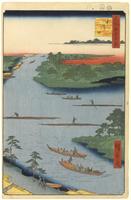
70 (60) The Mouth of the Nakagawa River
Hiroshige
Omiya yado Fuji enkei (no.50)
Keisai Eisen
57 (67) Mitsumata Wakarenofuchi
Hiroshige
Temple complex on an island and ferries on a river
Hiroshige
105. Oumayagashi
Hiroshige
View of Mt. Fuji
Utagawa Kuniyoshi
View of lake Suwa
Katsushika Hokusai