Expert analysis of Katsushika Hokusai’s Tengu
Style: Ukiyo-e · Genre: mythological painting
Expert Art Historical Analysis: Tengu by Katsushika Hokusai
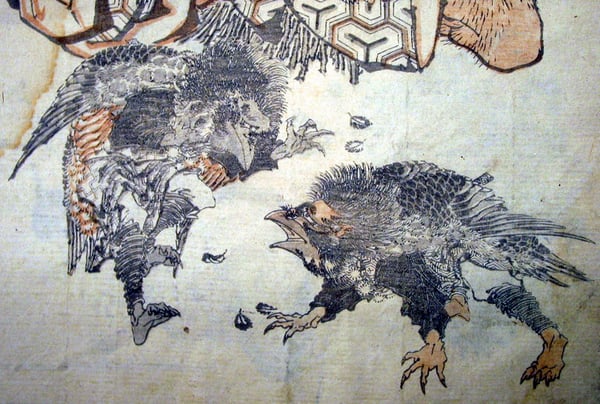
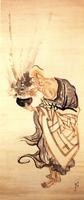
Katsushika Hokusai, the master of ukiyo-e, is best known for his iconic The Great Wave off Kanagawa, but his mythological subjects reveal a profound engagement with Japanese folklore and supernatural iconography. In Tengu, Hokusai presents a creature from the Shinto and Buddhist folk traditions—a goblin-like being with a long nose and bird-like features, often considered a minor deity or a mischievous spirit of the mountains.
Significance within Ukiyo-e and Mythological Painting:
-
Synthesis of Folklore and Print Aesthetics: Hokusai’s Tengu exemplifies how ukiyo-e artists brought legendary beings into the realm of popular visual culture. During the Edo period, tengu were widely depicted in illustrated books, theatrical prints, and single-sheet images. Hokusai elevates the figure through his distinctive linework, dynamic pose, and careful attention to the creature’s expressive, almost human-like face, bridging the gap between supernatural terror and everyday familiarity.
-
Mastery of Line and Form: The print showcases Hokusai’s hallmark clarity of contour and sinuous, calligraphic lines. The tengu’s wings, robes, and talons are rendered with a rhythmic flow that conveys movement and otherworldly energy. This technical virtuosity—blending bold outlines with subtle pattern details—was revolutionary for ukiyo-e and influenced later artists both in Japan and in the West.
-
Cultural Resonance and Symbolism: Tengu were ambiguous figures—sometimes protective, sometimes tricksters. Hokusai captures this duality: the creature’s stern, knowing expression and its exaggerated nose (a traditional sign of arrogance or martial prowess) suggest a being with both wisdom and wildness. By isolating the tengu against a minimal background (typical of ōban size prints), Hokusai forces the viewer to confront the creature’s uncanny presence, making the mythological feel immediate and personal.
-
Contribution to Hokusai’s Larger Oeuvre: While Hokusai is celebrated for landscapes, his Tengu and other supernatural works demonstrate his commitment to every genre of ukiyo-e, from bijin-ga (beautiful women) to yakusha-e (actor prints) and musha-e (warrior prints). This print is a testament to his versatility and his role in codifying the visual language of Japanese monsters (yōkai)—a legacy that persists in manga, anime, and global pop culture today.
Conclusion: Tengu is significant not only as a fine example of Hokusai’s technical skill but also as a key document of how ukiyo-e democratized myth, turning an ancient spirit into a vivid, accessible image that still captivates audiences. Its blend of folkloric depth, artistic precision, and dynamic storytelling marks it as a standout within both Hokusai’s career and the broader tradition of Japanese mythological painting.
Visually similar
20 works with related composition and palette
Drawing of a tengu
Katsushika Hokusai
Oni pelted by beans
Katsushika Hokusai
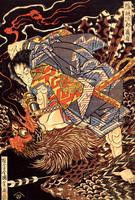
Oki no Jiro Hiroari killing a monstrous tengu
Utagawa Kuniyoshi
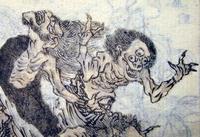
Multi-eyed Oni
Katsushika Hokusai
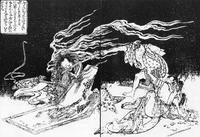
Vengeful ghost that manifests in physical (rather than spectral) form
Katsushika Hokusai
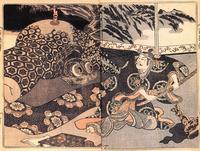
New edition of the life of a hundred generals
Utagawa Kuniyoshi
Rokurokubi
Katsushika Hokusai
A woman makes a cursing ritual ceremony
Katsushika Hokusai
Head of an old man
Katsushika Hokusai
The Underwater Fight
Tsukioka Yoshitoshi
Visit at the crane hunt
Toyohara Chikanobu
Minamoto Yorimitsu also known as Raiko
Utagawa Kuniyoshi
Sumo Wrestlers
Katsushika Hokusai
Postal Tengu
Tsukioka Yoshitoshi
Yamamoto Kansuke fighting a giant boar
Utagawa Kuniyoshi
Night March of a Hundred Demons (detail)
Tosa Mitsuoki
Apparition of the monstrous cat
Utagawa Kuniyoshi
Yama-uba
Katsushika Hokusai
The arhat Handaka
Utagawa Kuniyoshi
Laughing demon
Katsushika Hokusai