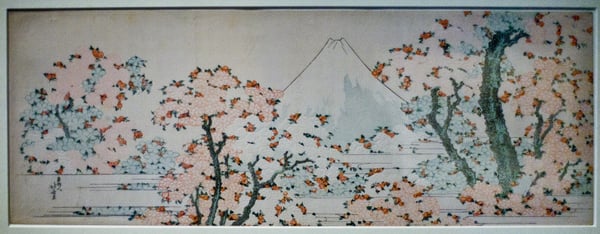
View on Mount Fuji between flowerin trees
Analisi esperta di View on Mount Fuji between flowerin trees di Katsushika Hokusai
Stile: Ukiyo-e · Genere: landscape
Expert Analysis: "View on Mount Fuji between flowering trees" by Katsushika Hokusai
This woodblock print, executed in the ukiyo-e style, exemplifies Hokusai’s mastery of the landscape genre and his iconic reverence for Mount Fuji. Although not as globally famous as The Great Wave off Kanagawa, this work shares the same series—Thirty-six Views of Mount Fuji—and demonstrates Hokusai’s innovative approach to composition and perspective.
Significance within Ukiyo-e and the Landscape Genre
The artwork is significant for its sophisticated use of foreground framing to create depth, a technique borrowed from Western linear perspective yet seamlessly integrated with Japanese decorative flatness. Here, the flowering trees (likely cherry or plum blossoms, evoking spring) form a natural arch through which Mount Fuji is glimpsed in the distance. This “borrowed scenery” (shakkei) device not only guides the viewer’s eye toward the sacred peak but also contrasts the ephemeral beauty of blossoms with Fuji’s eternal, snow-capped stability—a core theme in Hokusai’s work.
Compositional Innovation
Hokusai deliberately places Fuji off-center, partially obscured by the trees, which emphasizes its monumental presence rather than diminishing it. The tree trunks and branches create rhythmic, asymmetrical patterns typical of ukiyo-e’s bold silhouettes, while the distant mountain is rendered in softer, gradating blue and white—a hallmark of Hokusai’s Prussian blue (bero-ai) technique. This juxtaposition of crisp foreground detail and atmospheric perspective was revolutionary for Japanese printmaking and directly influenced later Impressionists (e.g., Monet’s Wisteria series).
Cultural and Artistic Legacy
The work reflects the ukiyo-e fascination with meisho-e (pictures of famous places), but Hokusai elevates it by transforming a simple view into a meditation on nature’s cycles and human perception. The flowering trees also allude to the transient joy of ukiyo (“the floating world”), making this print both a precise topographical study and a poetic symbol of Japan’s spiritual identity. Through such images, Hokusai secured Mount Fuji as the enduring icon of Japanese art, bridging the traditional yamato-e landscape sensibility with a modern, global visual language.
Visivamente simili
20 opere con composizione e palette affini
Mount Fuji seen through cherry blossom
Katsushika Hokusai
Fuji Blue
Katsushika Hokusai
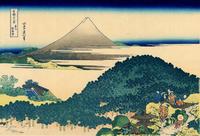
The coast of seven leages in Kamakura
Katsushika Hokusai
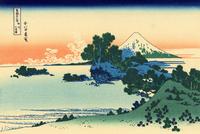
Shichiri beach in Sagami province
Katsushika Hokusai
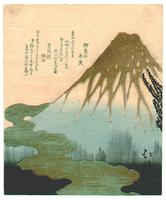
Mt. Fuji Above the Clouds, copy after Hokkei's print from the set of Three Lucky Dreams
Toyota Hokkei
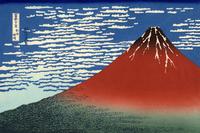
Fuji, Mountains in clear Weather (Red Fuji)
Katsushika Hokusai
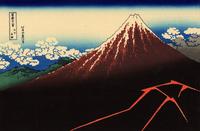
Rainstorm beneath the Summit
Katsushika Hokusai
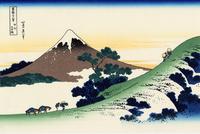
Inume pass in the Kai province
Katsushika Hokusai
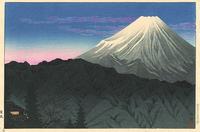
Fuji from Hakone
Shotei Takahashi
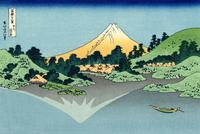
The Fuji reflects in Lake Kawaguchi, seen from the Misaka pass in the Kai province
Katsushika Hokusai
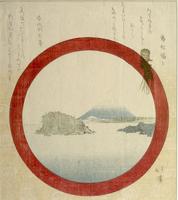
FUJI AND ENOSHIMA THROUGH A ROUND WINDOW
Toyota Hokkei
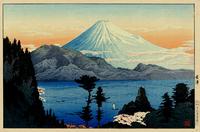
Fuji from Kurasawa
Shotei Takahashi
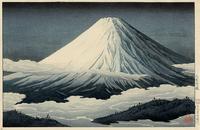
Nearby Omuro
Shotei Takahashi
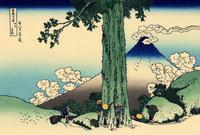
Mishima pass in Kai province
Katsushika Hokusai
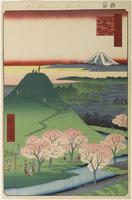
24. New Fuji in Meguro
Hiroshige
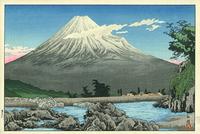
Fuji River
Shotei Takahashi
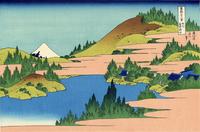
The lake of Hakone in the Segami province
Katsushika Hokusai
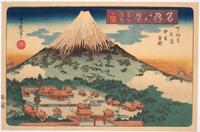
Evening Snow on Fuji from a set of Eight Famous Views published by Iseya Rihei
Utagawa Toyokuni II
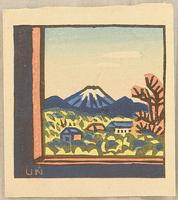
Mt. Fuji
Unichi Hiratsuka
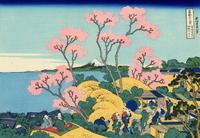
The Fuji from Gotenyama at Shinagawa on the Tokaido
Katsushika Hokusai