
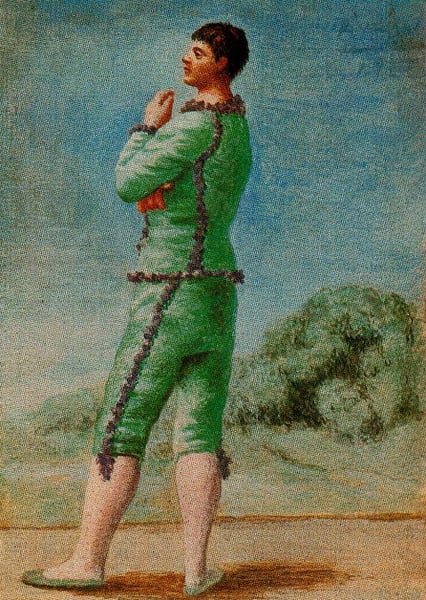
Acrobat
Details
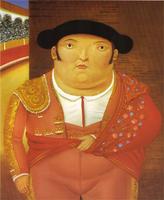
Deskundige analyse van Acrobat van Pablo Picasso
Stijl: Neoclassicism · Genre: portrait
Expert Analysis of Pablo Picasso’s "Acrobat"
Style & Period Context:
"Acrobat" belongs to Picasso’s Neoclassicist & Surrealist Period, a phase in which the artist oscillated between two seemingly opposing modes: the disciplined, idealized forms of Neoclassicism and the dreamlike, irrational impulses of Surrealism. As a portrait executed in a Neoclassical style, this work is significant precisely for how it navigates that tension.
Significance within Neoclassicism:
The Neoclassical traits—balanced composition, clear contour lines, and a sense of sculptural volume—lend the acrobat a monumental, timeless dignity. Picasso here returns to the classical humanism of Ingres and Greek sculpture, but with a modern twist. The subject is not a mythological hero but a performer, grounding lofty classical ideals in the everyday world of the circus. This democratization of Neoclassical gravity makes the work a pivotal bridge between tradition and modernity.
Significance within the Surrealist Context:
Though executed in a Neoclassical idiom, the portrait emerges during Picasso’s Surrealist engagement. The acrobat’s pose—poised yet precarious—hints at the transitory, irrational experience of the performer’s life. The discipline of the classical shell contains a surreal energy: the figure seems both solid and on the verge of dissolving into gesture. This duality is the work’s core innovation. Picasso uses the clarity of Neoclassicism to make the uncanny feel tangible, a hallmark of his ability to merge psychological depth with formal mastery.
Why It Matters:
"Acrobat" is not simply a neoclassical portrait; it is a dialogue between order and disorder within a single image. By applying Neoclassical structure to a surreal subject (a circus performer at the edge of reality), Picasso demonstrates that classical rigor can house the fantastical. This synthesis prefigures later surrealist portraiture while reaffirming the enduring relevance of classical ideals in the 20th century.
Museum / Gallery
Visueel vergelijkbaar
20 werken met verwante compositie en kleurenpalet
Figaro, from ''The marriage de Figaro''
Émile Bayard
A matador
Edouard Manet
Toreador's toilet
Eduardo Zamacois
Sebastia Junyer-Vidal as matador
Pablo Picasso
Victorine Meurent in the costume of an Espada
Edouard Manet
Matador
Fernando Botero
Young Guitarist Standing
Pierre-Auguste Renoir
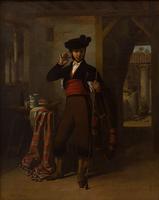
Andalusian Knight
Joaquín Domínguez Bécquer
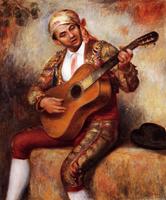
The Spanish Guitarist
Pierre-Auguste Renoir
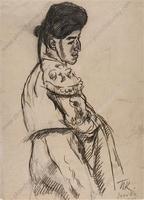
Sevilla. Matador.
Pyotr Konchalovsky
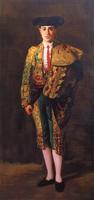
Portrait of El Matador, Felix Asiego
Robert Henri
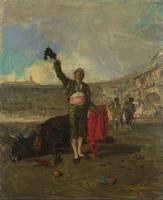
Tribute of the sword
Marià Fortuny
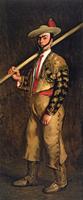
El Picador (Antonio Baños Calero)
Robert Henri
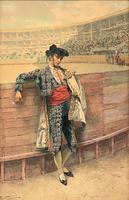
The bullfighter
Ramón Tusquets y Maignon
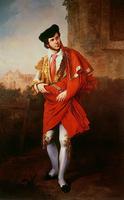
Portrait of a Bullfighter
Antonio Cabral Bejarano
Offering the Panel to the Bullfighter
Mary Cassatt
A rest during the bullfight
Joaquín Agrasot
The picador in La Maestranza, Seville
John Frederick Lewis
Corrida in Ronda No. 6,
Eric Fischl
Matador
Fernando Botero