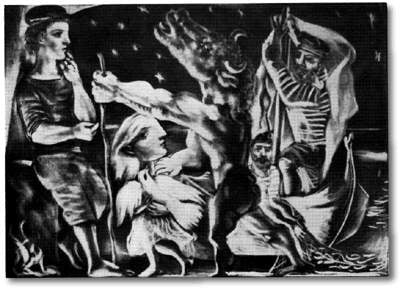
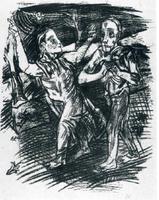
This work, painted during Picasso’s synthesis of Neoclassicism and Surrealism in the 1930s, is significant for its masterful fusion of two seemingly opposed styles. The mythological subject—the blind Minotaur—is rendered with the sculptural, idealized forms of Neoclassicism, yet the scene is charged with the dreamlike, irrational symbolism of Surrealism. The Minotaur, a recurring avatar for Picasso himself, appears vulnerable and dependent, guided by a young girl through a nocturnal landscape. This inversion of the traditional Theseus myth (where the hero slays the beast) transforms the Minotaur from a monster into a tragic figure, embodying themes of blindness, guidance, and the artist’s own inner turmoil. The juxtaposition of classical gravity and surrealist psychology makes the piece a pivotal bridge between Picasso’s earlier order and his later, more anxious explorations of human vulnerability.