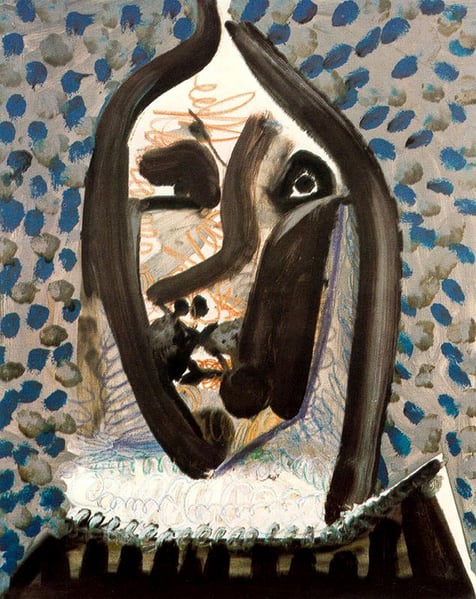
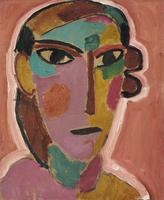
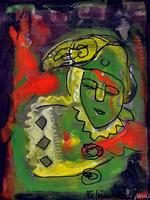
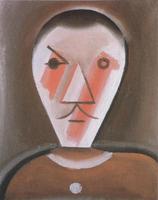
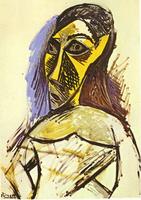
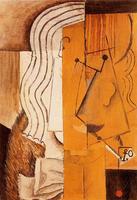
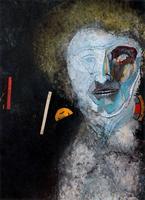
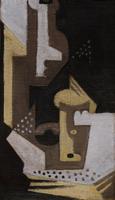
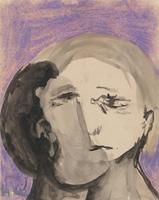
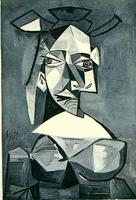
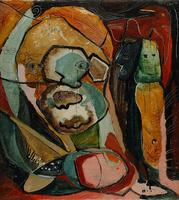
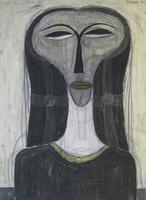
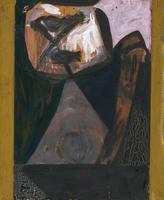
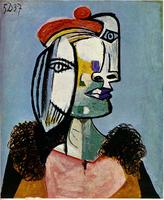
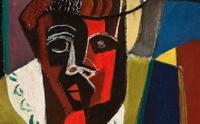
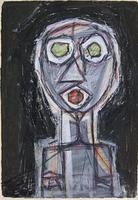
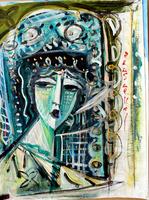
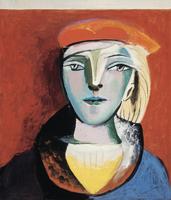
Based solely on the provided structured facts, the significance of Pablo Picasso's "Head of the man" lies in its fusion of two distinct avant-garde styles—Naïve Art (Primitivism) and Surrealism—within the traditional genre of portraiture. This combination is noteworthy because it bridges the raw, simplified forms and untutored aesthetic of Primitivism with the irrational, dreamlike distortions characteristic of Surrealism. As a portrait, the work subverts conventional representation: the “head” likely presents a face that is at once childlike in its simplicity (reflecting Naïve Art’s rejection of academic polish) and uncanny in its manipulation of anatomy (echoing Surrealism’s exploration of the subconscious). By merging these two styles, Picasso creates a portrait that is both primitive and psychologically charged, emphasizing the tension between instinctual expression and surreal transformation. This synthesis underscores the artist’s role in pushing portraiture beyond mimetic likeness into a realm of symbolic and emotional intensity, making the work a significant example of how early 20th-century modernism redefined the human image.