
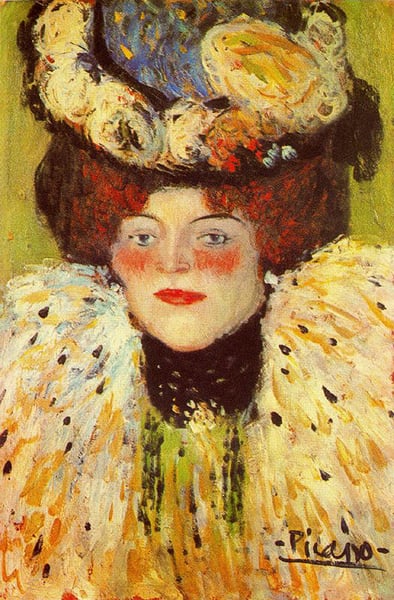
Pablo Picasso の Head of woman の専門的な分析
スタイル:Impressionism · ジャンル:portrait
Expert Analysis: "Head of Woman" by Pablo Picasso
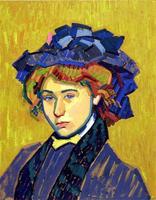
While Pablo Picasso is most celebrated for his later revolutionary contributions to Cubism and modernism, this early work, "Head of Woman," offers a rare and revealing glimpse into his formative artistic exploration. Executed in an Impressionist style during his Early Years, this portrait demonstrates Picasso’s engagement with the fleeting effects of light, color, and brushwork—principles central to Impressionism—before he would break decisively from naturalism.
Significance within Impressionism
Though Picasso is not typically associated with Impressionism, this painting shows his absorption of the movement’s core tenets. The handling of the woman’s features is not meticulous or academic; rather, loose, visible brushstrokes suggest the play of light across her face, softening contours and imbuing the portrait with a sense of immediacy. The palette likely employs vibrant, broken color—hallmarks of Monet, Renoir, and Degas—to capture a momentary impression rather than a static likeness. This places Picasso within the broader late-19th‑century Impressionist current, even as he was beginning to assimilate Symbolist and Post-Impressionist ideas.
Significance as an Early Work
As a product of Picasso’s Early Years (roughly 1895–1901), this portrait marks a crucial transitional phase. It predates his Blue Period, exhibiting none of the somber, monochromatic melancholy that would soon define his mature style. Here, Picasso is still mastering the language of modern painting, experimenting with the atmospheric effects that Impressionism made central. The choice of a woman’s head as subject also reflects the period’s fascination with the human face as a vessel for psychological nuance, yet rendered through the lens of optical sensation.
Contextual Implications
This work is significant because it contradicts the common narrative that Picasso emerged fully formed as a Cubist revolutionary. Instead, it illustrates his willingness to engage with—and then surpass—the dominant avant-garde modes of his youth. In "Head of Woman," we see a young artist absorbing Impressionism’s lessons on perception, setting the stage for the radical departures that would come just a few years later. For art historians, it serves as a crucial missing link between late 19th‑century Impressionist portraiture and the bold redefinitions of form that Picasso would soon unleash.
視覚的に類似
構図やパレットが近い作品 20 件
Profile of a young girl (Girl with red flower in her hair)
Pablo Picasso
Woman with feathered hat
Pablo Picasso
Madrilenian (Head of young woman)
Pablo Picasso
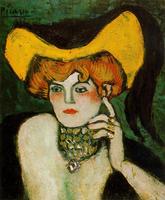
Woman with necklace of gems
Pablo Picasso
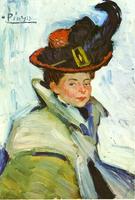
Woman with hat
Pablo Picasso
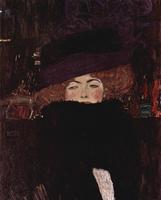
Lady with Hat and Featherboa
Gustav Klimt
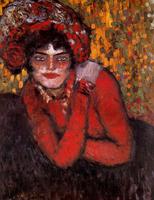
Pierreuse with her hand on her shoulder
Pablo Picasso
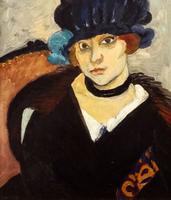
Marguerite with a Leather Hat
Henri Matisse
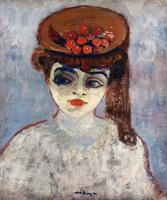
Woman with Cherries on Her Hat
Kees van Dongen
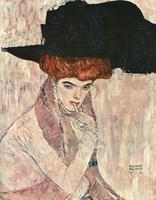
The Black Feather Hat
Gustav Klimt
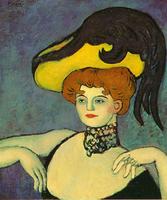
Courtesan with necklace of gems
Pablo Picasso
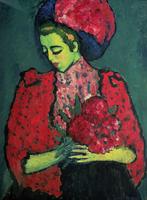
Young Girl with Peonies
Alexej von Jawlensky
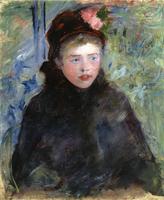
Susan in a Toque Trimmed with Two Roses
Mary Cassatt
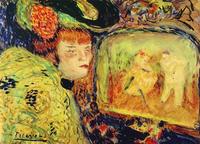
The 'Divan Japonais'
Pablo Picasso
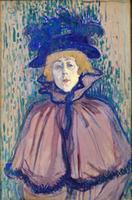
Jane Avril
Henri de Toulouse-Lautrec
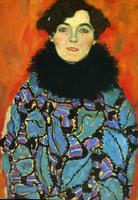
Portrait of Johanna Staude
Gustav Klimt
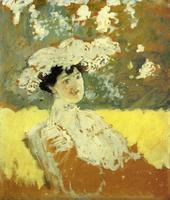
Woman with a Hat
Edouard Vuillard
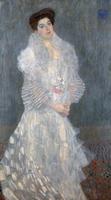
Portrait of Hermine Gallia
Gustav Klimt
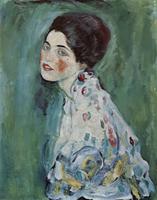
Portrait of a Lady
Gustav Klimt
Portrait de Jeune fille
Auguste Herbin