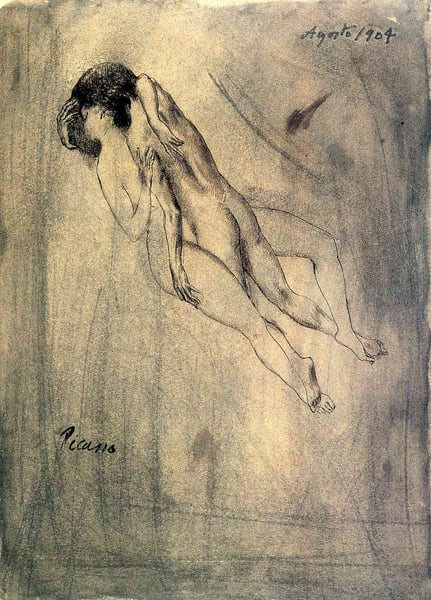
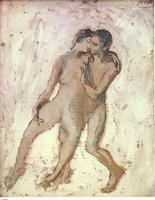
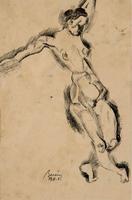
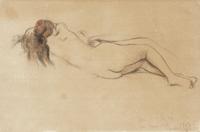
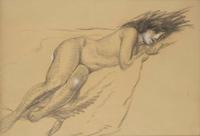
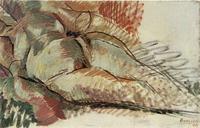
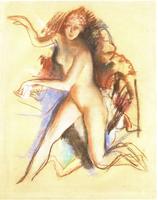
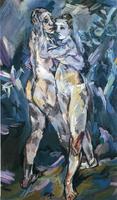
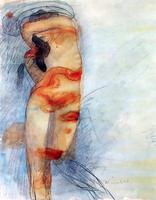
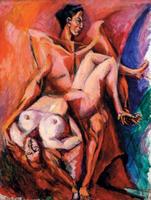
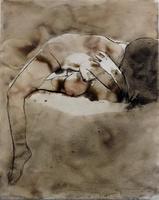
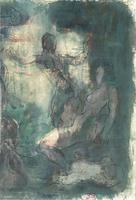
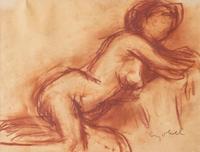
"Lovers" by Pablo Picasso, created during his Rose Period (c. 1904–1906), is a significant work within the Expressionist style and the genre of genre painting. Its importance lies in its representation of a pivotal shift in Picasso’s artistic evolution: the move away from the somber, blue-toned themes of his earlier Blue Period toward a warmer, more optimistic palette and subject matter. As an Expressionist piece, it prioritizes emotional resonance over naturalistic detail, using color and form to convey tenderness and intimacy. The choice of lovers as a genre scene—depicting everyday human connection—further anchors the work in the Rose Period’s focus on the transient, often melancholic beauty of circus performers, acrobats, and harlequins, though here applied to a more universal theme. This painting thus encapsulates the period’s hallmark mood: a delicate balance between fragility and warmth, marking a key moment in Picasso’s journey toward the radical innovations of Cubism.