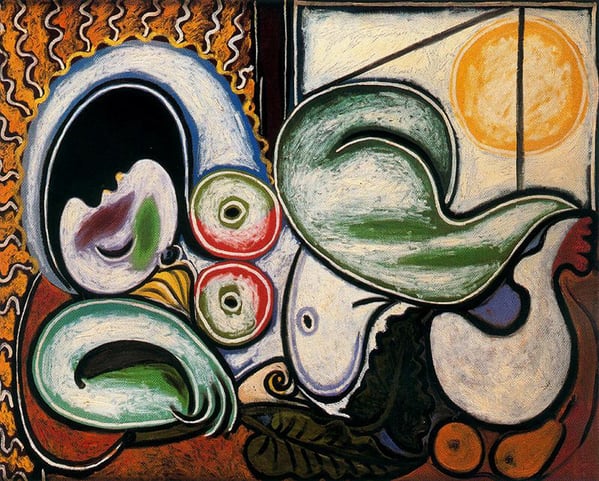
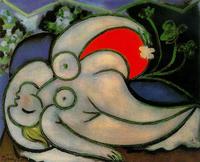
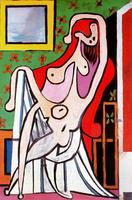
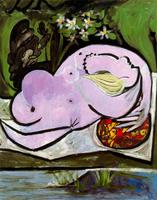
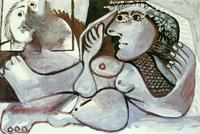
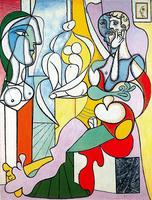
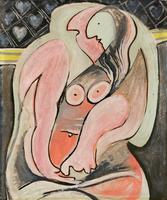
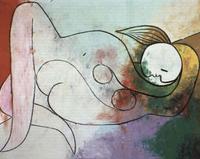
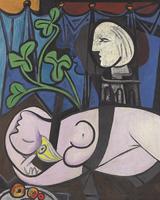
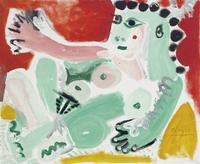
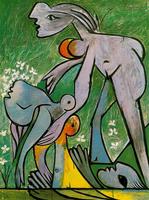
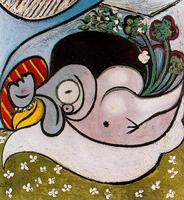
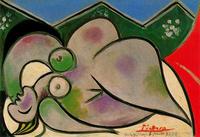
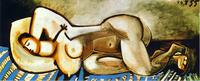
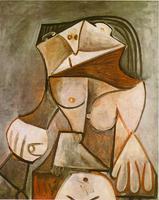
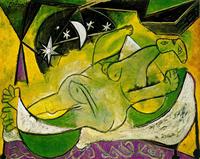
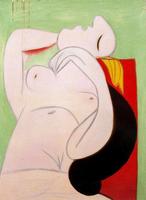
This artwork, Lying female nude by Pablo Picasso, is a significant example of the artist’s ability to bridge two seemingly opposing approaches: the structured clarity of Neoclassicism and the dreamlike irrationality of Surrealism. Created during his Neoclassicist & Surrealist Period, the painting reimagines the traditional nude genre—a staple of art history—through a lens that combines solid, almost sculptural forms with the distorted, illogical anatomy typical of Surrealist figuration. Its importance lies in how Picasso uses the reclining nude as a site of tension: the pose and genre nod to classical ideals, while the handling of the body defies naturalistic proportion, creating a hybrid that is both grounded and fantastical. This duality reflects the broader concerns of the period, as Picasso explored ways to reconcile timeless beauty with the subconscious, making the work a key statement in his evolution toward surrealist expression.