
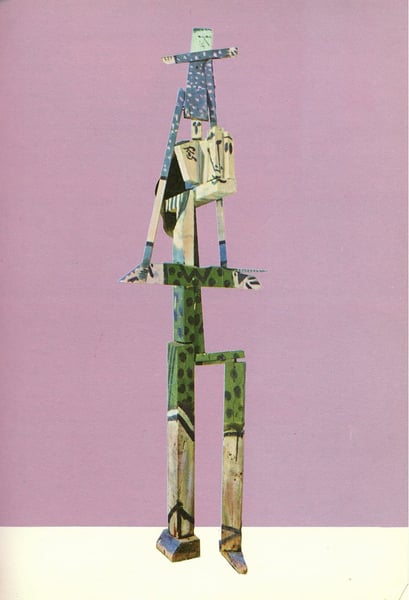
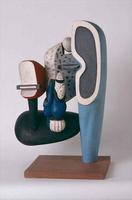
Expert analysis of Pablo Picasso’s Mother and child
Style: Surrealism · Genre: sculpture
In the sculpture Mother and Child, Pablo Picasso merges the biomorphic distortions of Surrealism with the emotional gravity of a timeless maternal theme, creating a work that stands as a powerful testament to his later stylistic evolution. Executed during a period when the artist frequently revisited classic subjects through a fragmented, symbolic lens, the piece exemplifies Surrealism’s drive to bypass rational form in favor of primordial, dreamlike imagery. The very choice of sculpture—a medium Picasso used increasingly in his later years—allowed him to give physical, tactile presence to the psychological tension between protection and vulnerability. By rendering the mother and child as an asymmetrical, almost abstract configuration, he strips the scene of sentimental realism, instead foregrounding the raw, unspoken bond that Surrealism sought to expose beneath social conventions. This work is significant precisely because it channels Surrealist principles (unexpected juxtapositions, irrational contours) through the intimate, archetypal motif of motherhood, demonstrating how Picasso pushed the movement beyond painting and into three-dimensional, deeply personal expression during his final creative phase.
Visually similar
20 works with related composition and palette
Questioning Children
Karel Appel
Untitled 1959
Gaston Chaissac
I Want to Be an Insect
Leonora Carrington
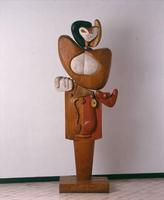
Femme
Le Corbusier
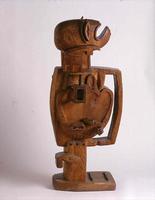
Totem
Le Corbusier
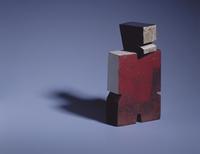
Man with Red Chest
Joaquin Torres Garcia
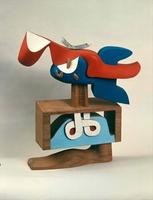
La mer
Le Corbusier
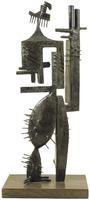
Monsieur Cactus
Julio Gonzalez
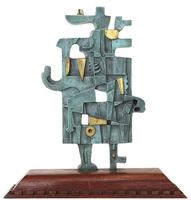
Faces
Carlos Merida
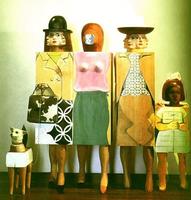
Women and Dog
Marisol Escobar
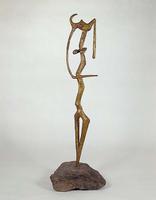
Woman Screaming
David Hare
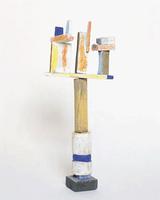
Divertimento
Esteban Vicente
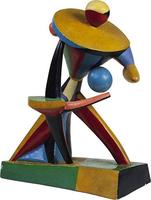
Carrousel Pierrot
Olexandr Archipenko
Book Pages 8
MAUREEN QUIN
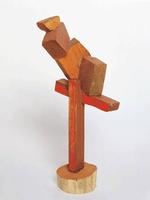
Divertimento
Esteban Vicente
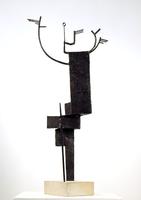
Daphne
Julio Gonzalez
Book Pages (8)
MAUREEN QUIN
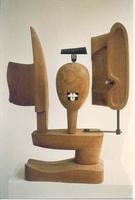
Ozon III
Le Corbusier
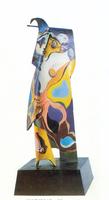
PAINTING IN SPACE
Yervand Kochar
Ozon, Opus I
Le Corbusier