Pablo Picasso sanatçısının Pierrot with a mask eseri hakkında uzman analizi
Tarz: Post-Impressionism · Tür: genre painting
This analysis is based solely on the provided structured facts.
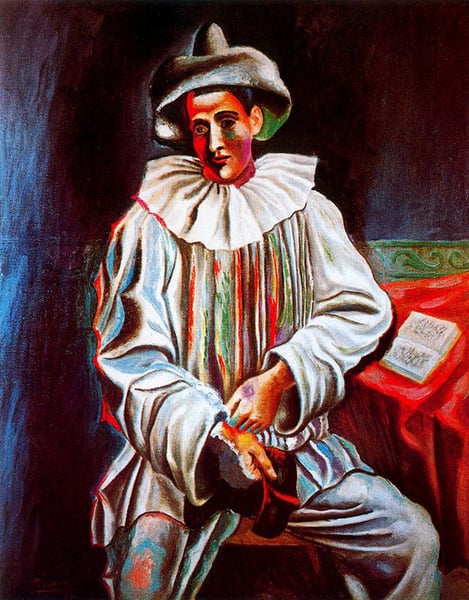
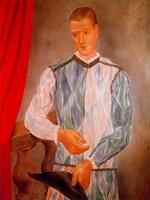
"Pierrot with a mask" by Pablo Picasso stands as a compelling synthesis of divergent artistic impulses. Though executed during Picasso’s Cubist Period—an era defined by the fragmentation and geometric analysis of form—the painting is classified within the Post-Impressionist style, a movement that emphasized emotional expression, symbolic content, and bold, non-naturalistic color. As a genre painting, it depicts a scene from everyday theatrical life, yet the presence of the mask introduces themes of identity, disguise, and the tension between reality and artifice.
The significance of this work lies in its bridging of two major movements. Picasso applies the emotional intensity and subjective color of Post-Impressionism—reminiscent of Van Gogh or Gauguin—to the fractured, multi-perspectival space of Cubism. The figure of Pierrot, a stock character from commedia dell’arte often associated with melancholy and naivety, becomes a vehicle for Picasso to explore the fragmentation of the self. The mask itself, a traditional symbol of theater and deception, is rendered with Cubist planes, suggesting that identity is not fixed but constructed from multiple viewpoints.
Within the context of Picasso’s Cubist Period, this painting is notable for its retention of narrative and human emotion, qualities often minimized in more abstract Cubist works. It demonstrates that even as Picasso deconstructed form, he remained invested in psychological depth and the traditions of figuration. "Pierrot with a mask" thus represents a crucial moment of synthesis, where the expressive legacy of Post-Impressionism meets the radical formal innovations of Cubism, resulting in a work that is both intellectually rigorous and emotionally resonant.
Görsel olarak benzer
İlişkili kompozisyon ve renk paletine sahip 20 eser
Pierrot Grin
Gustave Dore
Portrait of Margaretha de Geer, Wife of Jacob Trip
Nicolaes Maes
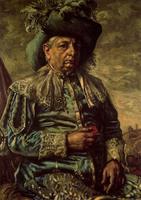
Self Portrait in a Park
Giorgio de Chirico
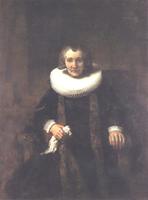
Portrait of Margheride Geer, Wife of Jacob Trip
Rembrandt
Lambert Doomer
Ferdinand Bol
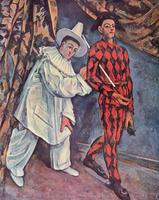
Pierrot and Harlequin (Mardi Gras)
Paul Cezanne
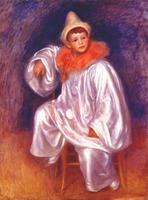
The white pierrot (Jean Renoir)
Pierre-Auguste Renoir
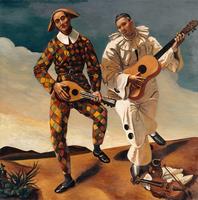
Harlequin and Pierrot
Andre Derain
Portrait of a Man, Full-Length, in a Black Slashed Doublet and Breeches and a Ruff, Standing beside a Table with Writing Implements
Pieter Jansz. Quast
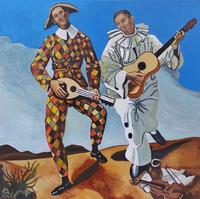
Harlequin and Pierrot
Gregorio Undurraga
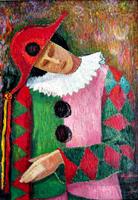
Harlequin
George Stefanescu
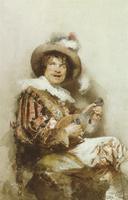
The serenade
Gustavo Simoni
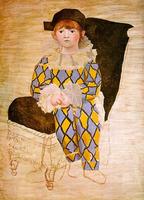
Paul as harlequin
Pablo Picasso
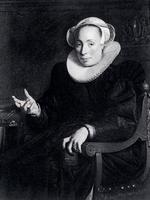
Portrait Of The Artist's Wife
Joachim Wtewael
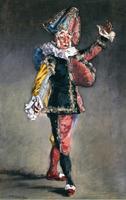
Polichinelle
Edouard Manet
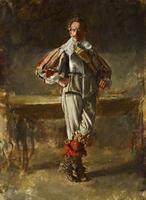
A Gentleman of the Reign of Louis XIII
Ernest Meissonier
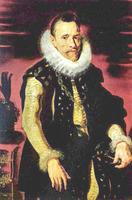
Albert VII, Governor of the Southern Provinces
Peter Paul Rubens
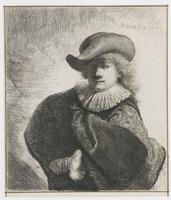
Self-portrait in a soft hat and embroidered cloak
Rembrandt
Barselona harlequin
Pablo Picasso
The cavalier
Gustavo Simoni