
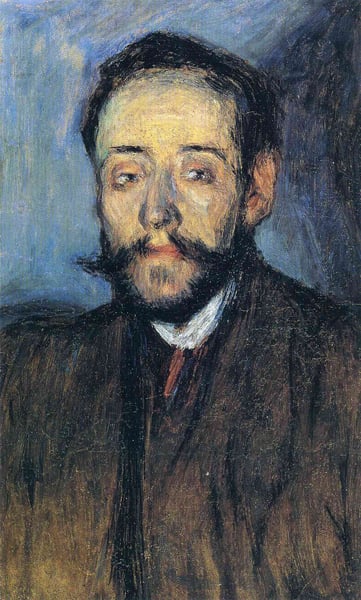
Expertenanalyse zu Pablo Picassos Portrait of Minguell
Stil: Impressionism · Genre: portrait
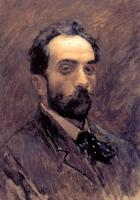
Expert Analysis of "Portrait of Minguell" by Pablo Picasso
While Pablo Picasso is most renowned for pioneering Cubism, this early work—an Impressionist portrait—offers a crucial glimpse into his formative artistic development. Executed during a period when Picasso was absorbing and experimenting with the bold brushwork, vibrant color palettes, and emphasis on fleeting light characteristic of Impressionism, Portrait of Minguell stands as a testament to his ability to synthesize a prevailing movement while already hinting at his own future innovations.
Significance within the Impressionist Style:
- Mastery of Light and Atmosphere: True to Impressionist principles, the portrait likely captures a specific moment, using visible, dynamic brushstrokes to model the sitter’s features and surroundings. The handling of light—whether dappled across the face or softening the background—demonstrates Picasso’s early command of the technique that would later inform his more radical departures from naturalism.
- Portraiture as a Vehicle for Experimentation: Although portraiture was a common genre within Impressionism (think of Renoir or Degas), Picasso’s version injects a subtle psychological intensity. The sitter, Minguell, is not merely a subject for optical study but an individual whose presence is filtered through the artist’s subjective response—a foreshadowing of Picasso’s lifelong preoccupation with transforming reality rather than replicating it.
- Bridging Two Epochs: As an Impressionist work by an artist who would soon shatter the movement’s conventions, Portrait of Minguell is historically significant. It represents a moment of apprenticeship, where Picasso internalized the lessons of Monet, Pissarro, and others, only to later harness that same freedom of brush and color to dismantle perspective itself. This painting thus serves as a critical link between late-19th-century Impressionism and the radical modernisms of the 20th century.
In sum, the work’s significance lies not in its exceptional departure from Impressionist norms, but in its demonstration of a young master thoroughly absorbing a style—only to prove that style was merely a starting point for his revolutionary vision.
Visuell ähnlich
20 Werke mit ähnlicher Komposition und Farbpalette
Jacques Eugene Spuller
Pierre-Auguste Renoir
Self-Portrait
Henri Matisse
Portrait of the painter Arturo Fittke
Umberto Veruda
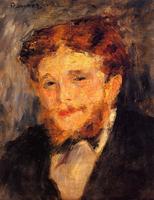
Portrait of Eugene Pierre Lestringuez
Pierre-Auguste Renoir
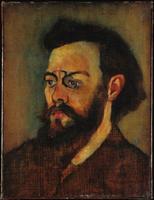
Bernard Lemaire
Suzanne Valadon
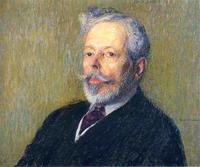
Self Portrait
Henri Martin
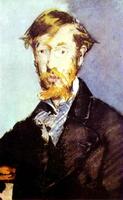
Portrait of George Moore
Edouard Manet
Maurice Drouard
Amedeo Modigliani
Portrait of Monsieur Louis Estruc
Camille Pissarro
Self-Portrait with Pipe and Glass
Vincent van Gogh
Portrait of Anthony Valabregue
Paul Cezanne
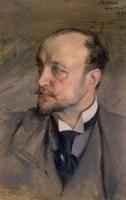
Self Portrait
Giovanni Boldini
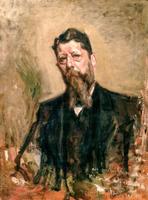
Portrait of the painter Eugenio Scomparini
Umberto Veruda
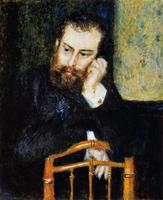
Alfred Sisley
Pierre-Auguste Renoir
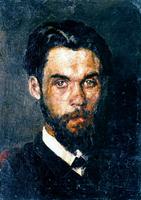
Автопортрет
Микола Пимоненко
The Count of Artal
Joaquín Sorolla
Selbstbildnis
Arthur Segal
Portrait of the painter Pietro Fragiacomo
Umberto Veruda
Portrait of Italian singer Angelo Masini
Konstantin Korovin
Self portrait
Isaac Levitan