
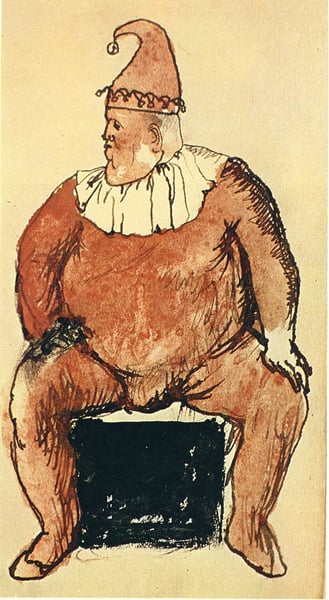
Expertenanalyse zu Pablo Picassos Seated fat clown
Stil: Art Nouveau (Modern) · Genre: genre painting
Expert Analysis: “Seated Fat Clown” by Pablo Picasso
This work, executed during Picasso’s Rose Period (c. 1904–1906), is a genre painting that captures a moment from the itinerant circus world—a recurring subject that defines the emotional and stylistic shift from his earlier Blue Period. The painting’s significance lies in its bridging of two distinct artistic currents: the tender humanism of the Rose Period and the decorative, organic elegance of Art Nouveau (here listed as the style, albeit anachronistic to Picasso’s typical trajectory).
Composition and Subject:
The “fat clown” is depicted seated, likely in a moment of weary repose. Picasso’s Rose Period figures—acrobats, harlequins, and clowns—are usually lean and melancholic, but here the clown’s corpulence introduces a rare note of grounded physicality. The figure’s bulk is rendered with soft, rounded contours that echo Art Nouveau’s preference for flowing, sinuous lines. The palette is warmed by pinks, ochres, and dusty roses, replacing the cold blues of the previous period while retaining a sense of wistful isolation.
Stylistic Significance:
While Picasso is not typically classified as an Art Nouveau artist, this painting demonstrates his engagement with the movement’s linear fluidity. The clown’s costume—likely patterned with diamonds or ruffles—may exhibit the decorative, whiplash curves found in the work of Alphonse Mucha or Henri de Toulouse-Lautrec. The genre setting (a backstage or circus ring) allows Picasso to explore the tension between performance and private vulnerability, a theme that would later resurface in his Blue and Rose saltimbanques.
Period Context:
The Rose Period marks Picasso’s turn toward more optimistic, though still poignant, themes. “Seated Fat Clown” is significant because it challenges the stereotype of the starving, slender harlequin. By rendering a fat clown, Picasso subverts expectations: the clown’s girth could symbolize the weight of joy, the heaviness of a performer’s life, or a deliberate departure from idealized poverty. This ambiguity—both tender and slightly grotesque—anticipates the psychological complexity of his later Cubist portraits.
Legacy:
Though less famous than works like Family of Saltimbanques (1905), this painting encapsulates the Rose Period’s core achievement: transforming marginalized circus folk into universal symbols of resilience. Its fusion of genre realism with Art Nouveau ornamentation also reveals Picasso’s early willingness to borrow from popular decorative styles, a flexibility that would later fuel his revolutionary experiments.
In summary, “Seated Fat Clown” is a quiet masterpiece of transition—between color moods, between social classes, and between the decorative and the profound. It reminds us that even in the hands of a modernist titan, the simple, seated figure can carry the weight of an entire era.
Visuell ähnlich
20 Werke mit ähnlicher Komposition und Farbpalette
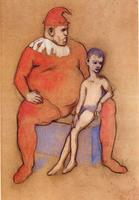
Young acrobat and clown
Pablo Picasso
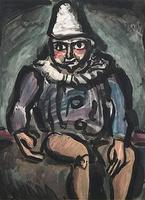
Le Vieux Clown
Georges Rouault
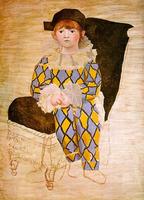
Paul as harlequin
Pablo Picasso
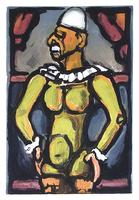
Triste Os from Cirque de l'Etoile Filante
Georges Rouault
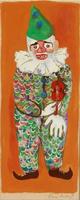
Anna Margit, Bohóc. . ,
Anna Margit
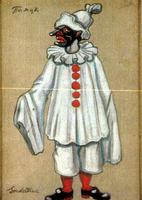
Costume designs for "Petrushka" by Stravinsky in Metropolitan Opera - Jester
Serge Sudeikin
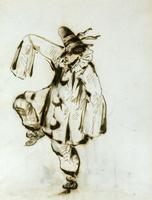
Pierrot dancing
Edouard Manet
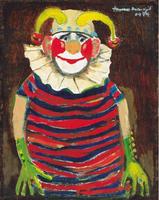
Anna Margit, Bohóc Kék Piros Csikos Ruhában
Anna Margit
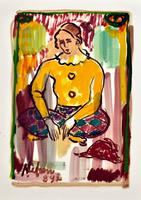
The Repose of the Harlequin
George Stefanescu
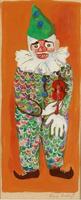
Anna Margit, Bohóc
Anna Margit
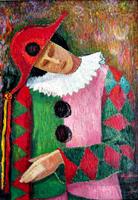
Harlequin
George Stefanescu
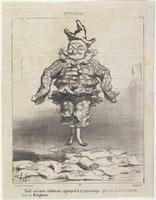
Thiers
Honore Daumier
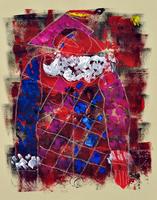
Harlequin´s Resignation
George Stefanescu
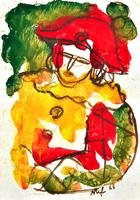
Harlequin
George Stefanescu
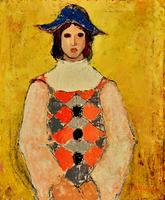
Harlequin
George Stefanescu
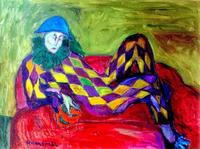
Arlequín
Víctor Humareda
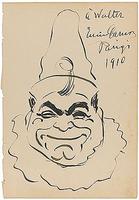
As Pagliacco
Enrico Caruso
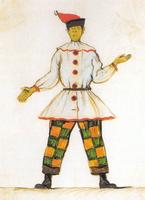
Petrushka. Costume design for Vatslav Nijinsky
Alexandre Benois
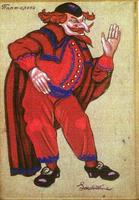
Costume designs for "Petrushka" by Stravinsky in Metropolitan Opera - Pantalone
Serge Sudeikin
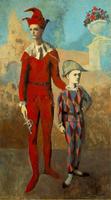
Acrobat and young harlequin
Pablo Picasso