
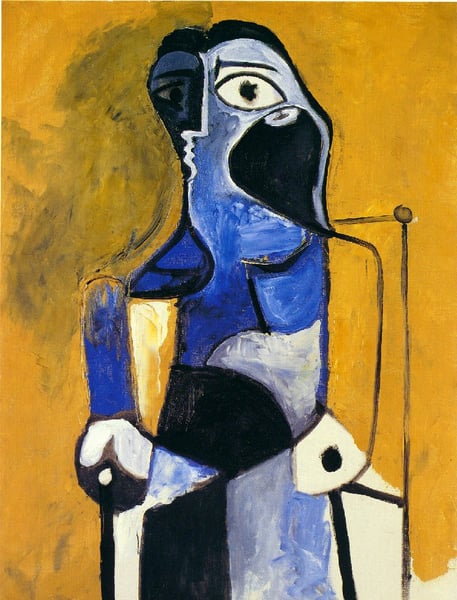
Expert analysis of Pablo Picasso’s Seated woman
Style: Surrealism · Genre: portrait
In "Seated Woman," Pablo Picasso operates within the Surrealist mode during his Later Years, offering a portrait that exemplifies the period’s shift toward psychological and dreamlike representation. The work’s significance lies in how it synthesizes Picasso’s lifelong exploration of the human figure—here a seated woman—with the Surrealist emphasis on distorted, biomorphic forms and subconscious imagery. Unlike his earlier Cubist deconstructions, this portrait channels a more fluid, often unsettling transformation of anatomy, where the seated pose becomes a vehicle for emotional intensity and symbolic compression. As a product of his later career, the painting reflects Picasso’s mature ability to distill decades of artistic experimentation into a single, potent image, marking a pivotal moment where Surrealism’s irrationality meets the portrait genre’s traditional focus on identity. The work is thus significant for demonstrating how Picasso continued to reinvent figuration, pushing the seated-woman motif beyond naturalism into a realm of pure, psychological expression.
Visually similar
20 works with related composition and palette
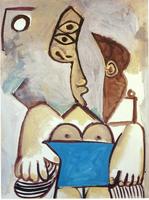
Seated woman
Pablo Picasso
Seated woman with flat hat
Pablo Picasso
Crouching female nude
Pablo Picasso
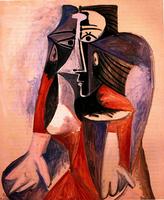
Seated woman (Jacqueline)
Pablo Picasso
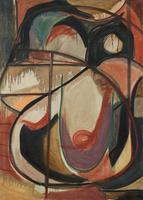
Nucleus IV
Judith Godwin
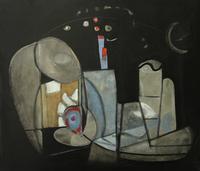
Untitled
Artin Demirci
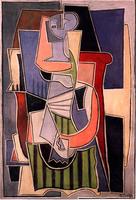
Woman sitting in an armchair
Pablo Picasso
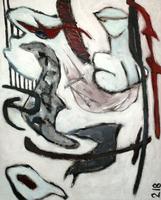
Shamanistic painting - abstract painting by Fons Heijnsbroek - Dutch artist
Fons Heijnsbroek
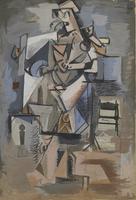
Untitled (Cubist Figure)
Arshile Gorky
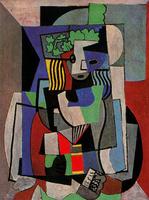
The student
Pablo Picasso
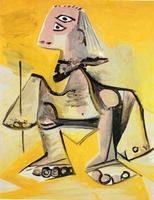
Crouching man
Pablo Picasso
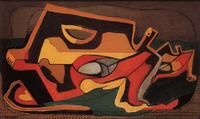
Les Dieux marins
Alfred Manessier
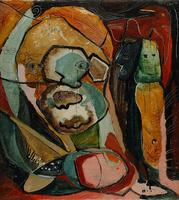
Face and Figure
Christo Coetzee
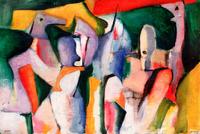
Intifada
Alexander Bogen
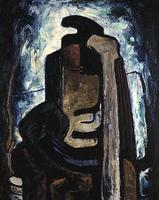
1938-N-No. 1
Clyfford Still
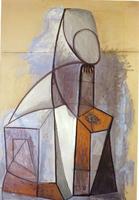
Composition
Pablo Picasso
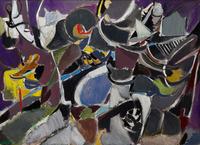
En quete de l'image
Andre Lanskoy
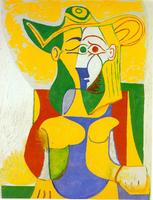
Woman sitting in an armchair
Pablo Picasso
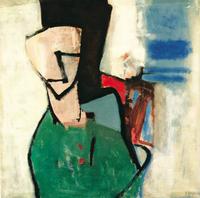
Self Portrait
Alexander Bogen
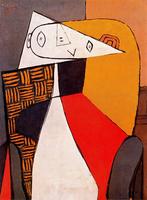
Seated Woman
Pablo Picasso