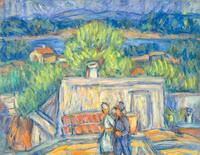
Expert Analysis: "The Mother Leading Two Children" by Pablo Picasso (Blue Period)
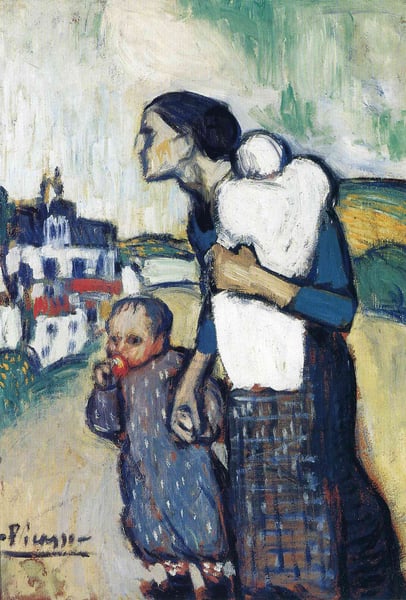
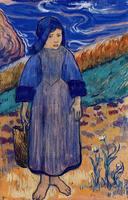
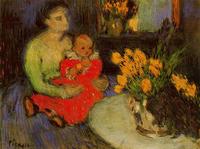
This work is a quintessential example of Picasso’s Blue Period, a phase defined by its monochromatic palette of blues and greens, melancholic subject matter, and deep emotional resonance. Painted in the Post-Impressionist style, it moves beyond naturalistic representation to convey psychological weight through color and form.
As a genre painting, it depicts an everyday scene—a mother guiding her two children—but Picasso transforms this simple domestic moment into a poignant meditation on poverty, hardship, and maternal endurance. The elongated, fragile figures and the cool, somber tones evoke a sense of isolation and sorrow, reflecting the artist’s empathy for the marginalized during a time of personal grief and social awareness.
The work’s significance lies in how it crystallizes the Blue Period’s core innovations: using color as an emotional language (the blue hue symbolizes both coldness and spiritual depth) and simplifying form to heighten expressive power. Here, Picasso strips away anecdotal detail, focusing instead on the universal pathos of a mother’s protective love amid adversity—a theme that would resonate throughout his later, more revolutionary periods.