
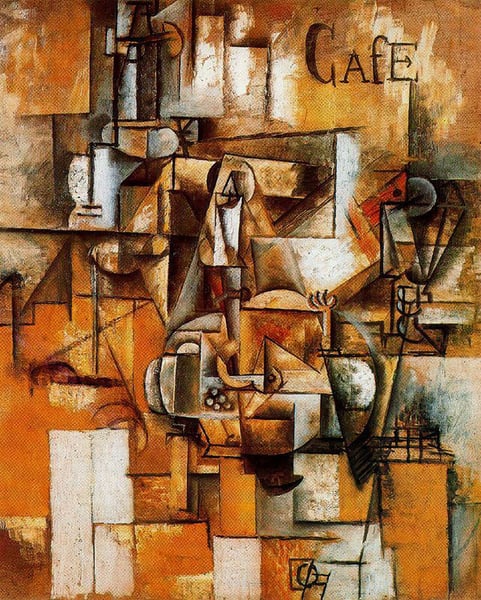
Expert analysis of Pablo Picasso’s The pigeon pea
Style: Analytical Cubism · Genre: still life
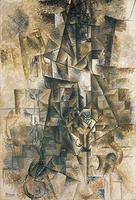
Given the provided facts, "The pigeon pea" by Pablo Picasso represents a quintessential example of his Analytical Cubist period, specifically within the still life genre. Its significance lies in how Picasso applies the core tenets of Analytical Cubism—fragmentation, multiple perspectives, and a muted, near-monochromatic palette—to a humble subject: the pigeon pea. By breaking down the form of this simple legume into geometric planes and intersecting facets, Picasso elevates a mundane object to a complex intellectual exercise. The work challenges traditional notions of representation, forcing the viewer to reconstruct the pea's identity from abstracted shards of line and shadow. In the broader context of the Cubist Period, this piece underscores Picasso's radical departure from naturalism and his relentless investigation into the nature of seeing, making it a telling artifact of how Analytical Cubism redefined still life not as a mirror of reality, but as a constructed language of space and form.
Genre
Style
Visually similar
20 works with related composition and palette
Poet
Pablo Picasso
The aficionado (The torero)
Pablo Picasso
Clarinetist
Pablo Picasso
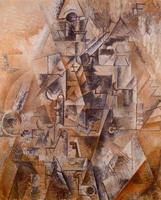
Clarinet
Pablo Picasso
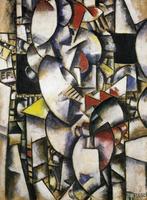
Naked model in the workshop
Fernand Leger
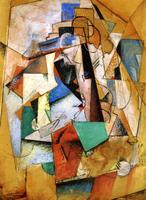
Composition
Georges Valmier
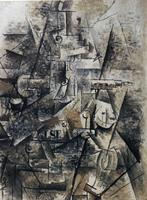
Clarinet and Bottle of Rum on a Mantelpiece
Georges Braque
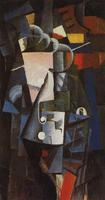
Vanity Box
Kazimir Malevich
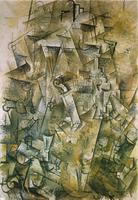
Still life with harp and violin
Georges Braque
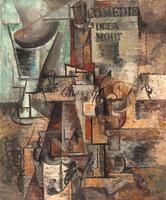
Zátiší S Lahví Cherry
Emil Filla
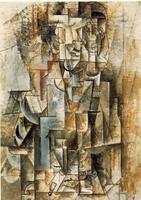
Man with guitar
Pablo Picasso
Paysage
Albert Gleizes
Kuřák
Emil Filla
The lady at the piano
Kazimir Malevich
Samovar
Kazimir Malevich
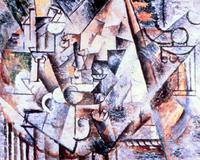
The chess
Pablo Picasso
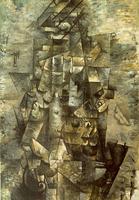
Man with a Guitar
Georges Braque
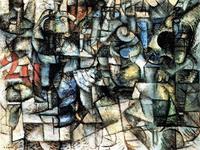
Ritmi di oggetti
Carlo Carra
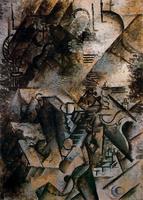
Woman with guitar and piano
Pablo Picasso
The Piano Accordionist
Pablo Picasso