
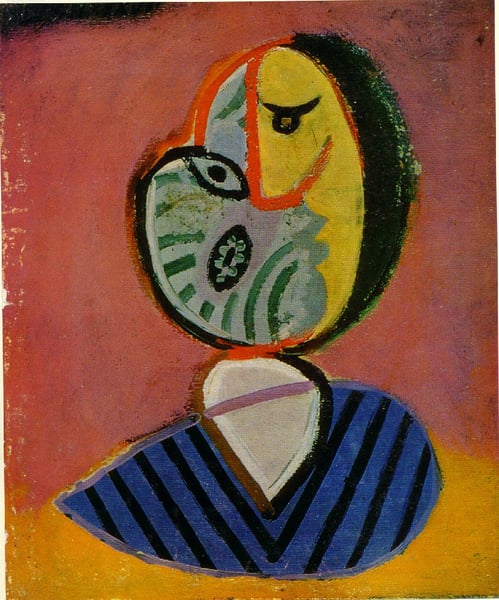
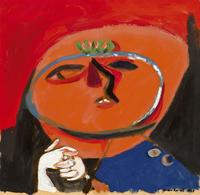
Untitled
Details
Expert analysis of Pablo Picasso’s Untitled
Style: Surrealism · Genre: portrait
As an art historian, I can provide an expert analysis of Pablo Picasso's "Untitled," based solely on the given structured facts. This work belongs to Picasso's Neoclassicist & Surrealist Period—a pivotal moment when he synthesized seemingly contradictory impulses. The genre is a portrait, but the style is Surrealism, which immediately signals a departure from conventional likeness toward psychological or subconscious representation.
What makes this artwork significant:
-
Stylistic hybridity within a single period: The "Neoclassicist & Surrealist Period" (roughly 1918–1927) is itself a testament to Picasso's ability to move between monumental, ordered classicism and the irrational, automatist explorations of Surrealism. An "Untitled" portrait from this moment likely merges the sculptural solidity and calm of his neoclassical figures (influenced by Ingres and Greek sculpture) with the distorted, dreamlike metamorphosis of Surrealist forms. The absence of a title emphasizes that identity is secondary to the condition of the psyche—a core Surrealist value.
-
Reimagining portraiture: Traditional portraiture aims for recognizable features; Picasso's Surrealist approach subverts that. With no name or title, the sitter becomes a universal archetype—perhaps a projection of inner turmoil or desire. The juxtaposition of neoclassical structure (balanced composition, stable outline) with Surrealist dislocation (bizarre anatomy, floating or disjointed elements) creates a tension that defines Picasso's contribution to Surrealism. He did not merely paint dreams; he painted constructed dreams, where classical order is disrupted by the unconscious.
-
Influence on later Surrealist portraiture: Picasso's fusion of academic draftsmanship with irrational imagery directly inspired Surrealists like Dalí and Magritte. In this "Untitled" portrait, the significance lies in how Picasso proves that the most radical breaks with tradition can emerge from a deep understanding of tradition. By blending Neoclassicist's clarity with Surrealist's ambiguity, he transforms the portrait from a record of appearance into a psychological landscape—a hallmark of his mature mastery and a key contribution to 20th-century modernism.
In summary, the artwork's significance is its embodiment of Picasso's transitional genius: a portrait that is both monumentally timeless and exquisitely strange, refusing to settle into one identity or style, while expanding the very definition of what a portrait can convey.
Visually similar
20 works with related composition and palette
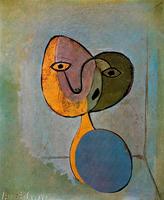
Portrait of woman
Pablo Picasso
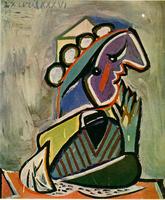
Untitled
Pablo Picasso
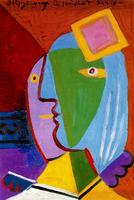
Woman with cap
Pablo Picasso
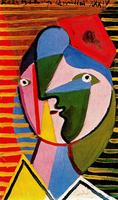
Woman turned right
Pablo Picasso
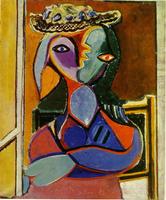
Untitled
Pablo Picasso
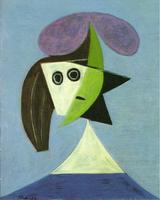
Woman with hat (Olga)
Pablo Picasso
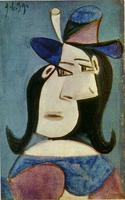
Untitled
Pablo Picasso
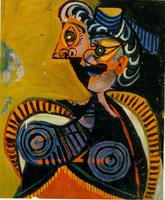
Untitled
Pablo Picasso
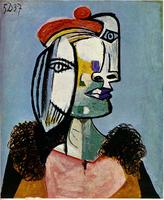
Untitled
Pablo Picasso
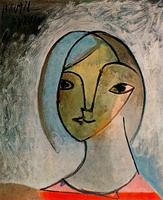
Bust of woman
Pablo Picasso
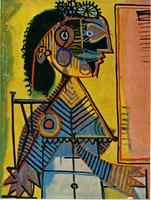
Untitled
Pablo Picasso
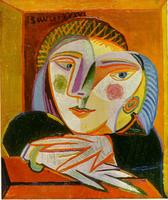
Woman by the window
Pablo Picasso
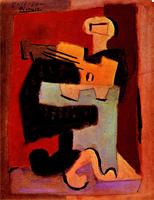
Man with mandolin
Pablo Picasso
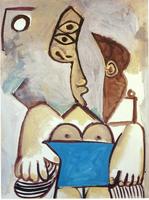
Seated woman
Pablo Picasso
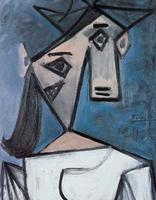
Woman’s Head
Pablo Picasso
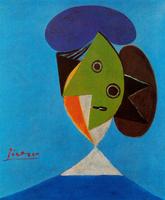
Bust of a woman
Pablo Picasso
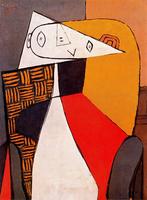
Seated Woman
Pablo Picasso
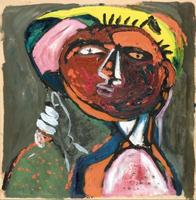
Anna Margit, Sárga Sapka 1946
Anna Margit
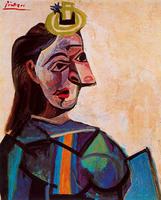
Bust of a woman
Pablo Picasso
Anna Margit, Összekulcsolt Kezü 1948
Anna Margit