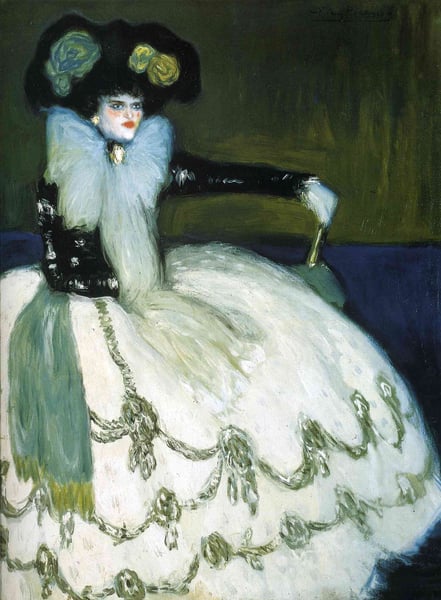
Based solely on the supplied structured facts, the significance of “Woman dressed in blue” by Pablo Picasso lies in its clear demonstration of the artist’s early engagement with Post-Impressionism. As a portrait from Picasso’s Early Years, the work represents a formative moment when the young painter was absorbing and synthesizing the expressive color, simplified forms, and subjective emotional intensity characteristic of Post-Impressionist masters. This piece is therefore significant as an essential stepping stone in Picasso’s stylistic evolution, showing his departure from academic tradition and his exploration of modern pictorial language that would later lead to his revolutionary breakthroughs. The portrait’s focus on a single figure, titled by her clothing color, also underscores the Post-Impressionist priority of conveying mood and personality through bold, non-naturalistic chromatic choices.