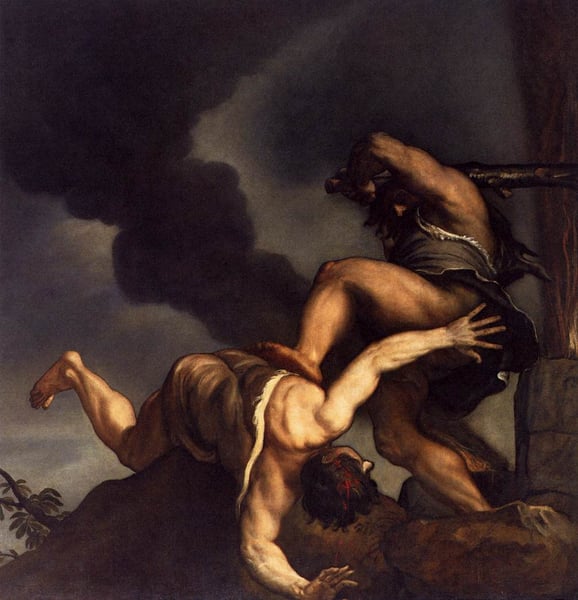
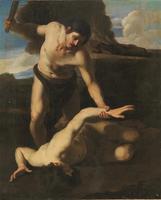
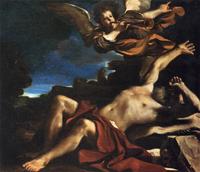
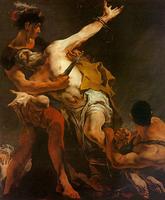
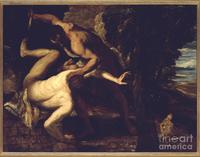
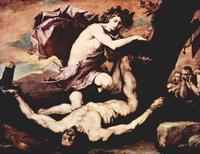
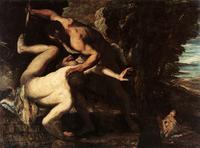
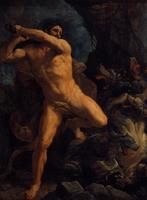
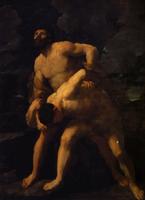
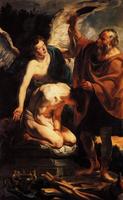
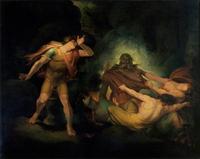
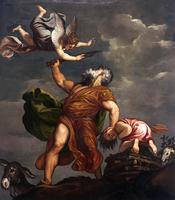
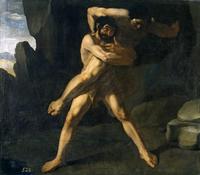
This religious painting by Titian is a significant example of Mannerism, the Late Renaissance style that emerged as a deliberate departure from the balanced harmony of the High Renaissance. Here, Titian applies Mannerist principles to a biblical subject—the fratricidal story of Cain and Abel—emphasizing emotional intensity, dramatic torsion, and a heightened sense of tension. The work’s importance lies in how it showcases Titian’s late-career shift from serene classicism toward more complex, psychologically charged compositions, aligning with Mannerism’s preference for artifice, spatial ambiguity, and expressive distortion. Within the context of religious painting, this piece demonstrates how Mannerist artists reimagined sacred narratives to provoke visceral responses, moving beyond didactic clarity to explore human vulnerability and moral conflict.