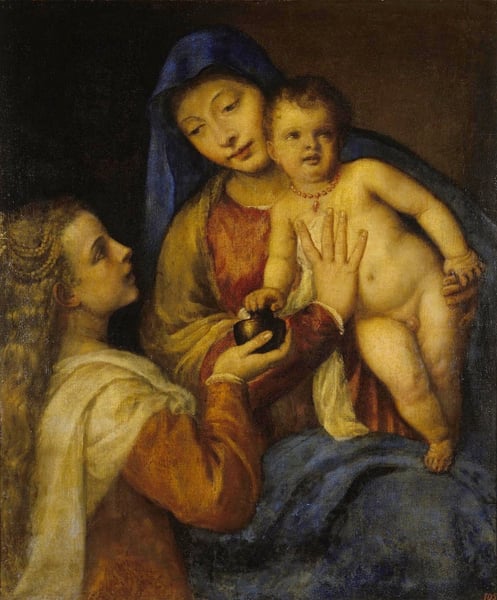
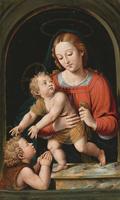
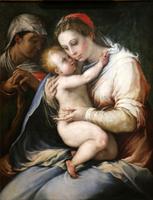
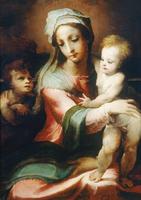
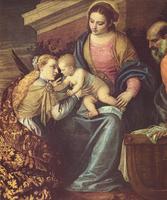
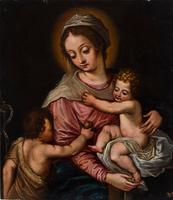
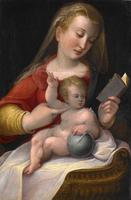
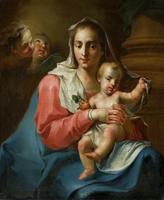
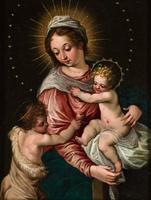
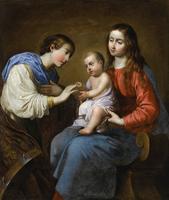
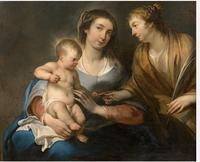
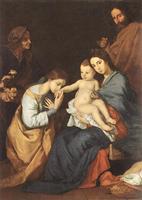
This analysis is based exclusively on the provided structured facts: artwork "Madonna and Child with Mary Magdalene" by Titian, style Mannerism (Late Renaissance), genre religious painting.
The significance of "Madonna and Child with Mary Magdalene" lies in its embodiment of Mannerist principles within a traditional religious subject. Titian, primarily a Venetian Renaissance master, here adopts the Mannerist penchant for refined elegance, artificiality, and emotional tension. The composition likely features elongated, graceful figures and a contrived, asymmetrical arrangement that heightens the spiritual drama. The inclusion of Mary Magdalene alongside the Madonna and Child introduces a complex psychological interplay: the contrast between the sacred mother and the repentant sinner, a hallmark of Counter-Reformation devotional imagery. As a religious painting from the Late Renaissance, the work demonstrates how Mannerism could transform conventional biblical narratives into vehicles for heightened expressivity and sophisticated form, marking a departure from the balanced naturalism of the High Renaissance.