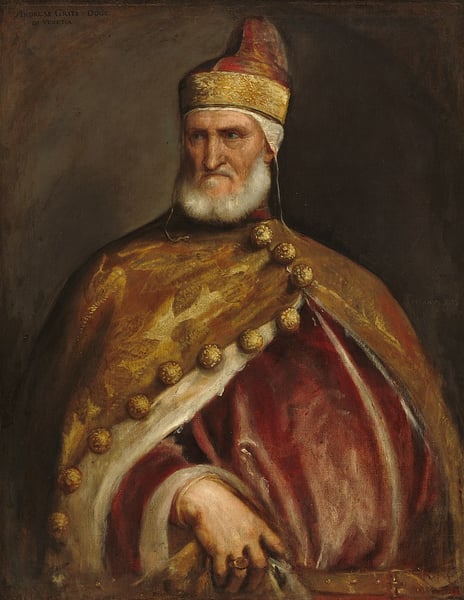
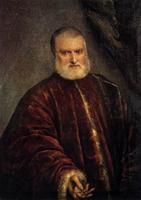
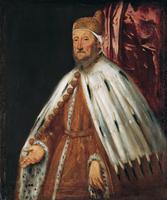
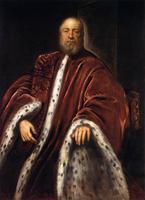
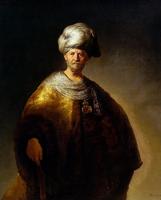
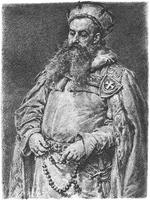
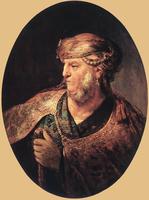
This portrait of Doge Andrea Gritti by Titian is significant within the Mannerist (Late Renaissance) style for how it transforms the traditional official portrait into a vehicle for psychological depth and aristocratic sophistication. As a genre work, it captures not merely the likeness of the doge but his authority through the Mannerist hallmarks of elongated proportions, a refined sense of elegance, and a subtle distortion of naturalism that conveys power and intellect. The work exemplifies the late Renaissance shift from the balanced harmony of the High Renaissance toward a more complex, willfully artificial aesthetic—here used to elevate the sitter’s status. Titian’s handling of this portrait underscores the Mannerist interest in the interplay between realism and idealization, making the doge appear both human and iconic, and thereby reinforcing the political and cultural aspirations of Venice during this period.