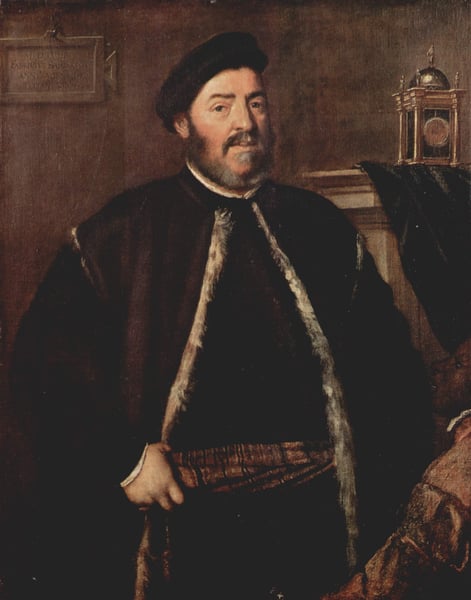
Based solely on the provided facts, "Portrait of Fabrizio Salvaresio" by Titian is significant as a work that bridges the High Renaissance and Mannerist periods. As a portrait within the Mannerist (Late Renaissance) style, it likely departs from the naturalistic balance of earlier Renaissance works, instead emphasizing refined elegance, intellectual sophistication, and a heightened sense of artificiality—hallmarks of Mannerism. The artist Titian, a master of the Venetian school, brings his renowned skill in color and psychological depth to this genre, making the portrait a key example of how Mannerist ideals were adapted in Venetian portraiture. Its significance lies in representing the stylistic transition of the late 16th century, where portraiture became not just a record of likeness but a deliberate display of social status, cultivated poise, and the artist's own virtuosity.