
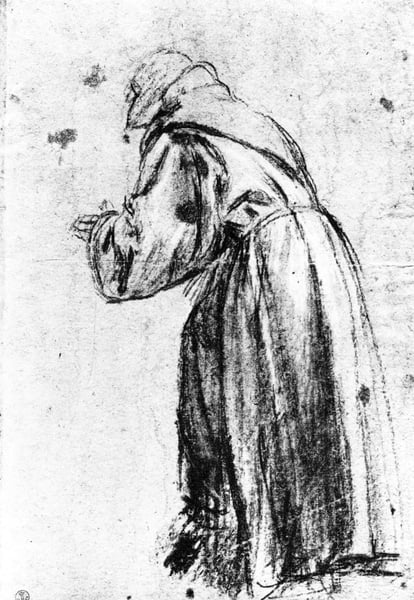
Analisi esperta di Saint Bernadine di Titian
Stile: High Renaissance · Genere: religious painting
Based solely on the structured facts provided, the analysis of "Saint Bernadine" by Titian must remain grounded in the given categories: High Renaissance style and religious painting genre. Even without specific visual details, the artwork’s significance emerges from its intersection of artist, period, and subject.
Art Historical Significance:
- High Renaissance Context: As a work by Titian, a master of the Venetian school, "Saint Bernadine" embodies the High Renaissance ideals of balanced composition, naturalistic human form, and subtle emotional depth. Titian was renowned for his innovative use of color (colorito) and atmospheric light, which elevated religious narratives from static icons to vivid, relatable scenes. This painting likely demonstrates his ability to infuse a sacred figure with lifelike presence and psychological nuance—a hallmark of the period’s shift toward humanized spirituality.
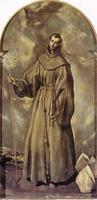
- Religious Painting Genre: Depicting Saint Bernadine (likely Saint Bernardine of Siena, a prominent 15th-century Franciscan preacher), the artwork serves both devotional and instructive purposes. In the High Renaissance, religious paintings were not mere illustrations but vehicles for theological complexity and rhetorical persuasion. Titian’s rendering would have emphasized the saint’s charismatic piety through gestures, symbols (e.g., the Christogram “IHS” associated with Bernardine), and a serene yet compelling expression, aiming to inspire reverence and meditation.
- Titian’s Contribution: As a leading figure of the High Renaissance, Titian moved away from the linear clarity of earlier Florentine art toward a painterly, atmospheric approach. “Saint Bernadine” likely showcases this through soft modeling, rich chromatic harmonies, and a sense of living breath—qualities that helped define the Venetian Renaissance as distinct from its Central Italian counterparts. The work’s significance lies in how it exemplifies Titian’s synthesis of spiritual gravity with earthly warmth, making the saint accessible yet transcendent.
Conclusion: Without further data, the artwork’s importance is tied to Titian’s role in advancing High Renaissance religious painting, where technical mastery served devotional authenticity. It represents a key moment when art and faith converged with unprecedented naturalism and emotional resonance.
Museum / Gallery
Visivamente simili
20 opere con composizione e palette affini
Praying Monk
Bartolome Esteban Murillo
Saint Francis
Jacopo Pontormo

Study of Two Carthusian Monks
Jacopo Pontormo

Frate
Agim Sulaj
Always poor
Frantisek Kupka
Young Cleric in a Cope Holding a Book
Placido Costanzi
Fraile
Rosario Weiss Zorrilla
St. Francis
Francisco de Zurbaran
An Apostle from the Transfiguration
Matthias Grünewald

I Walk To and Fro Through Civilization,
Ivan Albright
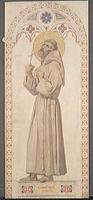
Cardboard window of the Chapel of St. Ferdinand. St. Francis of Assisi
Jean Auguste Dominique Ingres
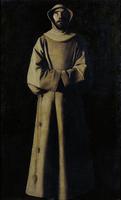
Saint Francis Of Assisi According To Pope Nicholas V?s
Francisco de Zurbaran
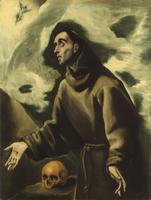
St. Francis receiving the stigmata
El Greco
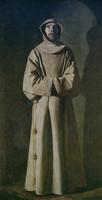
Saint Francis
Francisco de Zurbaran

The monk at prayer
Edouard Manet

Two monks in conversation
Ernst Meyer
St. Francis in Prayer
Giovanni Battista Piranesi
St. Jerome kneeling
Rembrandt
St. Bernardino of Siena
El Greco

Saint Francis
Carlo Crivelli