
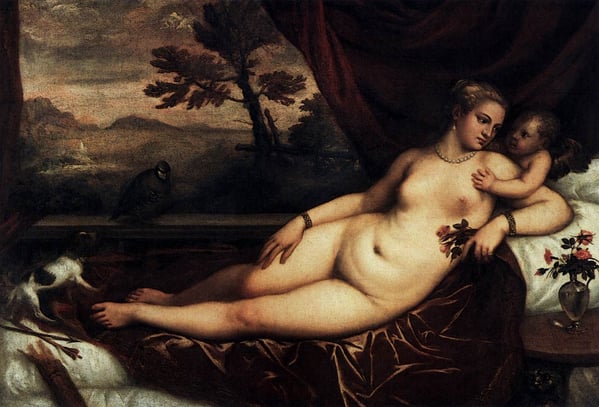
Analisi esperta di Venus and Cupid di Titian
Stile: Mannerism (Late Renaissance) · Genere: mythological painting
Expert Analysis: "Venus and Cupid" by Titian
Titian’s Venus and Cupid exemplifies the transition from the balanced naturalism of the High Renaissance into the more self-conscious elegance and psychological complexity of Mannerism. As a foundational work of the Late Renaissance, this mythological painting reveals Titian’s masterful manipulation of color, texture, and composition to evoke both sensuality and intellectual refinement.
Significance within Mannerism (Late Renaissance):
- Exaggerated elegance and artifice: The figures of Venus and Cupid are rendered with elongated proportions and a refined, almost serpentine grace—hallmarks of Mannerist aesthetics. Venus’s pose, often a twisting figura serpentinata, creates a dynamic, spiraling energy that draws the eye, prioritizing visual complexity over naturalistic repose.
- Rich, emotional colorism: Titian’s late style is celebrated for its unprecedented use of colorito—color applied with loose, expressive brushstrokes that blur contours. In Venus and Cupid, the warm flesh tones and luminous drapery are set against a dark, atmospheric background, heightening the erotic tension and psychological depth. This chromatic vibrancy became a defining trait of Venetian Mannerism.
- Ambiguous symbolism and intimacy: Unlike earlier, idealized depictions of the goddess, Titian’s Venus is both divine and human—her direct gaze and casual touch with Cupid suggest a narrative of seduction or maternal tenderness. The inclusion of Cupid, often holding an arrow or touching Venus’s breast, introduces an allegorical layer about love’s power and vulnerability, a common Mannerist device to provoke intellectual contemplation.
- Brushwork as expression: The loose, almost unfinished handling of paint—visible in the shimmering highlights of Venus’s skin and the soft blur of Cupid’s wings—anticipates the Baroque and underscores the Mannerist interest in showing the artist’s hand. Titian’s late technique turns the act of painting into a sensory experience, making the work significant as a bridge between Renaissance clarity and later stylistic freedoms.
In sum, Venus and Cupid is not merely a mythological scene but a sophisticated demonstration of Mannerist ideals: formal elegance, emotional nuance, and a bold departure from classical restraint. Titian’s fusion of Venetian color with Mannerist artifice ensures its lasting influence on European painting.
Museum / Gallery
Visivamente simili
20 opere con composizione e palette affini
Venus
Palma Vecchio
Sleeping nymph spied by satyrs (after a painting based on a print by Anthony van Dyck)
Jean-Étienne Liotard
Venus and the Lute Player
Titian
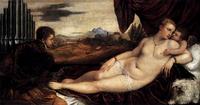
Venus and Cupid with an Organist
Titian
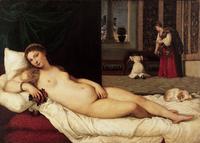
Venus of Urbino
Titian
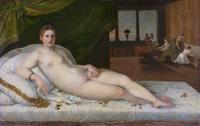
Liggie Venus
Titian
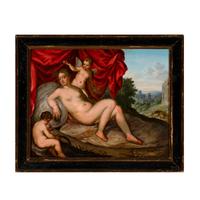
Venere e Amore
Hans Rottenhammer I
Ariadne
Asher Brown Durand
Lying nude with jug
Achille Devéria
Danae
Carolus-Duran
Venus
Joshua Reynolds
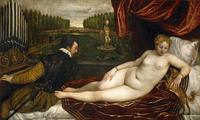
Venus and an Organist and a Little Dog
Titian
Ariadne
Asher Brown Durand
Diana Resting After the Hunt
Bartholomeus Spranger
Reclining nude
Achille Devéria
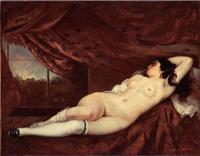
Sleeping Nude Woman
Gustave Courbet
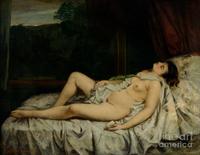
Sleeping Nude
Gustave Courbet
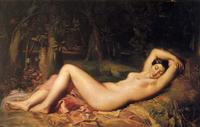
Baigneuse endormie
Theodore Chasseriau
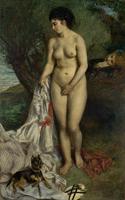
Lise on the Bank of the Seine
Pierre-Auguste Renoir
A Study in Curves
William Merritt Chase