Expert Analysis:
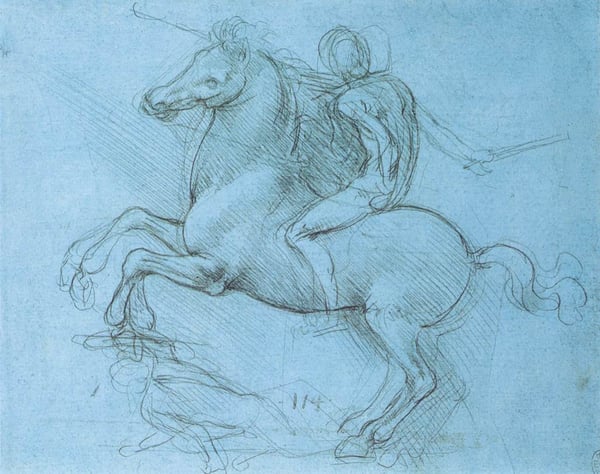
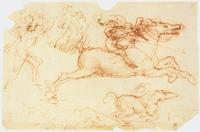
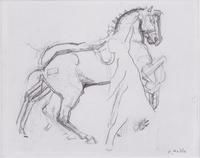
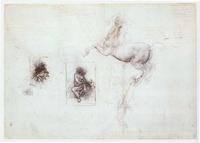
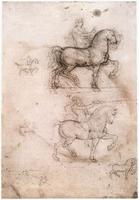
Leonardo da Vinci’s A study for an equestrian monument exemplifies the High Renaissance ideal of merging scientific observation with artistic expression. Though only a preparatory sketch, this work is profoundly significant for two reasons: its virtuosic rendering of animal anatomy and its connection to one of the most ambitious sculptural projects of the era.
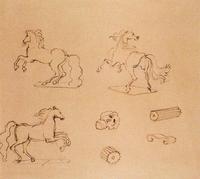
Leonardo’s studies for an equestrian monument—most famously the never-completed bronze horse for Francesco Sforza—demonstrate his relentless pursuit of capturing dynamic movement. In this drawing, he employs delicate chalk or pen lines to build the horse’s musculature, tense neck, and poised legs, conveying both power and arrested motion. The sketch’s liveliness, achieved through rapid, exploratory strokes, reveals his method of working from live models and dissections to understand underlying bone and sinew. This scientific rigor, applied to a genre traditionally dominated by static poses, marks a revolutionary shift in the representation of animals in art.
Within the High Renaissance context, the work also underscores Leonardo’s role as a polymath who saw drawing as a tool for problem-solving. The sketch is not merely a preliminary plan but a testament to his ambition to fuse classical monumentality with naturalistic expression. Its unfinished quality, far from being a flaw, offers a rare glimpse into the artist’s experimental process—a quality that continues to fascinate scholars and artists alike.