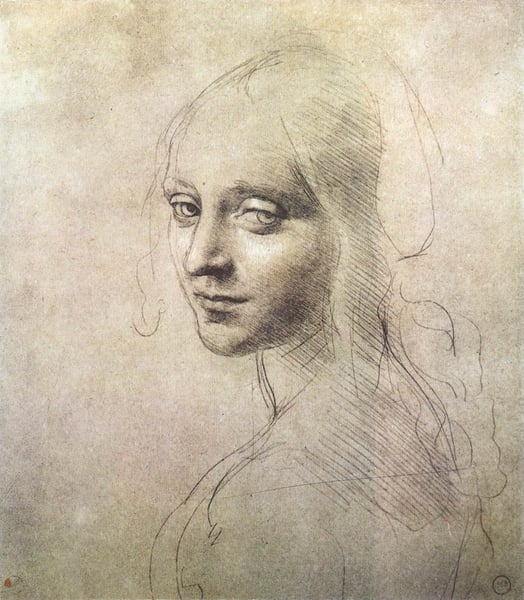
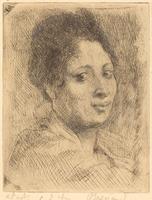
Based solely on the provided facts, the significance of Leonardo da Vinci’s Head of a Girl lies in its dual identity as both a sketch and study within the Early Renaissance style. As a sketch, it captures the raw, immediate fluency of Leonardo’s hand, revealing his process of rapidly recording an observation or idea. As a study, it was likely a preparatory exploration for a larger composition—demonstrating the Renaissance shift toward empirical observation and anatomical understanding. Within the Early Renaissance context, such works elevated drawing from mere craft to a tool for scientific inquiry and artistic perfection, showcasing Leonardo’s ability to render lifelike softness and psychological depth through subtle shading (sfumato) even in an unfinished medium. This piece exemplifies how Leonardo transformed the humble sketch into a window onto nature and human expression.