Analysis of "Head of Saint Anne" by Leonardo da Vinci
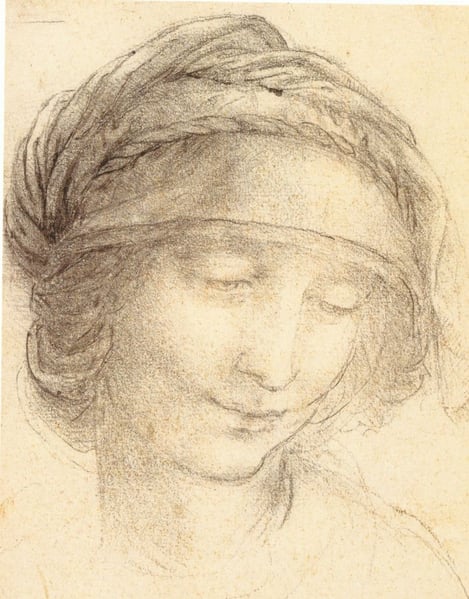
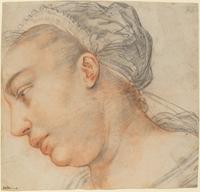
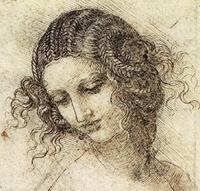
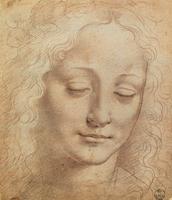
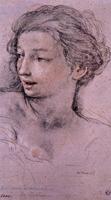
As a sketch and study executed during the High Renaissance, this work exemplifies the period’s profound commitment to observational accuracy and intellectual preparation. Leonardo’s drawing of Saint Anne’s head is not a finished painting but a crucial preparatory step—a genre that reveals the artist’s method of dissecting anatomy, expression, and composition before committing to a final work.
The significance lies in its demonstration of the High Renaissance ideal: the synthesis of scientific inquiry with artistic beauty. Through this study, Leonardo explores the subtle tilt of the head, the drape of fabric, and the soft modeling of features that would later appear in his famous altarpiece The Virgin and Child with Saint Anne. The sketch captures a sense of serene contemplation, characteristic of Leonardo’s ability to imbue even a preliminary drawing with spiritual depth. As a High Renaissance artifact, it underscores the era’s shift from rigid iconography to naturalism, where every line and shadow serves both a structural and emotional purpose. Thus, "Head of Saint Anne" stands as a testament to Leonardo’s genius in transforming preparatory work into an artwork of intrinsic value—a window into the creative process that defined an entire artistic age.