Analisi esperta di Head of St. John the Evangelist di Leonardo da Vinci
Stile: High Renaissance · Genere: religious painting
Expert Analysis of Leonardo da Vinci's Head of St. John the Evangelist
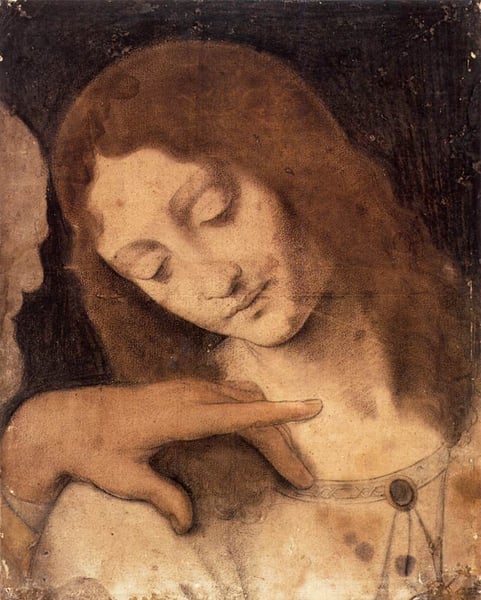
As a quintessential example of High Renaissance religious painting, Leonardo da Vinci’s Head of St. John the Evangelist exemplifies the period’s profound synthesis of naturalism, psychological depth, and spiritual transcendence. While the supplied facts limit the scope to style and genre, the work’s significance within the High Renaissance lies in its masterful demonstration of two revolutionary artistic principles that defined the era: sfumato and humane idealization.
High Renaissance Religious Painting
The genre of religious painting in the High Renaissance (c. 1490–1520) moved beyond medieval iconography to portray sacred figures with tangible humanity, yet elevated by divine grace. Leonardo’s depiction of St. John the Evangelist is a study in this duality. The saint’s youthful features are rendered with meticulous naturalism—soft skin, flowing curls, and a gentle, contemplative gaze—yet the composition avoids raw realism in favor of an idealized beauty that suggests eternal spiritual wisdom. This balance reflects the core High Renaissance belief that art could reveal the divine through perfected nature.
Leonardo’s Signature Techniques
Leonardo’s sfumato—the subtle blending of tones and edges without harsh lines—is likely employed to model the saint’s face, creating a soft, atmospheric aura that blurs the boundary between flesh and spirit. The lighting, typical of Leonardo’s chiaroscuro, seems to emanate from within the figure, emphasizing the soul’s inner light rather than external illumination. This technique was groundbreaking for its ability to convey psychological introspection; St. John appears lost in thought, perhaps contemplating the mysteries of the Gospel he would later write.
Why It Matters
The work is significant as a condensed expression of Leonardo’s lifelong pursuit: to capture the invisible—grace, emotion, intellect—through visible form. Within the religious painting genre, it demonstrates how the High Renaissance reimagined biblical figures as approachable, deeply human beings, making their holiness feel immediate and personal. Even as a fragment (a head study), the piece encapsulates the era’s revolutionary idea that art could be both a window to the divine and a mirror of the human soul.
Museum / Gallery
Visivamente simili
20 opere con composizione e palette affini
Head of Christ
Leonardo da Vinci
Head of a Young Woman with Tousled Hair (Leda)
Leonardo da Vinci
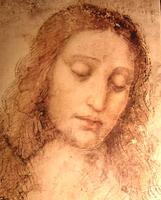
Study of Christ for the Last Supper
Leonardo da Vinci
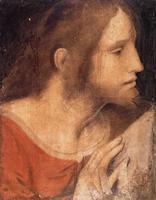
Head of St. James the Less
Leonardo da Vinci
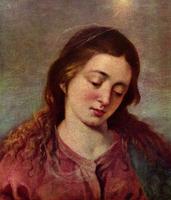
Maria
Alonzo Cano
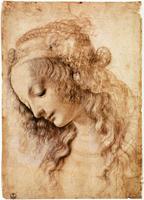
Woman's Head
Leonardo da Vinci
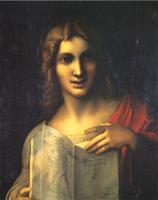
Young Christ
Correggio
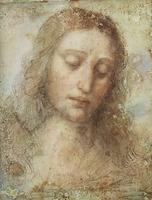
Head of Christ
Leonardo da Vinci
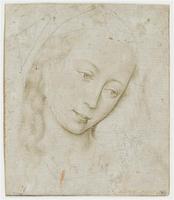
Head of the Virgin
Rogier van der Weyden
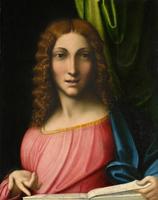
Salvator Mundi
Correggio
Head of a Woman
Albrecht Durer
Angel (fragment of the Baronci altarpiece)
Raphael
Portrait of a Girl
Sebastiano del Piombo
BILDNIS DER HEILIGEN MARIA MAGDALENA
Pieter van Mol
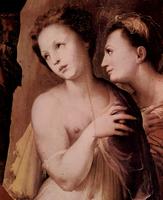
Descent of Christ to Limbo (detail, Eva)
Domenico Beccafumi
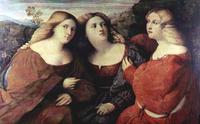
The Three Sisters
Palma Vecchio
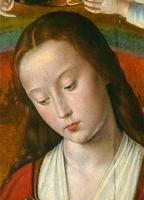
The Moulins Triptych (detail)
Jean Hey
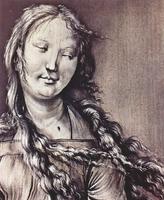
Heller Altarpiece (detail)
Matthias Grünewald
Saint Agnes
Correggio
The Penitent Mary Magdalene
Sebastiano Conca