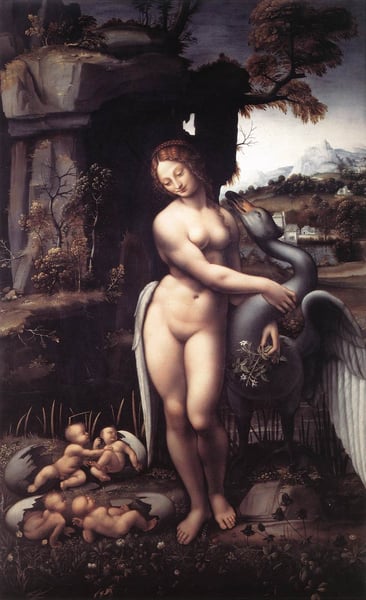
Leonardo da Vinci's Leda is a quintessential High Renaissance mythological painting, significant for its exemplification of the period's core values: the harmonious synthesis of classical narrative with naturalistic human form, balanced composition, and idealized beauty. Produced during a time when artists sought to elevate mythological subjects to the same level of spiritual and intellectual gravity as religious works, Leonardo’s treatment focuses on the graceful, psychologically resonant depiction of the human figure. The work embodies the High Renaissance emphasis on sfumato—soft, smoky transitions of light and shadow—to create a sense of three-dimensionality and ethereal elegance. As a mythological painting, it draws on ancient Greco-Roman themes of transformation and divine encounter, but Leonardo reframes the story through a lens of serene, almost enigmatic, naturalism. This integration of classical subject matter with advanced painterly technique marks Leda as a touchstone for how Renaissance artists reimagined mythology as both a vehicle for humanist inquiry and a demonstration of technical mastery.